


More news on this day
An LGBTQ focused cruise carrying nearly 2,000 mostly gay men has been denied entry to Egypt just days after Turkey blocked the same charter from docking, intensifying scrutiny of how conservative governments in the eastern Mediterranean treat queer visitors.
Get the latest news straight to your inbox!
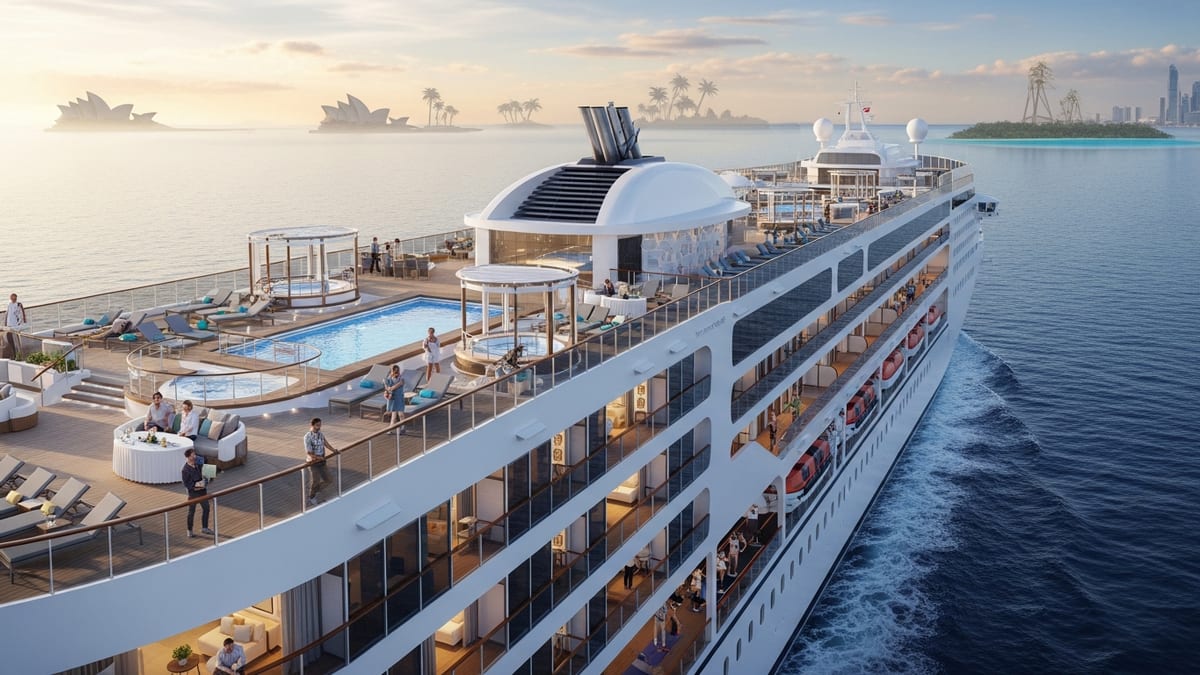
Second Port Denial Leaves Cruise Adrift
The latest setback unfolded off the coast of Alexandria on July 9, when the Scarlet Lady, a Virgin Voyages ship chartered by U.S. based Atlantis Events, was refused permission to enter Egyptian territorial waters. Publicly available information from the operator indicates that the call at Alexandria had been added at short notice after Turkey rejected the ship’s earlier plans to visit Istanbul and Kuşadası.
The cruise, marketed as an all gay or LGBTQ focused voyage, departed Athens on July 5 for a 10 night itinerary through the eastern Mediterranean ending in Venice. Reports indicate that almost all of the roughly 2,000 passengers on board are gay men, many of whom learned of the Egypt decision through written notices distributed on the ship.
According to published coverage, Atlantis Events told guests that Egyptian officials had blocked the ship from entering national waters, making it impossible to dock in Alexandria as scheduled. The company said it was working to secure an alternative port, underscoring how quickly a seemingly stable itinerary can unravel when local politics and social norms collide with high profile queer tourism.
The refusal by Egypt followed a week of headlines about the same voyage, already forced to scrap Turkish ports amid mounting political attention. The back to back denials have amplified the case well beyond the cruise industry, fueling debate among travelers and LGBTQ advocates about where queer visibility is welcome and where it remains a flashpoint.
Turkey’s Earlier Ban Set the Tone
The difficulties for the Scarlet Lady began before the ship left Greece. In the days leading up to departure, Turkish authorities informed the operator that the vessel would not be allowed to dock in Istanbul or Kuşadası. Reports in international and regional outlets state that local officials cited “moral standards” and “family values” in explaining the decision, portraying the LGBTQ themed charter as incompatible with the country’s social fabric.
That move forced Atlantis Events and Virgin Voyages to redesign the itinerary on short notice, replacing the Turkish stops with new calls in Alexandria and on the Greek island of Crete. Travel industry coverage notes that in more than three decades of operating queer focused cruises, Atlantis had not previously had a ship turned away explicitly because of its passenger profile.
The Turkish decision, which quickly became a domestic political story, highlighted the precarious position of LGBTQ visibility in a country where same sex relations are not illegal but where public life has become more tightly controlled. Analysts following the situation say the denial fits a broader pattern of restrictions on Pride marches and queer cultural events, even as mainstream tourism campaigns continue to promote Turkey’s coastal resorts and historic cities.
For the passengers, many of whom booked the voyage months in advance, Turkey’s last minute move initially seemed like a one off disruption that could be managed with itinerary changes. Egypt’s subsequent refusal, however, has transformed the episode into a wider test of where LGBTQ specific tourism can safely operate in the region.
Legal Grey Zones and Social Hostility
Observers note that both Turkey and Egypt occupy a complex space on LGBTQ rights. Same sex sexual activity is not formally criminalized in either country, but human rights groups and local activists have long documented patterns of harassment, arrests and public vilification of queer people, particularly gay and bisexual men and transgender women.
In Egypt, publicly available reports describe the use of broadly worded “debauchery” and morality statutes against individuals perceived as LGBTQ, as well as raids on private gatherings and online entrapment campaigns. While urban centers such as Cairo and Alexandria have historically had underground queer scenes, visibility is often met with intense social and legal pressure.
Turkey, meanwhile, has seen Pride marches in Istanbul banned or repeatedly dispersed in recent years, alongside political rhetoric that links LGBTQ visibility to threats against family and national identity. Civil society organizations have warned that discretionary decisions by local officials, rather than clear written laws, frequently determine what is tolerated in public space.
The experience of the Scarlet Lady illustrates how that discretionary power can extend to international tourism. Even when a cruise line secures port slots and completes formalities months ahead of sailing, governments retain wide latitude to reverse course, especially when voyages become symbolic flashpoints around sexuality, religion and national image.
Impact on Cruise Itineraries and Queer Travel
The back to back refusals by Turkey and Egypt are reverberating across the cruise and travel sectors. Consultants who specialize in LGBTQ tourism say the incident is likely to prompt a reassessment of eastern Mediterranean routes, particularly those that market explicitly to queer travelers or brand entire sailings as gay cruises.
Travel industry commentary suggests that operators may respond by favoring ports in countries with clearer legal protections and more predictable political climates, even if that narrows itinerary options. Alternatives in Greece, Italy, Croatia and other parts of the Adriatic and Aegean are already being highlighted as comparatively safer and more reliable for LGBTQ themed sailings.
For many would be passengers, the episode has become a case study in the gap between destination marketing and on the ground realities. Tourism campaigns often emphasize ancient heritage sites, beaches and nightlife, but rarely address how sexual orientation or gender identity might shape a visitor’s experience, especially when a large queer group arrives as a highly visible cohort.
Some travel advisors now recommend that LGBTQ clients scrutinize not just national laws but also recent political trends, enforcement patterns and the track record of previous queer tours or cruises in a given country. The Scarlet Lady’s odyssey underscores that even long established operators with decades of incident free history can encounter sudden pushback when social and political winds shift.
Symbolism Beyond a Single Voyage
While the immediate concern for passengers on board is the loss of planned port calls and the scramble to adjust excursions, the symbolic weight of the episode reaches further. Commentators in LGBTQ media and mainstream outlets alike have framed the saga as a reminder that, despite gains in parts of Europe and North America, queer visibility remains deeply contested across much of the world.
In that sense, the trajectory of the Scarlet Lady mirrors broader global fault lines. On one side are travelers seeking to bring openly queer community and culture into spaces long shaped by religious conservatism and traditional gender norms. On the other are governments and local authorities that portray such visibility as an affront to social order or moral values.
The ship’s exclusion from both Turkey and Egypt may also influence how queer travelers weigh the benefits and risks of visiting destinations where local LGBTQ communities face restrictions. Some advocates argue that tourism can foster connection and gradual change, while others warn that highly visible events can provoke backlash without materially improving conditions for residents.
For now, the blocked voyage stands as a stark example of how quickly a holiday can turn into a flashpoint. As the cruise continues toward friendlier ports, the questions it raises about safety, solidarity and the limits of visibility are likely to linger far beyond this Mediterranean summer.