


More news on this day
Railroad response teams and local emergency crews are working near the Laurens and Greenwood county line in South Carolina after 21 freight cars derailed along a freight corridor that links several Upstate communities, according to early regional coverage and public incident updates.
Get the latest news straight to your inbox!
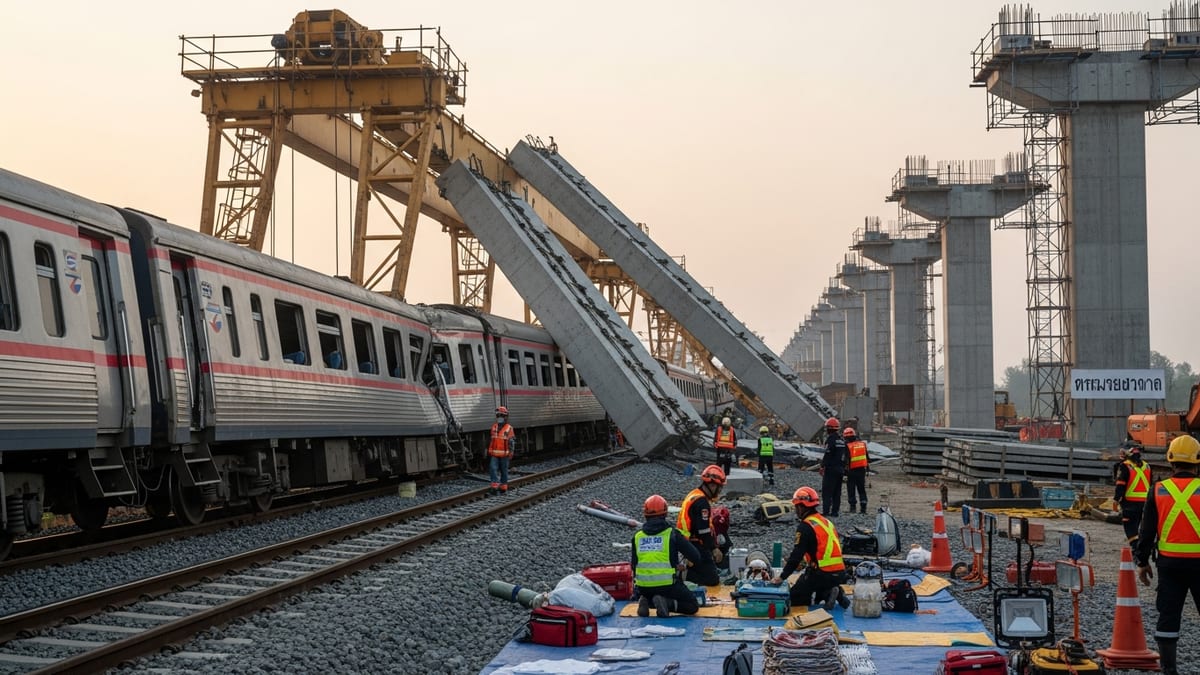
Freight Train Derails Along Key Upstate Rail Corridor
Initial reports indicate the derailment occurred along a line that parallels the boundary between Laurens and Greenwood counties, a stretch of track frequently used by freight trains serving manufacturers and distribution centers in the region. The incident involves 21 rail cars that left the tracks, disrupting rail traffic and drawing a sizable response from railroad contractors and local emergency management.
While full investigative details have not yet been released, regional outlets and public dispatch summaries describe a freight consist with multiple cars derailing in a rural area not far from existing highway links and small communities. The location places the incident within a broader Upstate South Carolina transport corridor where rail, interstate highways and state routes intersect and share right-of-way in close proximity.
At this stage, there are no widely circulated reports of serious injuries associated with the derailment. Information currently available suggests that responders are concentrating on assessing the condition of the derailed cars, checking for fuel or cargo leaks and ensuring the scene remains secure for both crews and nearby residents.
Travelers moving between Laurens, Greenwood and nearby lake and recreation areas are being urged through local advisories to remain alert for detours or slowdowns where rail access roads intersect public highways, particularly as heavy equipment is brought in to support the cleanup.
Cleanup Operations and Impact on Rail Traffic
Crews specialized in rail incident response are working to stabilize and re-rail cars where possible, while damaged rolling stock is being prepared for removal. This type of operation typically involves cranes, side booms and heavy trucks accessing the right-of-way from nearby secondary roads, which can temporarily affect local traffic and access to rural properties.
Publicly available rail operations information for the region indicates that the affected line is part of a network that moves bulk commodities and general freight between the Upstate and other parts of the Southeast. A derailment of 21 cars is expected to disrupt scheduled traffic, leading to reroutes and delays on connecting lines until the track can be inspected and cleared for safe use.
Track inspection and repairs are often phased, with damaged sections rebuilt and tested before trains are allowed to pass at reduced speeds. Until full clearance is granted, both freight customers and any connecting passenger services in the wider network may see schedule adjustments, as dispatchers work around the affected segment.
For travelers planning rail-connected itineraries through major hubs in the Carolinas and neighboring states, the incident serves as a reminder that localized disruptions can ripple through broader schedules, even when they occur on secondary corridors away from large cities.
Safety Checks and Environmental Monitoring Underway
Available information points to an ongoing series of safety checks at the scene, including inspections of the rail bed, ties and signaling equipment near the point of derailment. Investigators typically review recent maintenance records, train speed data and any reports of track conditions to determine what may have contributed to a multi-car derailment in this kind of setting.
Environmental monitoring is also a core part of the response when multiple freight cars leave the rails. Even when early indications suggest that hazardous materials are not a central concern, responders generally test soil and nearby waterways for fuel or cargo spills and set up booms or absorbent barriers as a precaution if there is any potential for runoff.
The rural character of the Laurens and Greenwood county line means that derailed cars can come to rest near fields, tree lines or drainage corridors that feed into local creeks and Lake Greenwood. As a result, mitigation steps often focus on keeping any leaked material from migrating off the right-of-way, especially during summer storm events that can bring sudden, heavy rain.
Rail operators in the United States have increasingly highlighted large-scale derailment response protocols in recent years, emphasizing coordination between in-house hazardous materials teams, contracted cleanup specialists and county-level emergency management agencies when significant incidents occur.
Local Communities and Travelers Adjust Around the Scene
The area around the Laurens and Greenwood county line is a mix of small towns, rural neighborhoods and lake-oriented communities that depend on a network of state highways, county roads and, in some cases, rail crossings to reach schools, workplaces and recreation areas. A derailment of this scale can temporarily reshape everyday routes as responders move equipment in and out of the scene.
Local news coverage in the broader region frequently notes how even short-term closures tied to infrastructure issues can affect traffic patterns on familiar corridors. In this case, nearby crossings and frontage routes may experience intermittent closures while crews work adjacent to the tracks, particularly if large cranes or loaders must use narrow roads for access.
Travelers headed toward Lake Greenwood, Ware Shoals and other points along the county line are being encouraged through regional advisories to monitor traffic and incident updates from local outlets and public information channels. Alternate routing along larger state and U.S. highways can help avoid congestion where rail cleanup intersects with road traffic.
For residents who live along the rail corridor, the presence of heavy machinery, lighting and extended work hours may be noticeable as teams aim to restore service as quickly and safely as possible. Noise and temporary visual impacts are common during such operations, though they generally ease once derailed cars are removed and track repairs are complete.
Wider Context for Rail Safety in the Carolinas
The derailment near the Laurens-Greenwood line arrives amid heightened public interest in rail safety across the Carolinas and the broader Southeast. Recent national and regional incidents have prompted closer attention to track conditions, train lengths and the movement of hazardous cargo through both urban and rural communities.
Transportation safety reports for the region have underscored the importance of routine inspection and maintenance on busy freight corridors, particularly where rail lines intersect with rapidly growing population centers. While the affected area in this incident is largely rural, it sits within a growth belt where residential and commercial development continues to move closer to long-established rail rights-of-way.
For travelers and tourism-focused communities, reliable rail freight operations play an indirect but important role. Efficient freight service supports supply chains for hospitality, manufacturing and retail, while safe, well-maintained corridors can also influence future discussions about potential passenger or excursion rail options in parts of South Carolina.
As the investigation into the Laurens-Greenwood derailment develops, further public reporting is expected to clarify any contributing factors and outline recommended safety measures. Those findings are likely to feed into ongoing conversations about how to balance economic growth, infrastructure needs and risk management along key transportation corridors in the Upstate.