


More news on this day
Emirates, the Dubai-based carrier, is rolling out a package of consumer incentives and enhanced security assurances designed to steady passenger confidence and protect bookings as the Iran war rattles aviation across the Middle East.
Get the latest news straight to your inbox!
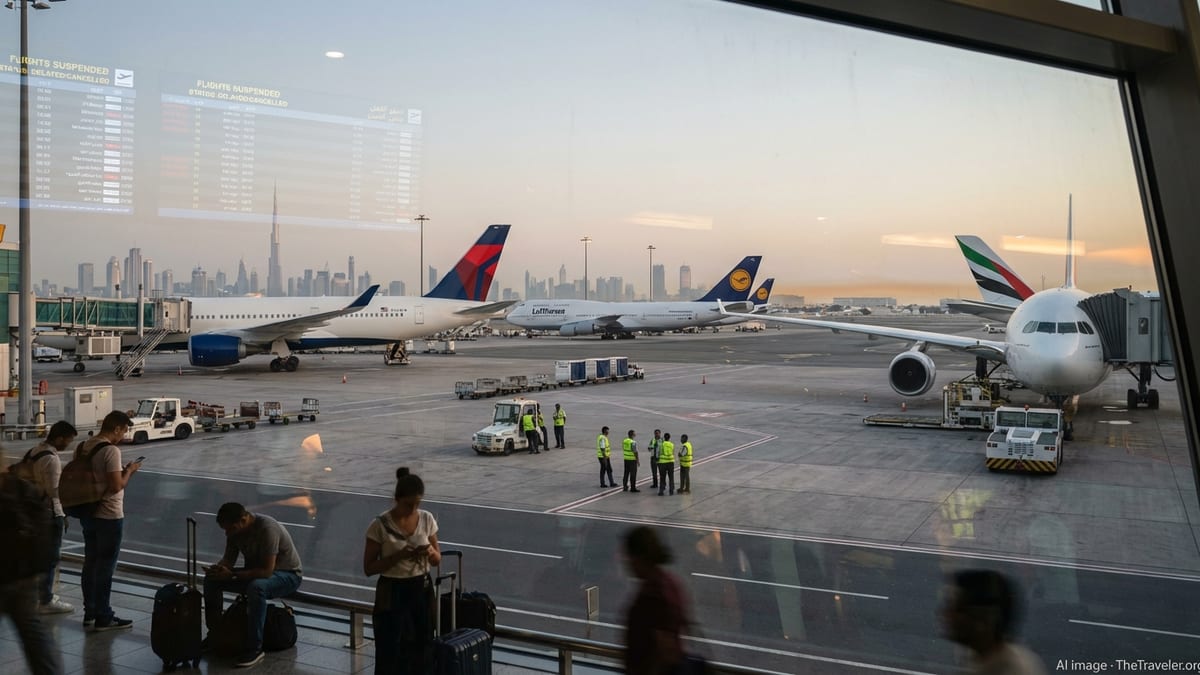
Targeted Incentives to Restore Passenger Confidence
Publicly available information indicates that Emirates is preparing a suite of incentives aimed at travelers unsettled by the prolonged conflict involving Iran, the United States and Israel. The measures focus on flexibility and service reliability rather than aggressive fare cuts, reflecting the carrier’s intention to defend its premium positioning while still coaxing nervous passengers back into the market.
Reports from financial and aviation outlets describe incentives such as more accommodating rebooking options, waivers on certain change fees, and additional assistance for disrupted itineraries. The emphasis is on reducing perceived risk for passengers who worry that rapidly changing airspace restrictions or new security incidents could derail trips at short notice.
Coverage of the strategy notes that Emirates is betting on its strong global network and hub infrastructure in Dubai to support these incentives. By maintaining a high level of connectivity, the carrier aims to remain the preferred option for long-haul journeys between Europe, Asia, Africa and the Americas at a time when some competitors are trimming schedules or avoiding the region entirely.
Aviation analysts quoted in regional business media suggest that, if successful, the approach could help contain the slump in demand triggered by the Iran war and provide a template for other Gulf carriers facing similar headwinds.
Reinforced Security Protocols and Operational Assurances
Alongside consumer-facing incentives, Emirates is also highlighting reinforced security practices and operational safeguards as part of its response to the crisis. Publicly available information shows that the airline is coordinating closely with aviation regulators and air navigation authorities as airspace rules shift in response to missile strikes, drone activity and changing threat assessments linked to the conflict.
Industry briefings describe more dynamic flight planning, including adjusted routings to avoid sensitive corridors, higher fuel reserves to support diversions, and tighter thresholds for go or no-go decisions on affected routes. These steps are designed to reassure travelers that flights operating to, from and through the Gulf region are being managed under heightened security scrutiny.
Advisories from travel risk consultancies indicate that Emirates and other major Middle Eastern carriers are working within a layered security framework that includes airport perimeter protection, screening enhancements and contingency planning for temporary airport closures. For passengers, the most visible impact may be longer connection times, additional checks at the gate and more frequent last-minute schedule changes as security conditions evolve.
Published coverage also notes that Emirates is emphasizing its safety record and its ability to adapt to complex geopolitical shocks, drawing on experience from previous regional crises and global disruptions that have periodically reshaped international aviation flows.
Managing Capacity in a Volatile Regional Market
The incentives and security emphasis come as the Iran war exerts heavy pressure on airline capacity across the Middle East. Open-source aviation data and industry commentary point to widespread airspace restrictions over Iran and neighboring states, forcing carriers to reroute or temporarily ground flights. This has reduced available seats and increased operating costs at a time when demand is already under strain.
Reports on Emirates indicate that the airline is trying to sustain as much of its schedule as security conditions allow, even as it absorbs higher fuel and insurance costs associated with longer routings and elevated risk premiums. Maintaining network breadth is central to the carrier’s business model, which relies on funneling global traffic through its Dubai hub.
Travel-industry analysts note that Emirates’ stance contrasts with some non-regional airlines that have sharply reduced or suspended services to the Gulf since the conflict began in late February 2026. By keeping more flights in operation and pairing them with consumer incentives, Emirates is seeking to capture market share from rivals that have pulled back, while accepting a near-term hit to profitability.
At the same time, capacity decisions remain fluid. Publicly available advisories show that flight frequencies and aircraft types on certain routes are being adjusted week by week to match changing patterns of demand, insurance conditions and airspace access, underscoring the uncertainty that still surrounds the region’s recovery trajectory.
Implications for Global Travelers and the UAE’s Role
The new incentives and security protocols carry significant implications for international travelers who rely on Gulf hubs for long-haul connectivity. With parts of regional airspace constrained by the Iran war, rerouted flights can mean longer journey times, tighter aircraft utilization and higher fares across multiple markets, from Europe to South Asia and Australasia.
Travel advisories compiled by risk-analysis firms suggest that passengers transiting through Dubai and other Gulf hubs should anticipate periodic schedule changes, extra time for security processes and evolving insurance conditions. Emirates’ consumer measures are designed to offset some of this uncertainty, but they cannot fully eliminate the operational turbulence created by the conflict.
The developments also highlight the broader role of the United Arab Emirates in navigating the crisis. Public diplomatic statements from Emirati officials in recent months have stressed the importance of regional stability and the need to protect global trade and aviation flows that pass through the Gulf. The moves by Emirates to buttress consumer confidence and tighten security protocols align with this wider effort to keep critical transport links functioning despite ongoing hostilities.
For now, industry observers view the airline’s response as a calculated attempt to balance commercial resilience with passenger reassurance. How effectively the combination of incentives and security guarantees can sustain demand will depend largely on the duration of the Iran war, the trajectory of regional airspace restrictions and the willingness of travelers to keep flying through one of the world’s most strategically sensitive corridors.
Outlook for Middle East Aviation Under Prolonged Tension
Looking ahead, aviation specialists quoted in global financial media warn that a drawn-out conflict could reshape Middle East air travel patterns for years. Prolonged war risk, higher operating costs and intermittent infrastructure disruptions could accelerate shifts in traffic flows, with some travelers favoring more northerly or southern routings that bypass the most exposed areas.
In that context, Emirates’ combination of consumer incentives and stringent security protocols is viewed as both a defensive and a competitive tool. By signaling continuity of operations, the airline is attempting to reassure corporate travel buyers, tour operators and individual passengers that it can remain a reliable connector between continents even under heightened geopolitical stress.
However, open-source economic assessments emphasize that there are limits to what any single airline can achieve while hostilities continue. Higher ticket prices, lingering safety concerns among leisure travelers and potential new waves of airspace closures all pose risks that could undermine the effectiveness of current measures.
For now, Emirates’ initiatives stand as an early test case of how a major Gulf carrier can respond to a fast-moving war that directly affects its home region. The outcome will be closely watched by airlines, regulators and travelers worldwide as they adapt to an air travel landscape reshaped by the Iran conflict.