


More news on this day
Emirates president Tim Clark has vowed that the Dubai carrier will return “hard and fast” after weeks of regional airspace disruption, signaling renewed competition on key long-haul routes as the airline restores most of its global network.
Get the latest news straight to your inbox!
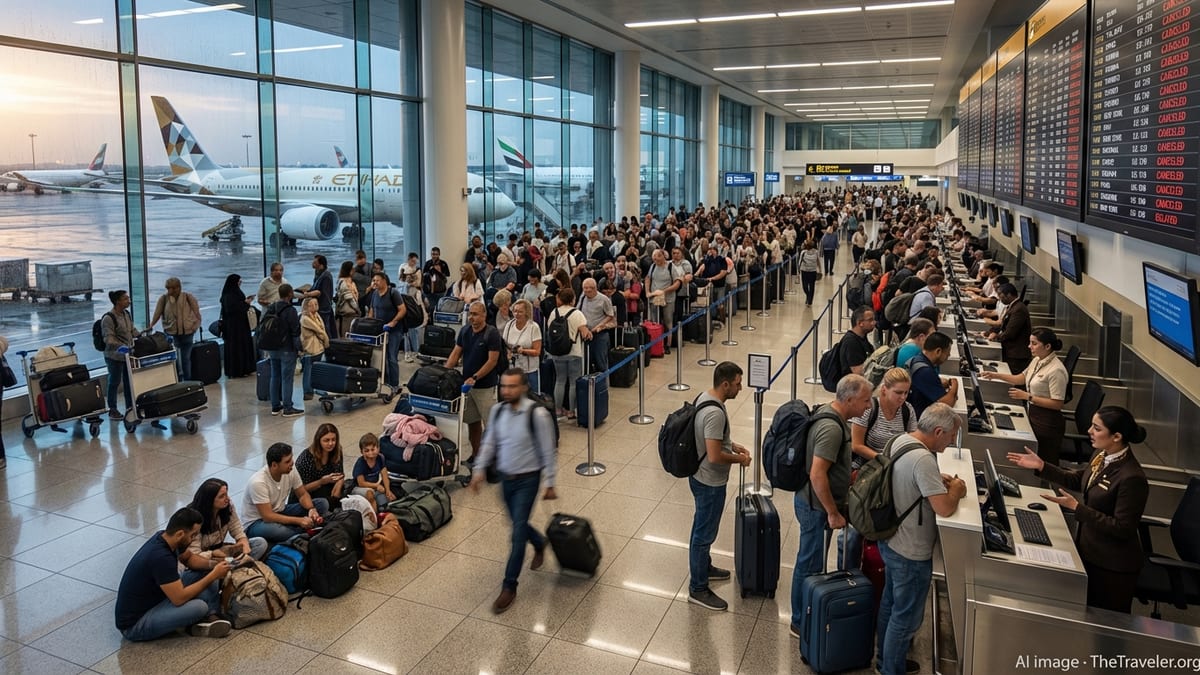
Strong rhetoric as Emirates targets quick recovery
Speaking at an industry event in Berlin, Tim Clark indicated that Emirates plans a rapid return to full strength following the conflict-driven disruption that has affected airlines across the Middle East since late February. According to published coverage, Clark warned that European rivals seeking to benefit from the Gulf carrier’s temporary weakness should not assume the advantage will last.
Clark’s comments follow a period in which Emirates, Qatar Airways and Etihad Airways were forced to cut or reroute services as regional airspace corridors closed and traffic flows through the Gulf were severely constrained. The crisis reduced one of the world’s busiest connecting regions to a fraction of its usual schedule, opening short term opportunities for European and Asian competitors to add capacity on intercontinental routes.
Reports indicate that Clark has reiterated Emirates’ stance of avoiding structural cutbacks, characterizing the current operating environment as a temporary shock rather than a reason to scale down long term ambitions. Public remarks show that the airline is positioning itself as ready to accelerate once airspace is fully available and operational constraints ease.
The assertive tone is being interpreted by aviation analysts as a signal to both the market and regulators that Emirates intends to preserve its role as a major global connector, even as it absorbs higher costs and operational complexity tied to the conflict.
From shutdown to near-full network in a few months
Data from airline and airport operators show that Emirates’ schedule contracted sharply at the onset of the Middle East crisis, with flight numbers falling as large sections of regional airspace closed or became highly restricted. In early March, the airline announced that it was operating a reduced schedule while working to rebuild its network as soon as safe corridors reopened.
By early May, publicly available information from industry publications indicated that Emirates had restored around 96 percent of its global network, reconnecting destinations across the Americas, Europe, Africa, West Asia, the Far East and Australasia. The near-full return came after weeks of gradual ramp-up, as routes were reactivated and frequencies increased in line with airspace availability.
Travel trade reports show that, even with a reduced schedule during March and April, Emirates carried several million passengers through Dubai, underlining both the size of its operation and the resilience of demand for its long haul hub model. Capacity additions in May and early June have pushed the airline closer to its pre-crisis connectivity, although some routings remain longer and more circuitous than before the conflict.
Regional aviation observers note that the speed of the rebound reflects extensive contingency planning developed over previous disruption episodes, including the pandemic and earlier regional tensions. The current recovery is being framed by the airline as proof that its network can withstand shocks and resume growth once external constraints ease.
Competitive pressure on European and Asian carriers
Clark’s pledge that Emirates will be back “hard and fast” is being closely watched by European and Asian airlines that briefly gained market share while Gulf carriers were constrained. During the height of the disruption, several European groups added capacity to Asia and other long haul markets, redirecting traffic that would normally connect via Dubai and other Gulf hubs.
Analysts quoted in recent coverage suggest that this window may narrow as Emirates restores frequencies and reinstates convenient connection times through Dubai International. The airline’s extensive network and large widebody fleet mean it can reenter markets at scale, potentially reversing some of the temporary gains enjoyed by competitors.
Industry commentary also highlights the risk that overcapacity could emerge on certain long haul corridors if European and Asian carriers maintain the extra capacity they deployed during the disruption while Gulf airlines return to their previous schedules. Yield pressure and fare competition could intensify, particularly on routes linking Europe with Asia and Australasia.
At the same time, the episode has prompted renewed debate about the vulnerability of hub carriers to geopolitical shocks. While Emirates emphasizes its ability to recover quickly, some analysts argue that airlines with more point to point networks may be less exposed to concentrated regional risks, even if they lack the scale of the Gulf super-connectors.
Operational challenges remain for passengers
Although Emirates has restored most of its network, operational data and passenger accounts indicate that some disruption continues. Longer routings to avoid sensitive airspace, tighter slot availability at busy airports and residual congestion over parts of the region continue to generate delays and schedule changes on select routes.
Travel reports from March and April detailed large numbers of rebookings, extended layovers in Dubai and special services to return stranded passengers to their home markets. While these incidents have become less frequent as airspace reopened, customer forums and advisory notices suggest that passengers are still advised to monitor flight status closely and allow additional time for connections.
Passenger rights and compensation have also featured prominently in the aftermath of the crisis. Public information on refund policies and disruption waivers indicates that Emirates and other regional carriers introduced flexibility measures for itineraries falling within specified disruption windows, including options to rebook or request refunds without standard penalties.
Consumer advocates point out that the experience has underlined the importance for travelers of checking fare conditions, travel insurance coverage and airline advisories when routing through geopolitically sensitive regions. For Emirates, maintaining customer confidence during and after the disruption has been a key part of its broader recovery strategy.
Strategic outlook for Emirates and Gulf aviation
As Emirates approaches a full restoration of its schedule, attention is turning to what the crisis means for the airline’s longer term strategy. Clark has previously signaled that Emirates intends to maintain its focus on widebody long haul operations centered on Dubai, supported by a fleet of Airbus A380s, Boeing 777s and an expanding number of Airbus A350 aircraft.
Industry coverage suggests that the regional conflict and resulting airspace closures have reinforced the importance of fleet flexibility and diversified routing options. Emirates has continued to invest in cabin refurbishments, onboard connectivity and premium products, aiming to ensure that passengers return to an upgraded experience as operations normalize.
For Gulf aviation more broadly, the rapid rebound from what some commentators describe as the most severe disruption in the region’s recent aviation history is seen as a test case for resilience. The ability of Emirates and its regional peers to restore networks and traffic flows is being closely monitored by aircraft manufacturers, leasing companies and tourism authorities that depend on the stability of long haul connectivity.
While geopolitical risks around the Gulf are unlikely to disappear, the current episode appears to have strengthened Emirates’ determination to defend its market position. Clark’s “hard and fast” message encapsulates a broader strategy of resuming growth quickly after shocks, rather than accepting a prolonged period of retrenchment, and sets the tone for the next phase of competition on the world’s busiest long haul corridors.