


In Cape May, New Jersey, two historic landmarks compete for space on most itineraries: the Emlen Physick Estate, a meticulously restored 1879 Victorian mansion, and the Cape May Lighthouse, a working beacon you can still climb. Each offers a very different kind of time‑travel. If you only have a few hours, which stop delivers the richer experience? The answer depends on what you value more: stories and interiors, or wind, waves, and wide‑open views.
Get the latest updates straight to your inbox!
Getting Oriented: Two Icons With Very Different Moods
The Emlen Physick Estate sits inland on Washington Street, wrapped in trees and lawns that make it feel almost secluded from the beach town bustle. Walk up the drive, and you are greeted by an 18‑room stick‑style mansion with oversized chimneys, deep porches and ornate trim. It is Cape May’s flagship Victorian house museum, curated down to the wallpaper patterns and hair art in the parlor to evoke life here in the late 1800s.
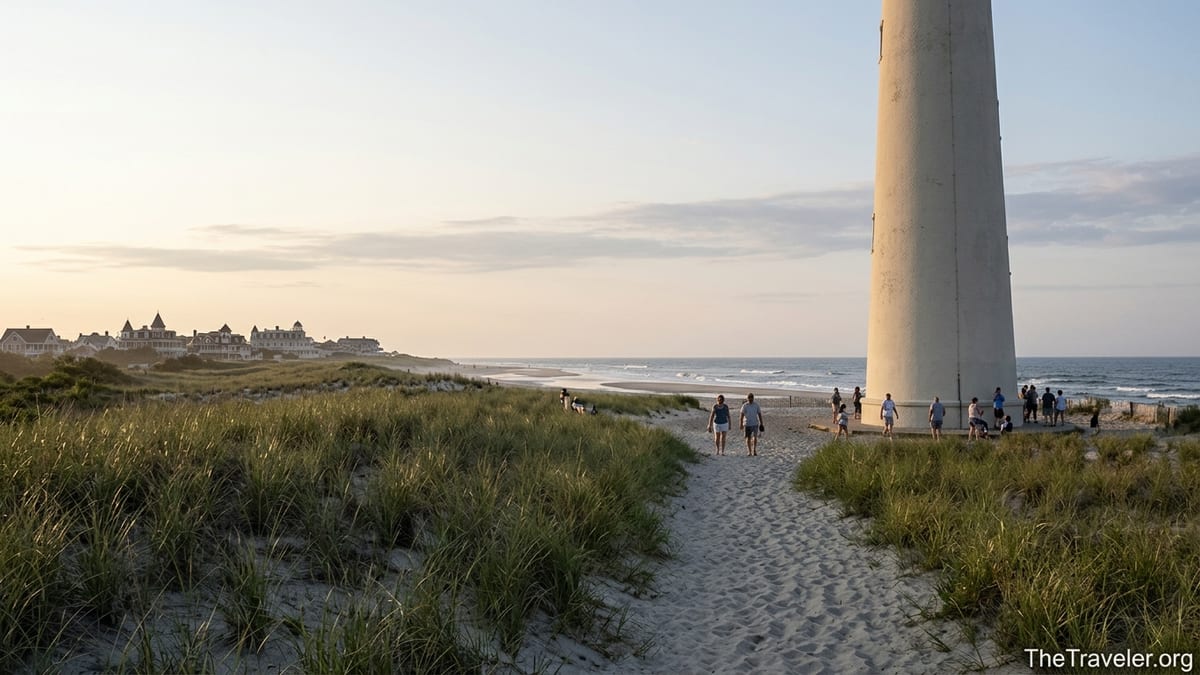
By contrast, Cape May Lighthouse rises out of Cape May Point State Park, a 157‑foot tower set among dunes, wetlands and wide beaches. The mood is coastal and elemental. Gulls wheel overhead, you hear the Atlantic before you see it, and the salt wind hits you the moment you step from your car. Where the Estate is about interiors and interpretation, the Lighthouse is about sky, sea and the simple thrill of climbing 199 iron steps to a sweeping horizon.
Both sites anchor broader experiences. The Physick grounds include the Carriage House with rotating exhibits, a museum shop and seasonal café, plus themed tours tied into Cape May’s trolley circuits and ghost walks. The Lighthouse is paired naturally with park trails, birding platforms and nearby Sunset Beach, which many visitors combine into a full afternoon of walking and watching the light change.
Understanding these two settings at the outset is key. One leans toward reflective storytelling in shaded rooms. The other is all about sun, wind and movement. From here, deciding which is more rewarding becomes a question of your interests, mobility and how you like to experience history.
History & Storytelling: Who Wins for Depth of Narrative?
If your measure of “rewarding” is how deeply you come to understand Cape May’s past, the Emlen Physick Estate has the edge. Built in 1879 for Dr. Emlen Physick Jr. and his family, the house has been preserved as a Victorian time capsule. Guided tours typically take you through about 15 restored rooms across the first and second floors, with docents explaining everything from daily routines to social expectations of upper‑middle‑class resort families in the late 19th century.
On a standard house tour, you might stand in the dining room while a guide points out the elaborate place settings used when Philadelphia society families fled summer heat for the Jersey shore. In the parlor, you’ll see intricate wreaths and decorations crafted from human hair, a once‑common Victorian mourning art that often surprises modern visitors. Rooms are not just furnished but interpreted, so you walk away knowing, for example, why the Physicks had separate staircases for family and servants, or how gas lighting changed evening entertainment.
The estate also folds in thematic programming that layers on more narrative. Seasonal “Voices From Beyond” or ghost‑themed evenings explore lore about the house’s reputed hauntings, while holiday candlelight tours use the mansion as a stage for costumed interpreters and period music. Even without special events, the year‑round Carroll Gallery in the Carriage House frequently hosts small exhibits on topics like Cape May’s hotel boom or local maritime history, each adding context beyond what you see on the beach.
Cape May Lighthouse tells a simpler story, but one with its own power. Panels at the base and in the small oil house typically outline the structure’s origins in 1859, its automation in the mid‑20th century and the life of keepers who once tended the light every night. Rangers or staff can usually answer questions about shipwrecks along the Delaware Bay and how the lighthouse became part of a state park. Yet interpretation tends to be more compact, self‑guided and focused on the structure and its function rather than personal stories. You get a strong sense of coastal navigation and the magnitude of the job, but fewer intimate details than in a furnished home.
Scenery, Atmosphere & Physical Experience
When it comes to memorable physical experience, the Lighthouse is hard to beat. After climbing the 199 spiraling steps, most visitors step out through a hatch onto the observation gallery to find a panorama that can include the Atlantic surf, Cape May Point’s quaint cottages, wetlands dotted with herons, and on very clear days a faint line of Delaware across the bay. In peak migration seasons, you may see kettles of hawks or monarch butterflies drifting past at eye level.
The conditions change the mood dramatically. On a clear late‑afternoon in September, the light softens over the ocean, and photographers line the dunes below as the tower catches the last glow. On a blustery March day, gusts rattle the railings and waves hammer the shore, giving a visceral sense of why a powerful light was needed here. The climb itself builds anticipation: iron treads slick with the patina of thousands of visitors, stone walls that cool noticeably as you ascend, echoing footfalls ahead and behind.
The Physick Estate offers a more controlled environment. Indoors, temperatures are moderated, and tours typically last around 45 minutes to an hour in groups that can swell on rainy summer days. The pleasures here are tactile and visual in a quieter way: carved newel posts polished by hands, the thick feel of original doors, the satiny sheen on antique furniture. On the shaded grounds, you can wander lawns and gardens after your tour, find a bench near the Carriage House Café when it is operating in warmer months, or photograph the distinctive chimneys and dormers framed by trees.
However, you will not get grand vistas or the elemental drama found at the Lighthouse. The closest equivalent might be visiting during a December evening candlelight event, when the estate glows with white lights and period decorations. Even then, the experience is intimate, framed at human scale rather than horizon scale. For travelers who find climbing steep stairs intimidating or impossible, the Estate’s relative accessibility makes it the more comfortable and therefore more rewarding physical experience.
Time, Cost & Practical Logistics
Most visitors can see either site in under two hours, but the way time and money are spent differs. Adult admission for a guided interior tour of the Emlen Physick Estate typically sits around the twenty‑dollar range, with separate pricing for trolley combinations and specialty tours. Booking a combo ticket that pairs a house tour with, say, a narrated trolley ride through the historic district can turn the estate into the centerpiece of a half‑day deep dive into Victorian Cape May, often for less than you would pay buying two separate activities.
The Cape May Lighthouse generally costs a bit less per person for a standard climb ticket, with additional small fees if you opt into special night climbs or themed events when offered. Families watching budgets often appreciate that you can enjoy much of the Lighthouse environment for free: boardwalks, viewing platforms and beaches in the surrounding state park offer lighthouse views without climbing, and you can picnic, walk trails or simply watch waves at no extra charge beyond park regulations and any parking fees that may apply seasonally.
In terms of time, a lighthouse climb can be surprisingly quick. Fit visitors sometimes go up, take photos and come down within 30 to 40 minutes, especially on quieter weekdays. Add an hour or two if you plan to walk the dune trails, watch birds or head to nearby Sunset Beach for late‑day views and Cape May’s famous “concrete ship” wreck offshore. The Estate, with its set tour times and more scripted experience, lends itself to a defined one‑ to two‑hour window that is easy to slot between beach sessions or meals.
Parking and navigation also shape the experience. The Physick Estate has its own lot just off Washington Street, which is generally manageable outside of peak summer Saturdays. The Lighthouse shares parking with Cape May Point State Park and can feel more crowded on sunny beach days, especially when the birding is good or during special events. If you are visiting in July and August, arriving early in the morning or later in the day can make both sites more pleasant and less stressful.
Who Will Love the Emlen Physick Estate Most?
The Emlen Physick Estate is the more rewarding stop for travelers who are fascinated by interiors, social history and narrative depth. Architecture buffs will appreciate that this is a rare surviving example of Frank Furness’s distinctive stick‑style residential work, with its oversized chimneys and expressive structural details. You can see how ornamental brackets, rooflines and porches combine into a cohesive statement of late‑Victorian taste that you rarely encounter intact at the shore.
History‑minded visitors often remark that the guided format transforms what could be a static mansion into a living story. For example, families traveling with teens interested in period dramas like “Downton Abbey” or “Bridgerton” often find this stop a highlight because it grounds that world in American, middle‑class reality. Guides talk about servants’ workdays, women’s limited options and how rail connections brought Philadelphians down for long summer stays. For travelers who like to ask questions and linger over objects, the Estate’s staff are generally enthusiastic and happy to elaborate beyond the basic script.
The Estate also shines for travelers visiting outside peak summer. In spring and fall shoulder seasons, when beach time is limited by cooler weather, the mansion becomes a comfortable anchor for exploring Cape May’s historic district. In December, many tour operators build Christmas itineraries around stops at the Physick Estate because of its lavish but historically minded decorations; stepping into the dim, garland‑draped halls while a guide explains Victorian holiday customs can feel like stepping into a period illustration brought to life.
Finally, travelers who prefer not to climb or who use mobility aids often find the Estate more feasible. While details can change and it is always wise to confirm current accessibility information before you go, the nature of a house museum generally allows for more accommodations than a 157‑foot tower with nearly 200 narrow steps and no elevator. If comfort and the ability to sit periodically are priorities, the Physick Estate is likely to feel more welcoming.
Who Will Love Cape May Lighthouse Most?
Cape May Lighthouse comes into its own for travelers who prioritize scenery, fresh air and a sense of achievement. Outdoor‑oriented visitors, photographers and families with energetic children often describe the climb as the highlight of a Cape May trip. Kids count the steps aloud, adults pause at several landings, and everyone emerges onto the lantern gallery with a shared sense of having earned the view. On clear days, you can frame shots of the beach curves, marshes and the tiny geometry of houses below that make perfect mementos of the trip.
Nature lovers will also find more to savor here. The lighthouse sits on one of the premier bird migration corridors in North America, and from late summer into fall the surrounding meadows and shoreline are alive with raptors, songbirds and butterflies. It is not unusual to meet visitors with binoculars in hand at the base, planning to combine a climb with hours on nearby observation platforms. Even outside peak migration, walkers can spot ospreys diving, dolphins offshore or horseshoe crab shells at the waterline.
Budget‑conscious travelers may find the Lighthouse more flexible. If you choose not to climb, it is still worthwhile to stroll the boardwalks through the wetlands, photograph the tower from different angles and enjoy the park’s free amenities. Pairing a climb with a low‑key beach picnic or a sunset walk costs relatively little compared with other resort‑area activities. It is also a strong option for very short stays: if you are in Cape May just for an afternoon, a quick lighthouse visit provides a distinct sense of place even without a lot of background information.
For romantically inclined travelers, timing a lighthouse visit for golden hour can be especially rewarding. Many couples head here in the late afternoon, climb, then linger on the beach as the sun sinks behind the Cape May peninsula or head a short drive to Sunset Beach to watch the sky turn shades of pink and orange behind silhouettes of the tower and distant ships.
How to Choose: Matching the Stop to Your Trip Style
When weighing which historic site is “more rewarding,” start by clarifying what you want most from your limited time. If you imagine yourself in quiet rooms studying period furniture and asking questions about daily life in 1879 Cape May, the Emlen Physick Estate is the better fit. A morning tour there pairs well with an afternoon spent wandering the surrounding streets, where you can see other Victorian cottages and perhaps compare details you learned in the mansion with houses now operating as inns.
If you crave movement and wide horizons, the Lighthouse is a more natural anchor. An ideal half‑day might look like this: arrive mid‑morning to secure parking at Cape May Point State Park, climb the lighthouse while the air is still cool, then walk the trails through freshwater wetlands and dunes. Later, drive or bike back into town for lunch, or continue along to Sunset Beach to search for “Cape May diamonds” and watch waves crash around the remains of the concrete ship Atlantus.
Travelers with children might consider energy levels and attention spans. Younger kids who struggle with listening on tours may enjoy the straightforward goal of climbing steps and getting a view more than standing through room‑by‑room narration. Older kids and teens interested in history, design or the paranormal, however, often respond strongly to the Estate, especially if you book one of the ghost‑themed or interactive seasonal offerings.
If your schedule permits, the most rewarding choice may be not to choose at all. Because each site typically takes one to two hours including walking and photos, it is entirely possible to visit both in a single relaxed day. For example, you might do a morning lighthouse climb and park walk, have lunch in town, then take a mid‑afternoon or early‑evening Physick Estate tour. Experiencing both provides a fuller sense of Cape May’s character: maritime and inland, working‑class seafarers and resort‑town professionals, natural drama and domestic refinement.
The Takeaway
Ultimately, labeling one of these sites as definitively “more rewarding” misses what makes Cape May special. The Emlen Physick Estate excels at drawing you into the textures of Victorian life, room by room, while Cape May Lighthouse connects you to the raw elements that shaped the town’s fortunes at sea. Your own preferences will tip the scales. For history enthusiasts, architecture fans and travelers visiting in cooler months, the Physick Estate may feel like the richer, more layered experience. For outdoor lovers, photographers and families looking for a vivid, physical memory, the Lighthouse usually wins.
If you can, plan your trip to include both. Together they tell a complementary story: inside and outside, shore and street, the private lives of Cape May’s residents and the public beacon that guided ships safely past its sands. Whether you are gazing at Victorian hair art under a carved wooden ceiling or squinting into Atlantic sunlight from a windswept gallery, you will be engaging with the same thread that runs through this small New Jersey town: a deep, enduring relationship between people, place and the passage of time.
FAQ
Q1. If I only have time for one, should I choose the Emlen Physick Estate or Cape May Lighthouse?
The best choice depends on your interests. Pick the Emlen Physick Estate if you love interiors, guided storytelling and social history. Choose Cape May Lighthouse if you prefer scenery, fresh air and a short physical challenge with big views.
Q2. How long should I plan to spend at each site?
Most visitors spend about one to one and a half hours at the Emlen Physick Estate, including the guided tour and a quick look at the Carriage House exhibits. A lighthouse visit can be as short as 30 to 45 minutes for a climb and photos, or up to two hours if you add walks in Cape May Point State Park.
Q3. Which is better for families with young children?
Cape May Lighthouse is often easier with younger kids, because the goal of climbing steps to reach a big view is simple and engaging. The Emlen Physick Estate can be great for older children and teens who can follow a guided tour and are interested in history or period houses.
Q4. Are either of the sites accessible for visitors with limited mobility?
The lighthouse’s nearly 200 narrow steps mean it is not suitable for many visitors with mobility challenges. The Emlen Physick Estate, while housed in a historic building, generally offers a more accessible environment, especially on the grounds and in associated facilities, but you should always confirm current accessibility options directly before visiting.
Q5. Can I visit both the Estate and the Lighthouse in one day?
Yes. Many travelers comfortably visit both in a single day by climbing the lighthouse and exploring the park in the morning, then touring the Emlen Physick Estate in the afternoon. Each site usually takes under two hours.
Q6. Which site is better value for money?
For structured, in‑depth interpretation and a guided experience, the Emlen Physick Estate often feels like strong value, especially if you book a combination ticket with a trolley tour. The Lighthouse can be better value if you want flexibility, since you can enjoy the surrounding park and beach with only a modest fee for climbing.
Q7. Are there special events I should plan around?
The Emlen Physick Estate frequently hosts seasonal events such as Christmas candlelight tours or ghost‑themed evenings that can make a visit feel especially memorable. The Lighthouse occasionally offers night climbs or themed programs, and the surrounding park often has birding events. Checking current event calendars before your trip can help you choose dates that add extra interest.
Q8. What should I wear for each visit?
For the Emlen Physick Estate, comfortable casual clothing and flat shoes work well, since you will mostly be indoors with light walking and standing. For the Lighthouse, wear sturdy shoes suitable for climbing, and dress in layers because the observation deck can be windy and cooler than ground level, even on warm days.
Q9. Is either site good to visit in bad weather?
The Emlen Physick Estate is a strong rainy‑day option, because the main experience is indoors and tours run in most weather. The Lighthouse and surrounding park are most enjoyable in dry, clear conditions. In high winds, heavy rain or storms, lighthouse climbs may be limited or temporarily suspended.
Q10. Do I need to book tickets in advance?
In peak summer and on holiday weekends, advance booking for Emlen Physick Estate tours is wise, especially for evening or specialty events. The Lighthouse often sells climb tickets on a walk‑up basis, though busy days can bring short waits. Checking current policies shortly before your visit will help you decide whether to reserve ahead.