


More news on this day
Las Vegas is betting on a new wave of flights and big-ticket entertainment projects to reignite visitor demand, as airlines add capacity into Nevada’s tourism hub and developers roll out ambitious venues designed to keep travelers coming back.
Get the latest news straight to your inbox!
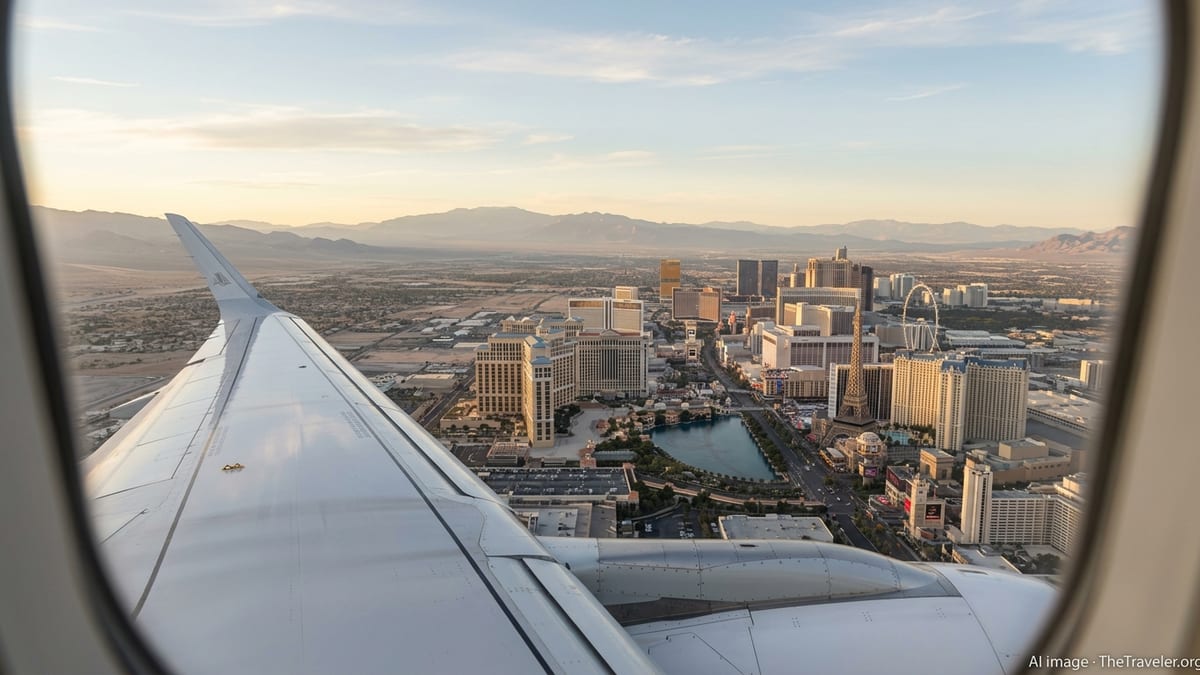
New Air Links Position Las Vegas as a National Gateway
Airlines are sharpening their focus on Las Vegas as a cornerstone of U.S. leisure travel, expanding schedules into Harry Reid International Airport at a time when domestic demand is gradually climbing. Preliminary federal data for 2025 shows more than 26.5 million passenger enplanements at Harry Reid, underscoring its position among the country’s busiest airports even as volumes remain slightly below recent peaks.
Reports from the airport indicate that 2025 closed with nearly 55 million total passengers, the third-highest annual tally on record and following two consecutive record years. The figures highlight Las Vegas as one of the country’s most resilient tourism markets, with airport operators signaling continued investments in modernization and planning for a supplemental airport to meet long-term demand.
Airlines are responding with new and restored routes that reinforce Las Vegas as a national gateway. Delta is expanding service around the 2026 Consumer Electronics Show, adding nonstop flights from additional U.S. hubs and boosting capacity from existing gateways to move tech travelers efficiently into the city. Other major carriers are likewise adjusting schedules to capture growing leisure and convention traffic.
Southwest Airlines, the largest carrier at Harry Reid International, has outlined plans to introduce or increase service on dozens of routes to and from Las Vegas through 2027. The company expects a record daily departure count in the market, with new links from a mix of large and mid-sized U.S. cities, further integrating Las Vegas into the country’s short-haul and medium-haul network.
Entertainment Investments Raise the Stakes on the Strip
Parallel to the air-service push, developers and operators are channeling billions of dollars into sports and entertainment infrastructure across the Las Vegas Valley. A proposed multibillion-dollar sports and entertainment district on the Strip would bring a large-scale soccer and concert stadium, envisioned as a year-round hub for major events and festivals, if it advances through planning and approvals.
Elsewhere, Bleutech Park Las Vegas has outlined plans for a technology-forward sports and gaming complex near the future Brightline West high-speed rail station. Public announcements describe an arena concept that aims to blend live events with immersive digital experiences and target potential professional basketball use later in the decade, signaling confidence that Las Vegas can sustain another marquee venue.
Existing resorts are also investing heavily in upgrades meant to keep visitor spending on the Strip. A multiyear, multibillion-dollar reimagining of The Venetian Resort is nearing completion, with renovated suites, refreshed casino and entertainment spaces, and a slate of new chef-driven dining concepts designed to appeal to higher-spend leisure and convention guests.
Additional capital is flowing into expansions at properties such as the M Resort Spa Casino, which recently added a new hotel tower and additional convention space. These projects aim to capture more group business and regional leisure trips, helping diversify Las Vegas visitation beyond weekend gaming travelers.
Residencies and Mega-Events Anchor Year-Round Demand
Las Vegas is also relying on a dense calendar of residencies and special events to smooth seasonal swings in demand. The city’s long-standing model of drawing visitors around entertainment names is evolving into a year-round, multi-venue ecosystem that supports airlines, hotels and local businesses.
The Sphere venue continues to attract global attention through high-profile residencies. Recent corporate disclosures and entertainment reporting note that artists such as Metallica have announced extended runs beginning in late 2026, while other acts are lengthening their engagements after strong ticket sales. The model concentrates visitors into multi-night stays, supporting higher room occupancy and ancillary spending across the Strip.
Traditional resort theaters are also adding star power. Caesars Palace and other Strip properties have announced new and returning residencies from established music acts into 2026, joining a roster that has increasingly turned Las Vegas into a touring destination in its own right. Local tourism promotion materials point to these residencies as key demand drivers, especially during typically softer travel periods.
Major sports and entertainment events add another layer of stability. The city is building on recent successes with professional football, motorsport and combat sports by hosting recurring fixtures on the national calendar, as well as welcoming showcase events in professional wrestling and baseball. This pipeline of programming supports airlines’ decisions to maintain robust capacity into Las Vegas even as some other U.S. leisure markets cool.
Travel Recovery Gains Pace but Remains Uneven
The renewed focus on Las Vegas comes as U.S. travel demand continues to heal from recent shocks but remains uneven across regions. Forecasts from national industry groups project domestic leisure travel spending will rise modestly in 2026 after solid growth in 2025, with urban destinations that offer a combination of entertainment, dining and events expected to outperform purely seasonal markets.
Public data for Nevada indicates that while Las Vegas visitor numbers in 2025 were below the record set in 2024, the city still ranked among the top-performing urban destinations in the country. Analysts note that a modest dip in overall visitors does not necessarily translate into weaker revenue, as resorts and airlines have focused on higher-yield travelers, premium events and longer stays.
National tourism reports suggest that the recovery trajectory may continue to vary by income segment and trip purpose. Rising costs, including airfares and lodging, have weighed on some discretionary travel, while corporate meetings and conventions have taken longer to return in certain sectors. Las Vegas, with its large convention infrastructure and aggressive event scheduling, is viewed as a bellwether for how quickly this segment can normalize.
Against this backdrop, the expansion of air service into Las Vegas is being watched closely by travel planners and regional tourism boards across the United States. The city’s ability to draw visitors from a wide catchment area, supported by competitive fares and an expanding slate of entertainment offerings, is seen as a potential catalyst for broader U.S. travel confidence.
Implications for Travelers and Competing Destinations
For travelers, the combination of new flights and headline entertainment is translating into greater choice and, in some cases, more competitive pricing. Additional nonstop options from secondary and mid-sized markets are shortening travel times to Las Vegas, while expanded schedules around major events are improving flexibility for both leisure and business trips.
At the same time, the concentration of investments in Las Vegas is putting pressure on competing destinations that rely on gaming, conventions or large-scale entertainment. Cities across the Southwest and beyond are monitoring how new venues, residencies and transport links on the Strip influence where Americans choose to spend their vacation and event budgets.
Industry observers note that the Las Vegas model of pairing aggressive air-service development with high-profile entertainment and sports investments could serve as a template for other U.S. cities seeking to accelerate tourism recovery. However, the scale of capital required, along with the city’s unique brand and existing infrastructure, makes direct replication challenging.
For now, the city’s bet on new routes and big-ticket entertainment appears to be paying off in renewed optimism. If current forecasts hold and planned projects stay on track, Las Vegas is positioned to remain a central force in the revival of U.S. travel over the next several years.