


More news on this day
The United Arab Emirates is tightening its grip on fast-growing Eurasian travel corridors as Etihad Airways and Uzbekistan Airways unveil a new codeshare partnership and direct Abu Dhabi–Tashkent services, promising smoother links to markets from India and Saudi Arabia to Kazakhstan and beyond.
Get the latest news straight to your inbox!
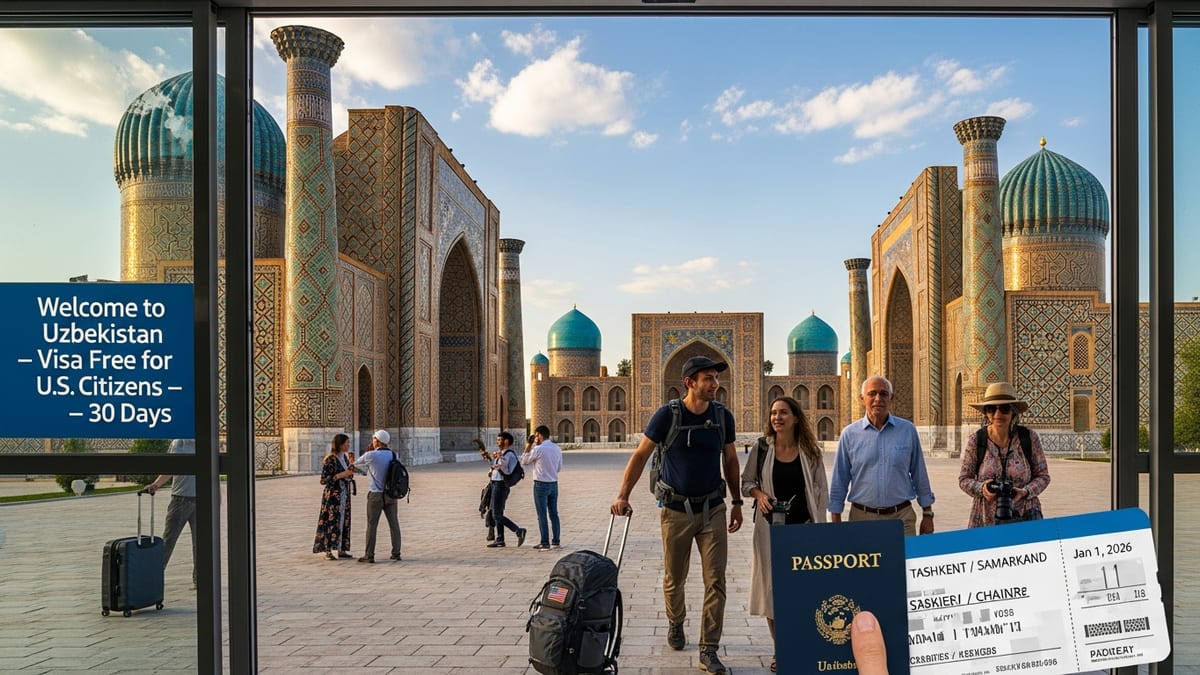
Strategic Codeshare Opens Up Central Asian Network
Etihad Airways and Uzbekistan Airways have launched a codeshare agreement that significantly broadens two-way connectivity between the Gulf and Central Asia. Publicly available information indicates that the partnership took effect in mid-May 2026, aligning with the rollout of Etihad’s new Abu Dhabi–Tashkent service later in the summer.
Under the arrangement, Etihad customers will be able to book single-ticket itineraries beyond Tashkent to a series of domestic Uzbek destinations on Uzbekistan Airways, including historic cities such as Samarkand and Bukhara, as well as other regional centers. In return, Uzbekistan Airways passengers will gain streamlined access to Abu Dhabi as a new long-haul gateway, building on the carrier’s existing daily services to Dubai.
Industry coverage describes the agreement as a step change in Central Asia’s air links with the Gulf, placing Uzbekistan more firmly on the radar of Middle Eastern, European and North American travelers who connect through Abu Dhabi. The codeshare also fits into a wider pattern of hub-and-spoke growth, with Tashkent positioned as a rising regional hub and Abu Dhabi reinforcing its status as a global transfer point.
The cooperation offers particular advantages for travelers from secondary Uzbek cities who previously faced complex routings to reach Gulf and Asian destinations. With Etihad codes now appearing on Uzbekistan Airways feeder flights, these passengers can connect to Abu Dhabi with coordinated schedules and aligned baggage and ticketing processes.
New Abu Dhabi–Tashkent Flights Anchor the Partnership
The codeshare is anchored by Etihad’s new nonstop service between Abu Dhabi and Tashkent, scheduled to commence in August 2026 according to route announcements and regulatory filings. Timetables published by aviation outlets show that the service will operate daily, adding capacity on top of existing low-cost operations on the city pair.
Reports from Uzbekistan’s aviation authorities indicate that formal approval for Etihad’s entry to the market was granted earlier, paving the way for the carrier to integrate Tashkent into its medium-haul network. The new service is part of a wider phase of growth from Abu Dhabi, during which Etihad has announced or launched multiple routes across Central and Eastern Europe, the Caucasus and Central Asia.
The route has strategic importance for both sides. For the United Arab Emirates, it strengthens Abu Dhabi’s competitive position against other Gulf hubs by giving passengers a direct option into Uzbekistan and, via the codeshare, onward to cities with increasing tourist and business appeal. For Uzbekistan, it adds a full-service Gulf carrier to a market that has so far been dominated by low-cost and regional operators.
Travel analysts note that schedule coordination will be key to the route’s success. The planned daily pattern should enable connections in Abu Dhabi to long-haul flights serving Europe, North America and the Asia–Pacific region, while also feeding returning traffic into Uzbekistan’s domestic network.
UAE Emerges as a Connector for India, Saudi Arabia, Kazakhstan and Beyond
The Etihad–Uzbekistan Airways collaboration comes as the UAE positions itself as a connector between fast-growing markets stretching from South Asia to Central Asia. In recent seasons Etihad has unveiled routes to cities such as Almaty in Kazakhstan and Medina in Saudi Arabia, while maintaining an extensive network across India’s major metros.
As a result, the new Abu Dhabi–Tashkent service effectively pulls Uzbekistan into a broader web of connectivity that links Indian business centers, Saudi Arabia’s religious and economic hubs, and Kazakhstan’s commercial capital. For travelers in India and the Gulf, itineraries that once required backtracking through European or Russian gateways can now be structured via a single Gulf stopover.
Industry publications highlight that this shift supports tourism and trade flows in multiple directions. Pilgrims and workers from Uzbekistan gain additional choices for reaching Saudi Arabia, Indian travelers can pair cultural tourism in Samarkand or eco-tourism in Uzbekistan’s mountainous regions with stopovers in Abu Dhabi, and Kazakh and Uzbek business communities benefit from shorter links to financial centers served by Etihad.
The UAE’s ambition to act as a bridge is further supported by parallel growth among Abu Dhabi-based low-cost carriers, which are expanding into South Asian and Caucasus markets. While these carriers are not part of the new codeshare, their presence increases the overall density of traffic through Abu Dhabi, making additional long-haul and regional services more commercially viable.
Uzbekistan Accelerates Aviation and Tourism Transformation
The partnership also reflects Uzbekistan’s broader aviation overhaul. Government-backed reforms have encouraged fleet modernization and the development of secondary cities, while Uzbekistan Airways has announced new routes to destinations in Kazakhstan, Turkey, South Asia and the Middle East in recent years.
Official press materials from the Uzbek carrier emphasize an ambition to turn Tashkent into a hub serving not only domestic markets but also transit flows between Europe, South Asia and East Asia. The new link to Abu Dhabi aligns with this strategy by adding a major Gulf hub to a growing list of partners that already includes regional neighbors and selected European airlines.
Tourism bodies in Uzbekistan have been promoting the country’s Silk Road heritage, mountain landscapes and cultural sites, and improved air access is seen as critical to sustaining visitor growth. By leveraging Etihad’s global sales channels and connecting traffic, the country aims to attract more travelers from North America, the Gulf and Southeast Asia, segments that often rely on network carriers and multi-stop itineraries.
Observers note that better connectivity also supports outbound tourism and labor mobility from Uzbekistan, whose citizens increasingly travel for study, work and leisure across the wider region. With more options routed through Abu Dhabi, travelers can compare fares and schedules across a wider mix of airlines and alliances.
Competitive Landscape and Future Growth Prospects
The Etihad–Uzbekistan Airways development arrives in a crowded competitive field. Other Gulf carriers have already built substantial networks into Central Asia, India and Saudi Arabia, while Turkish and regional airlines continue to vie for transfer traffic across Eurasia. The new codeshare and route launch signal Abu Dhabi’s intent to claim a larger share of this market.
Analysts tracking Etihad’s Journey 2030 strategy point out that Central Asia fits the airline’s focus on medium-haul markets with growing tourism and trade ties to the Gulf. The Tashkent launch complements previously announced services to destinations such as Almaty, Baku and Tbilisi, creating a contiguous corridor from the Caucasus through Central Asia that can be served by a common narrowbody or mid-size widebody fleet.
Further growth is expected to depend on how quickly demand materializes between Uzbekistan and long-haul markets such as Europe and North America. If load factors on the Abu Dhabi–Tashkent route and its domestic feed prove strong, industry commentary suggests that additional frequencies or seasonal capacity adjustments could follow, as well as deeper commercial cooperation between the two airlines.
For now, the new partnership underscores how the United Arab Emirates is extending its reach beyond traditional long-haul trunk routes, embedding itself in emerging markets from Uzbekistan and Kazakhstan to India and Saudi Arabia. As schedules ramp up toward August 2026, travelers across these regions are set to gain more options, shorter journey times and a wider choice of one-stop connections via Abu Dhabi.