


More news on this day
Taiwan High Speed Rail Corp is adding 176 extra train services over a six-day period in late September, expanding capacity ahead of a rare combined Mid-Autumn Festival and Teachers’ Day holiday that is expected to send millions of travelers across the island.
Get the latest news straight to your inbox!
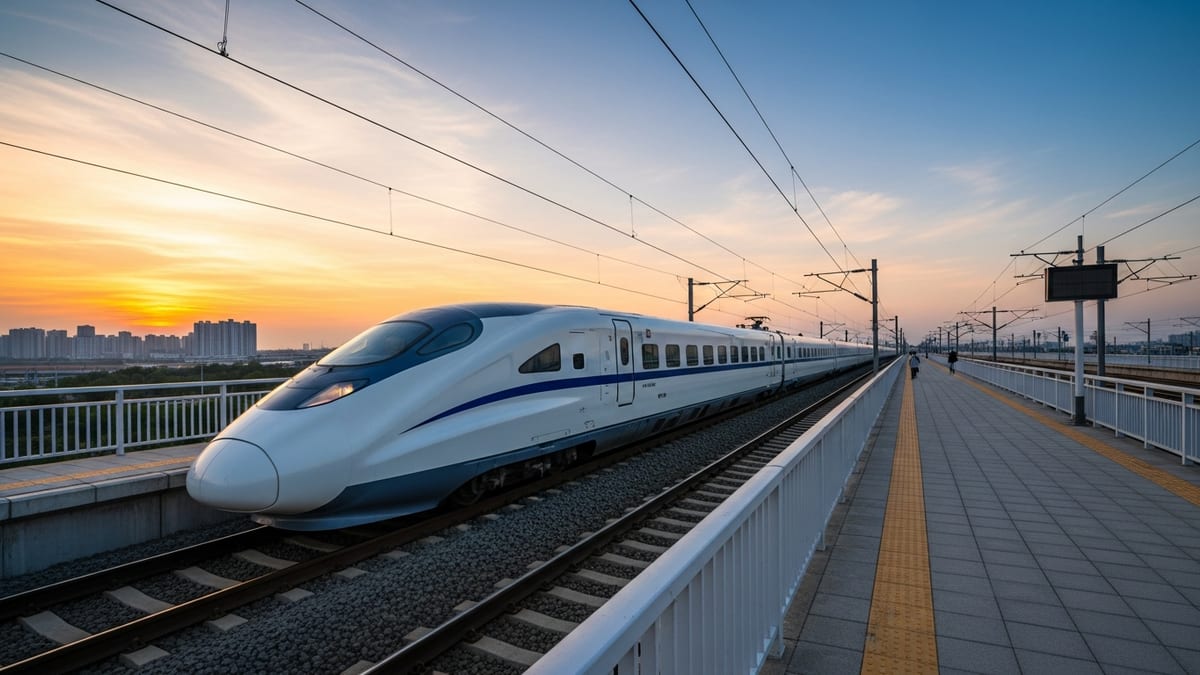
Expanded Holiday Timetable Targets September Travel Surge
According to recent coverage from Taiwan’s Central News Agency, Taiwan High Speed Rail Corp (THSRC) will operate 1,150 services between 24 and 29 September 2026, including 176 additional rides scheduled specifically to handle Mid-Autumn Festival and Teachers’ Day demand. The extra services are divided into 70 southbound and 106 northbound trains, reflecting historically heavier returns to northern cities at the end of the break.
The 2026 Mid-Autumn Festival falls on 25 September, while Teachers’ Day is observed on 28 September. With both dates clustering into one extended holiday window, transport planners anticipate compressed, high-intensity travel patterns rather than a staggered flow of journeys. Publicly available traffic forecasts for recent long weekends in Taiwan indicate that such consecutive holidays can drive highway traffic to around 1.3 to 1.4 times typical weekday volumes, pushing more travelers toward rail options to avoid congestion.
High-speed rail has become a central part of Taiwan’s national holiday transport strategy, complementing highway management measures and conventional rail services. The decision to layer 176 extra THSR trains on top of the regular timetable underscores the expectation that coastal cities and major urban centers, from Taipei and Taichung to Tainan and Kaohsiung, will see sustained peaks throughout the six-day period.
Historical data from previous Mid-Autumn weekends shows that northbound services at the end of the holiday can reach several hundred thousand passengers in a single day on THSR alone. Those patterns, combined with the additional Teachers’ Day break, have informed the current capacity plan aimed at preventing overcrowding and reducing the risk of last-minute ticket shortages.
Ticket Sales, Seating and Crowd Management
Publicly available information shows that tickets for the additional 176 services will be released through THSR’s standard channels, including the T-EX mobile app, the operator’s website, station ticket counters and ticket vending machines. Many convenience store chains across Taiwan also provide booking services, giving travelers multiple ways to secure seats without joining queues at stations.
Reports indicate that holiday trains will continue to feature a mix of reserved and unreserved cars, with between two and nine unreserved-seat carriages per train depending on the service. Unreserved tickets allow passengers to board within a defined section of the train but do not guarantee a seat, so riders are advised to monitor station information boards for carriage assignments and to arrive early during peak hours.
Crowd management will lean heavily on digital tools. In recent holiday periods, THSRC has partnered with major mobile platforms to publish graphical indicators showing estimated waiting times at each station, segmented into 20-minute ranges and color-coded to highlight less congested periods. Travelers can check these visuals via the T-EX app or associated lifestyle portals to time their arrival when crowds are thinner.
On the ground, station operating hours are typically extended around major holidays to accommodate early departures and late-arriving trains. Previous Mid-Autumn operations have included first departures before 6 a.m. at major hubs such as Nangang, Taipei and Zuoying, with ticketing halls kept open past midnight in some locations, allowing flexible travel across the 345-kilometer north-south corridor.
Millions on the Move for a Key Cultural Holiday
Mid-Autumn Festival, often referred to internationally as the Moon Festival, is one of Taiwan’s most important family-oriented holidays, traditionally associated with moon-gazing and outdoor barbecues. Travel demand is driven by a strong cultural emphasis on family reunions, with many residents returning from Taipei and other large cities to hometowns in central and southern Taiwan.
Transportation authorities’ summaries of recent holiday periods suggest that combined public transport and highway traffic for a Mid-Autumn long weekend can reach several million passenger journeys across the island. When multiple holidays cluster together, as in 2026, both long-distance and regional travel volumes tend to intensify, as residents use the window for both family visits and short leisure trips.
Past government forecasts for comparable long weekends have projected national freeway traffic volumes exceeding 110 million vehicle-kilometers per day at peak, prompting calls for travelers to shift from private cars to high-capacity rail. THSR’s expanded timetable is designed to absorb a significant share of that demand, particularly between the Greater Taipei area and popular leisure destinations such as Taichung, Chiayi and Tainan.
Experience from earlier Mid-Autumn and National Day periods also indicates that demand can spike unevenly across different days. Outbound southbound flows are typically concentrated on the eve of the main holiday, while return northbound travel is compressed into the final one or two days, a pattern that shapes the distribution of THSR’s 70 extra southbound and 106 extra northbound trains.
Planning Tips for Domestic and International Travelers
For Taiwan residents and visitors planning to use high-speed rail during the September holiday, publicly available guidance emphasizes booking as early as possible once the reservation window opens. Early reservations are frequently paired with promotional fares in other holiday periods, and while specific discount details for the 2026 Mid-Autumn break have not been fully outlined, past campaigns have included advance-purchase savings and student offers.
Travel analysts and local advisories recommend avoiding the heaviest departure and return waves where possible. For southbound journeys, that often means steering clear of the late afternoon and evening of the first full holiday day, while for northbound returns, lighter flows can sometimes be found during early morning or late-night periods on the final day. The high-frequency THSR timetable gives travelers options across a broad span of hours.
International visitors using THSR to reach cities such as Taichung or Kaohsiung during the festival period are encouraged to factor in station access time, as taxi queues and connecting local services can be busier than normal. With many urban residents staying in the city for barbecues and lantern events rather than leaving town, intracity transport can also experience pockets of congestion, particularly around riverfronts, parks and popular night markets.
Given the scale of anticipated travel, official traffic management plans also highlight the role of complementary modes, including Taiwan Railways’ conventional services and intercity buses. However, high-speed rail remains the most time-efficient option along the island’s western spine, which makes the 176 additional THSR trains a focal point of the broader national holiday mobility strategy.
High-Speed Rail’s Growing Role in Holiday Mobility
Since opening in 2007, Taiwan’s high-speed rail network has steadily increased its importance in managing peak holiday flows, complementing efforts to upgrade conventional rail fleets and reinforce highway infrastructure. Published historical data shows that THSR regularly adds significant numbers of extra services for major holidays such as Lunar New Year, Mid-Autumn Festival and National Day, aligning operations with long-term growth in passenger demand.
Past Mid-Autumn periods have seen the operator introduce more than 100 additional trains, alongside record-setting patronage days on major routes. The 176 extra services for the 2026 Mid-Autumn and Teachers’ Day holidays therefore represent a continuation and amplification of that capacity-building trend, informed by several years of experience with crowd patterns and booking behavior.
Looking ahead, THSRC has also pursued rolling stock upgrades and incremental timetable adjustments to further expand baseline capacity. While those longer-term investments sit outside the immediate holiday plan, they provide context for the 2026 measures, which rely on flexible deployment of existing trainsets and careful slot management on the busy north-south line.
For travelers, the practical impact is a denser timetable, shorter perceived wait times and a greater likelihood of securing preferred departure windows despite intense demand. As one of the most comprehensive seasonal adjustments in the network’s recent history, the addition of 176 extra trains underscores how central high-speed rail has become to keeping Taiwan moving during one of its most important annual holidays.
CNA: THSRC to add 176 rides for Mid-Autumn Festival, Teachers' Day holiday