


More news on this day
Tokyo’s Haneda Airport has launched a major terminal expansion featuring a new six-gate international facility, a strategic upgrade aimed at easing capacity pressures and supporting Japan’s record-breaking tourism boom.
Get the latest news straight to your inbox!
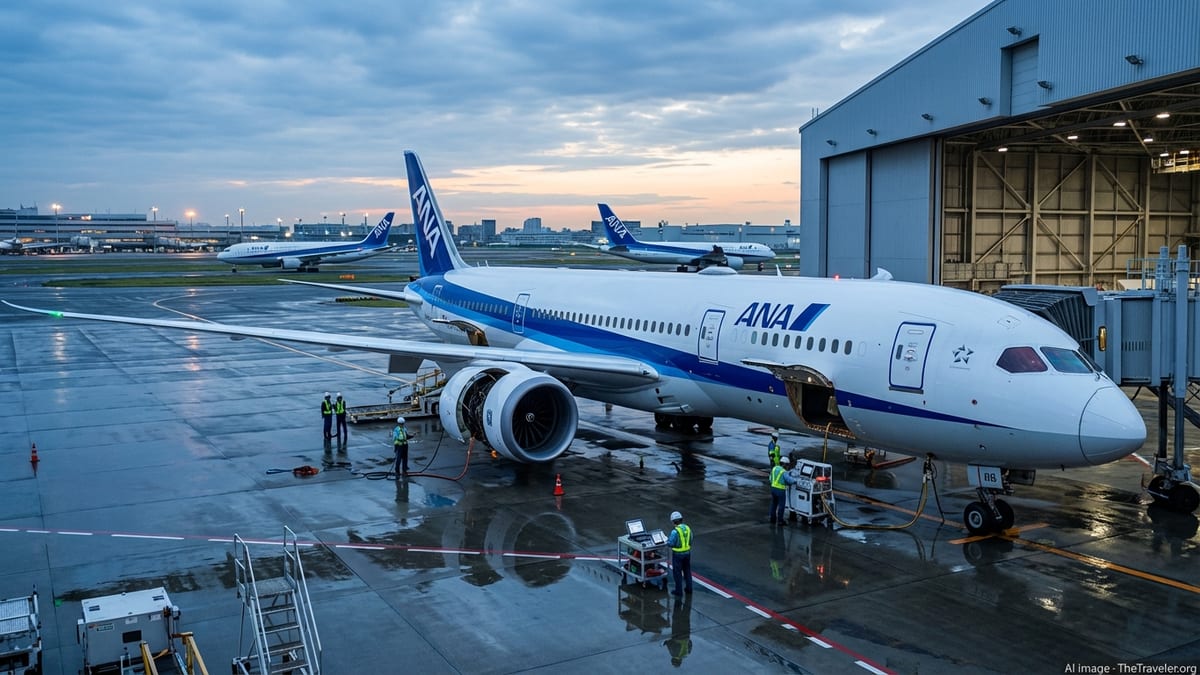
New Six-Gate Facility Extends Haneda’s International Reach
Publicly available information on Haneda Airport’s development program indicates that the latest expansion adds a six-gate satellite concourse to the international area, supplementing existing contact stands and remote bays. The new facility is designed to handle widebody aircraft on high-demand routes, particularly within Asia and to North America, giving airlines more flexibility in scheduling peak-time departures and arrivals.
The new gates form part of a broader international enhancement at Haneda’s Terminal 2, where dedicated international functions were introduced alongside the long-standing domestic operation. Airport operator materials describe a phased program that has steadily increased the number of international departures from Terminal 2 since 2024, with the new concourse providing additional contact gates to match growing slot allocations.
Layout diagrams shared in planning and investor documents show the concourse extending from the existing international pier, connected by secure airside walkways and equipped with dual boarding bridges at several stands. This configuration allows the facility to accommodate both large twin-aisle jets and smaller narrowbodies, enabling more granular matching of aircraft size to route demand.
Alongside the new gates, apron space and taxi lanes have been reconfigured to improve aircraft flow around the terminal complex. These airside changes are intended to reduce towing movements, shorten taxi times in congested banks, and support the tighter turnaround schedules that airlines increasingly require on competitive international routes.
Strategic Timing Amid Record Tourist Arrivals
The expansion comes as Japan records the strongest inbound tourism numbers in its history. Data released by the Japan National Tourism Organization shows that the country welcomed about 36.9 million international visitors in 2024, surpassing the previous pre-pandemic peak in 2019 and marking a year-on-year increase of more than 40 percent compared with 2023.
Analyses of this surge highlight several contributing factors, including a weak yen that has made Japan comparatively affordable for long-haul travelers, expanded air services into Tokyo, and pent-up demand after years of pandemic-related restrictions. Media coverage of the tourism rebound notes that spending by international visitors also reached new records, reflecting both higher arrivals and longer or higher-end stays.
Government planning documents outline ambitions to grow inbound tourism further toward a 60 million annual visitor target by 2030. In that context, Haneda’s new six-gate facility is positioned as part of the national gateway infrastructure needed to sustain double-digit growth in overseas arrivals, particularly from the United States, Europe, and high-frequency Asian markets.
While Narita Airport east of Tokyo continues to handle a large share of long-haul operations, Haneda’s closer-in location and expanding international capacity are seen in policy papers and industry commentary as critical to attracting time-sensitive travelers and premium traffic segments that favor quick access to central Tokyo.
More International Connectivity from a City-Center Hub
Airline route announcements over the past two years illustrate how Haneda’s growing international capacity is reshaping connectivity. U.S. and European carriers have added or restored non-stop services to the city-center airport, while Japanese airlines have shifted additional long-haul flights from Narita to Haneda in order to offer more convenient schedules and shorter surface-transfer times for business and leisure passengers.
For travelers, the new six-gate concourse translates into more flight options and, over time, greater resilience in peak seasons when demand for slots at Tokyo’s airports typically runs ahead of supply. Travel industry reports suggest that carriers are using the added gate resources to refine bank structures, tighten connections, and align departures with early-morning and late-night arrival waves from key markets.
Japan’s tourism authorities emphasize in strategic documents that easier access to regional cities is essential for spreading the benefits of visitor spending beyond Tokyo, Osaka, and Kyoto. Because Haneda is the primary domestic hub, the expansion of its international gates strengthens same-day connections between overseas flights and domestic services to regional destinations, which may encourage visitors to explore less-traveled parts of the country.
Industry analysis also points out that larger gate capacity at Haneda supports growing demand in premium cabins and from corporate contracts, whose travelers prefer the time savings of a city-adjacent airport. This, in turn, can help airlines sustain year-round service on routes that might otherwise be viable only in peak tourist seasons.
Infrastructure and Passenger Experience Upgrades
The six-gate expansion is accompanied by upgrades inside the terminal complex, including enlarged security and immigration zones, additional check-in counters and bag-drop positions, and expanded baggage claim areas. Planning documents and airport briefings describe these elements as essential to maintaining acceptable processing times as flight volumes grow.
Wayfinding and connectivity between terminals have also been a focus. Haneda provides free shuttle buses, rail links on the Tokyo Monorail and Keikyu Line, and an underground passage between Terminals 1 and 2, according to the airport’s official passenger information. These links are designed to keep minimum connection times competitive even as more long-haul flights are routed through the airport’s domestic-international complex.
Future surface-access improvements, such as the planned Haneda Airport Access Line being developed by JR East, are set to strengthen rail connectivity to central Tokyo. According to published project outlines, the new line will eventually offer direct services to major urban hubs, reducing travel times to and from the airport and distributing passenger flows across multiple rail corridors.
Within the new concourse itself, design illustrations emphasize unobstructed sightlines, natural light, and retail and dining options positioned along passenger flows. These features reflect a broader trend among major hub airports to integrate commercial space and local branding into gate areas, aiming to capture additional spending from international travelers during connection and dwell times.
Balancing Growth, Capacity and Overtourism Concerns
As Haneda expands, policymakers and local communities are increasingly focused on balancing the economic benefits of rising visitor numbers with growing concerns about overtourism in popular districts of Tokyo and other destinations. International media coverage has highlighted crowding in well-known neighborhoods and heritage sites, prompting discussion of measures such as visitor caps, timed-entry systems, and promotional campaigns that steer travelers toward lesser-known areas.
Tourism strategy papers in Japan underline the need for transportation hubs to support this rebalancing by offering convenient links to secondary cities and rural regions. Haneda’s enhanced international capacity, when combined with its dense domestic network, makes it a key tool for dispersing visitors more evenly and encouraging itineraries that extend beyond traditional urban hotspots.
Stakeholder analyses suggest that aviation infrastructure enhancements like the new six-gate facility will remain central to Japan’s efforts to hit long-term tourism goals while addressing environmental and social pressures. Greater use of fuel-efficient aircraft, potential adoption of sustainable aviation fuel, and operational efficiencies that reduce ground delays are cited as ways airports and airlines can mitigate the impact of rising traffic.
With global competition for long-haul passengers intensifying, the latest expansion at Haneda positions Tokyo to defend and expand its role as one of Asia’s primary aviation gateways. As visitor numbers climb, the performance of this new facility will be closely watched as an early indicator of how effectively Japan can match infrastructure capacity with the next phase of its tourism growth.
Tokyo International Air Terminal Co. business overview
Japan National Tourism Organization visitor statistics and press releases