


More news on this day
A new generation of travelers is riding Laos’s modern rail link between Vientiane and Luang Prabang, turning a once arduous overland journey into a fast, comfortable route that increasingly includes visits to unexploded ordnance (UXO) education centers along the way.
Get the latest news straight to your inbox!
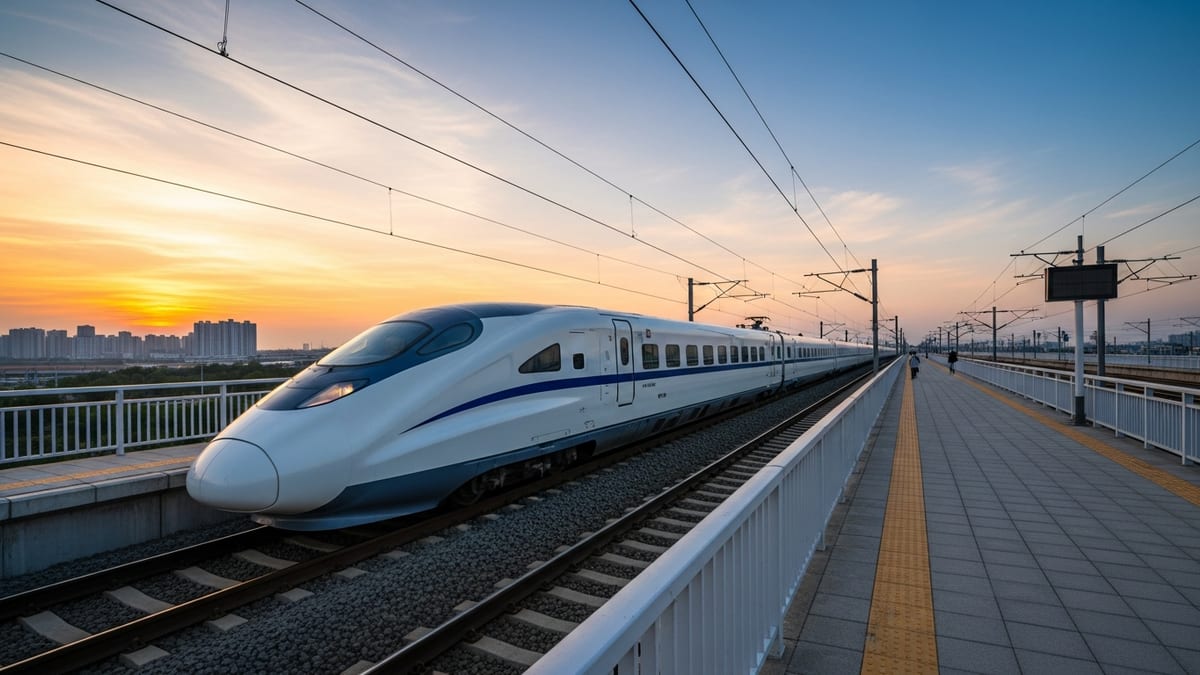
High-Speed Rail Reshapes Travel Between Capital and Heritage City
The Boten–Vientiane section of the Laos–China Railway has shifted how visitors move between the Lao capital and Luang Prabang, the country’s best-known UNESCO-listed destination. Rail transport only became prominent in Laos after the cross-country line opened in December 2021, finally providing a continuous standard-gauge link from Vientiane through Luang Prabang toward the Chinese border at Boten and on to Kunming.
Publicly available information shows that what used to be a six to eight hour road journey on winding mountain highways in the rainy season can now take around two to two and a half hours by high-speed train, depending on the service. Travel guides and recent traveler reports indicate multiple daily services between Vientiane and Luang Prabang, with intercity electric multiple unit trains operating specifically on this corridor.
Railway operators and official statistics from both Laos and China describe the line as a “golden route” for tourism, with over 70 million passenger trips recorded across the wider China–Laos Railway by early 2026. The route strings together major tourism hubs including Vientiane and Luang Prabang, and connects to hundreds of scenic and cultural sites along its alignment.
Local and international tourism briefings note that the rail link has supported the recovery of Laos’s visitor economy since borders reopened in 2022, by lowering travel times and costs between key destinations. Luang Prabang’s station has emerged as one of the busiest hubs on the route, reinforcing its role as a gateway for both leisure travelers and those seeking to understand the country’s war history and its UXO legacy.
UXO Education in Luang Prabang Draws Rail Travelers
Luang Prabang is not only known for its Buddhist temples and Mekong sunsets; it is also home to one of Laos’s most prominent UXO education facilities. The UXO Lao Visitor Center, operated by the Lao National Unexploded Ordnance Programme, opened in 2009 and presents the impacts of decades of aerial bombardment and the ongoing effort to clear unexploded ordnance.
According to the center’s own materials, visitors can see remnants of cluster munitions, learn about the scale of contamination that has made Laos one of the most heavily bombed countries per capita in history, and view survivor stories and documentaries. The center is located in central Luang Prabang, near the Souphanouvong Monument, and is often highlighted in travel coverage as a recommended stop for those who want to look beyond the city’s architectural beauty.
Recent travel articles and online discussions point out that the new rail connection has made it easier to integrate a UXO-focused visit into short itineraries. Travelers arriving by morning train from Vientiane can check into accommodation, visit central temples and markets, and still have time the same day to spend several hours at the UXO Lao Visitor Center.
Sector reports from the UXO community indicate that foreign visitors, tour groups and students are frequent guests at the Luang Prabang center. For many, the journey by sleek high-speed train into the country’s mountainous north contrasts sharply with the stories of villagers living with buried ordnance, creating a powerful frame for understanding development, infrastructure and post-conflict recovery in Laos.
From Landlocked to “Land-Linked” Tourism Corridor
For decades, Laos was frequently described as landlocked and relatively hard to reach, particularly for overland travel beyond the main highways. Studies on the Laos–China Railway and connectivity in the Mekong region describe the line as a shift toward becoming “land-linked,” opening up cross-border tourism and trade corridors that run through the country instead of around it.
A World Bank analysis of the railway’s tourism potential notes that long-distance rail connections are likely to be a key driver of visitor growth, especially from China, where high-speed train travel is already well established. The report highlights Vientiane and Luang Prabang as primary beneficiaries, recommending that tourism operators adapt services and payment systems to better serve regional travelers who arrive by rail.
National tourism statistics released after the opening of the railway show that arrivals rebounded more quickly in rail-connected destinations than in more remote provinces. Official tourism summaries for 2022 credit the railway with cutting typical Vientiane–Luang Prabang round-trip times from up to five days by road to as little as two days when using the new trains, making shorter stays and weekend breaks more feasible.
Within Laos, the corridor is increasingly marketed as a continuous journey combining urban culture in Vientiane, outdoor activities around Vang Vieng and heritage, food and UXO education in Luang Prabang. Travel agencies and online platforms highlight the possibility of purchasing rail tickets in the capital and then arranging onward walking tours or guided visits to the UXO center and nearby villages.
Balancing Visitor Growth with Heritage and Safety
The rail-fueled rise in visitor numbers has prompted new attention to how Laos manages both its cultural heritage and its UXO-affected landscapes. Urban planning documents for Luang Prabang refer to the influence of the high-speed railway, noting that improved access could increase tourist arrivals while also compressing average length of stay if travelers use the line for shorter trips.
Local development and conservation strategies emphasize the need to channel tourism growth into activities that respect the city’s UNESCO World Heritage status and support communities that have lived with UXO risk. In this context, UXO visitor centers are presented as educational spaces that encourage responsible travel rather than purely sightseeing-focused itineraries.
Analysts of the rail project have also pointed out that the construction phase itself had to navigate heavily contaminated areas in northern Laos. Public reports and sector briefings explain that UXO clearance was required along sections of the route, underscoring how war legacies intersect with modern infrastructure projects. For some travelers, visiting a UXO center after riding the line offers perspective on the hidden work behind building such a railway in formerly bombed terrain.
Tourism stakeholders interviewed in published research argue that as Laos becomes more connected by rail, integrating UXO awareness into mainstream visitor experiences can help sustain clearance and risk education programs. The Vientiane–Luang Prabang rail segment, with its combination of fast access and significant historical sites, is emerging as a focal point for this form of reflective travel.
Practical Rail Access to UXO-Focused Experiences
Travel guides and recent user reports describe a relatively straightforward rail journey between Vientiane and Luang Prabang. Tickets can be purchased at station ticket offices and dedicated sales points in the capital, with multiple departures each day. Standard and first-class seating are available, and journey times for direct services typically hover around two hours.
At the Vientiane end, the main railway station lies outside the city center, requiring a short taxi or bus transfer. In Luang Prabang, the station is also located several kilometers from the historic core, with tuk-tuks, taxis and minivans meeting arriving trains. From there, visitors can reach most guesthouses and hotels in under half an hour, and the UXO Lao Visitor Center can be accessed on foot or by short local ride from central accommodation.
Publicly available information from Laos’s tourism authorities and travel portals recommends checking current schedules, as train timings and services can change with seasonal demand. Cross-border services toward China are often busier during holidays, but domestic trains between Vientiane and Luang Prabang remain a key option for those planning a UXO-focused visit without needing to fly.
As ridership grows, the rail link is increasingly framed in regional media and policy documents as more than a transport success story. For travelers who choose to include UXO education centers in their itineraries, the line between Vientiane and Luang Prabang is becoming a route not just through dramatic landscapes, but also through the country’s living history of conflict, clearance and recovery.
Laos–China Railway travel guide
Tourism Laos coverage of China–Laos Railway