


More news on this day
Etihad Airways is emerging as one of the fastest-rising long-haul carriers, with new-generation widebody jets, record passenger numbers and a rapidly expanding network positioning the United Arab Emirates for a fresh phase of global connectivity.
Get the latest news straight to your inbox!
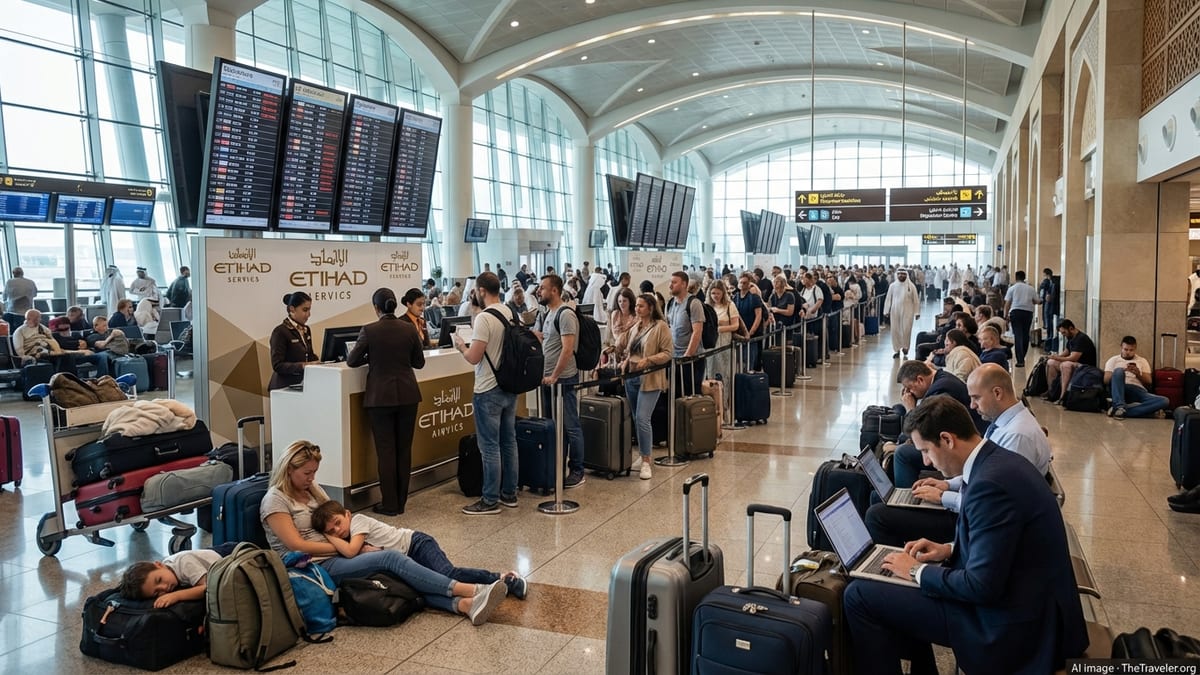
From Crisis Losses to Record Profits and Surging Capacity
Publicly available information shows that Etihad Airways has moved from deep pandemic-era losses to its strongest financial performance on record, powered by aggressive capacity restoration and network growth. The airline reported carrying around 18.5 million passengers in 2024, more than 30 percent higher than the previous year, as its strategy to rebuild and then outpace pre-crisis operations gathered speed.
Traffic statistics for late 2024 indicate that load factors and overall passenger volumes have risen sharply compared with 2022, underlining how far the Abu Dhabi-based carrier has progressed from the downturn. Reports indicate that Etihad’s turnaround plan, launched after consecutive annual losses in 2020 and 2021, is now being reinforced by a robust rebound in long-haul demand across its core markets in Europe, Asia and North America.
The pace of recovery means the airline is no longer simply matching its former footprint but increasingly surpassing it. Capacity growth, measured through additional seats and flights, has been directed through Abu Dhabi’s Zayed International Airport, reinforcing the UAE’s ambition to consolidate its position as a super-connector between East and West.
Industry analysis suggests that Etihad’s performance places it among the Gulf region’s most dynamic carriers in terms of post-crisis growth, even as it continues to refine its cost base and withdraw older aircraft types in favor of more efficient models.
Game-Changing Widebody Orders Reshape the Fleet
Central to Etihad’s strategy is a sweeping renewal and expansion of its widebody fleet. Fleet data compiled by aviation trackers in early 2026 lists more than 120 aircraft in operation, including a significant number of Boeing 787 Dreamliners, Airbus A350-1000s and restored Airbus A380s serving high-demand trunk routes.
In late 2025, Airbus announced that Etihad had become a new customer for the A330neo, at the same time increasing its commitments for the A350-1000 and adding the A350 freighter. Industry reports describe the combination of A330-900, A350-1000 and A350F as a pivotal shift that deepens the airline’s reliance on fuel-efficient, high-range widebodies designed to lower per-seat emissions and operating costs.
Alongside its Airbus expansion, Etihad continues to grow its Dreamliner fleet. Aviation news outlets have highlighted recent deliveries of additional Boeing 787-9 aircraft, following earlier resumption of 787-10 arrivals, as part of a broader plan to double the overall fleet by the end of the decade. These long-range jets, configured with the carrier’s updated premium cabins, underpin services to Europe, North America, East Asia and Australia.
Analysts note that changes to Etihad’s legacy widebody order book, including adjustments to earlier Boeing 777X commitments, appear to align the fleet more closely with near- and medium-term market realities. The emphasis now falls on flexible, lower-risk widebody families that can profitably serve both mature and emerging long-haul markets from Abu Dhabi.
Network Expansion Turns Abu Dhabi into a Super-Connector
While the fleet has been modernized, Etihad has also been rapidly redrawing its route map. According to published coverage of the airline’s announcements, at least ten new destinations are scheduled to join the network during 2025, taking total points served from the low 80s to the 90s and widening coverage across North America, North Africa and Asia.
Recent network updates show a distinct push into Africa, where Etihad has added or expanded services to cities such as Addis Ababa, Algiers and Nairobi, backed by new joint ventures intended to link African markets more tightly with the Gulf and onward to Asia. Additional frequencies are being deployed across key Middle Eastern and European gateways, enhancing two-way flows of leisure and business travelers.
The expansion is equally visible in Asia, where new and returning destinations in Southeast and East Asia have been launched in quick succession. Reports from aviation industry outlets describe coordinated schedule planning that enables smooth one-stop journeys between secondary Asian cities and major European or North American markets via Abu Dhabi.
Etihad’s published route map for 2025 depicts a dense web of connections radiating from the UAE capital to more than 70 countries. This growing breadth supports the country’s broader strategy to attract visitors, investors and high-value transit traffic, while also offering UAE residents a greater array of nonstop and one-stop options than before the crisis.
Cabin Innovation and Next-Generation Passenger Experience
Etihad’s fleet renewal is being matched by an overhaul of the onboard experience, particularly on long-haul widebody routes where competition among Gulf carriers is intense. Industry features highlight upgraded business-class suites on the 787 and A350-1000, designed with direct aisle access, privacy doors and large 4K screens, as well as refreshed cabins on returning A380s deployed to flagship destinations.
In parallel, the airline has pushed premium concepts into shorter sectors through the introduction of the Airbus A321LR, which entered service in 2025 with lie-flat business pods and a dedicated first-class section. Although technically a narrowbody aircraft, this model supports the wider hub strategy by feeding long-haul flights with high-yield passengers from regional markets, while promising a widebody-style experience on medium-haul services.
Observers note that this consistent cabin philosophy across aircraft types helps differentiate the Abu Dhabi carrier in a crowded long-haul marketplace. By standardizing a high level of comfort and connectivity, Etihad aims to encourage passengers to treat a transfer in the UAE not as an inconvenience but as an integral part of a premium journey.
Digital enhancements, including upgraded inflight entertainment systems and expanded onboard connectivity, further support Etihad’s efforts to appeal to both leisure and corporate travelers. Publicly available information indicates that the airline is positioning these investments as a key element of its “Journey 2030” blueprint to triple passenger numbers over the next several years.
Rewiring Global Flows Through Abu Dhabi
The convergence of new widebody aircraft, a broader route network and enhanced cabins is altering the pattern of global air flows through the UAE. With more fuel-efficient long-haul jets now deployed across its schedule, Etihad is able to open thinner routes and add frequencies on existing city pairs, improving connectivity while maintaining cost discipline.
Travel data published by the airline and industry analysts suggests that the Abu Dhabi hub is seeing stronger sixth-freedom traffic, as travelers from Europe, South Asia, East Asia and Africa connect through the UAE en route to each other’s regions. Additional widebody bellyhold capacity and new dedicated freighters are also reshaping Etihad’s cargo operations, supporting e-commerce and high-value logistics corridors.
For the wider United Arab Emirates, the airline’s resurgence offers strategic benefits that extend beyond aviation. Stronger air links are closely tied to tourism growth, foreign direct investment and the development of sectors such as events, education and healthcare, which depend on reliable international access.
As Etihad continues to take delivery of new widebody jets and roll out additional destinations through 2025 and beyond, travel industry observers expect its role in connecting continents to keep expanding. The carrier’s trajectory suggests that the UAE is not only restoring its pre-crisis position as a global crossroads but is actively redefining how passengers and goods move between the world’s major regions.