


More news on this day
Europe’s new biometric border regime is triggering hours-long queues at major airports just as the peak holiday season begins, with aviation leaders warning that current delays are “not bearable” and urging Brussels to ease or suspend some checks over the summer.
Get the latest news straight to your inbox!
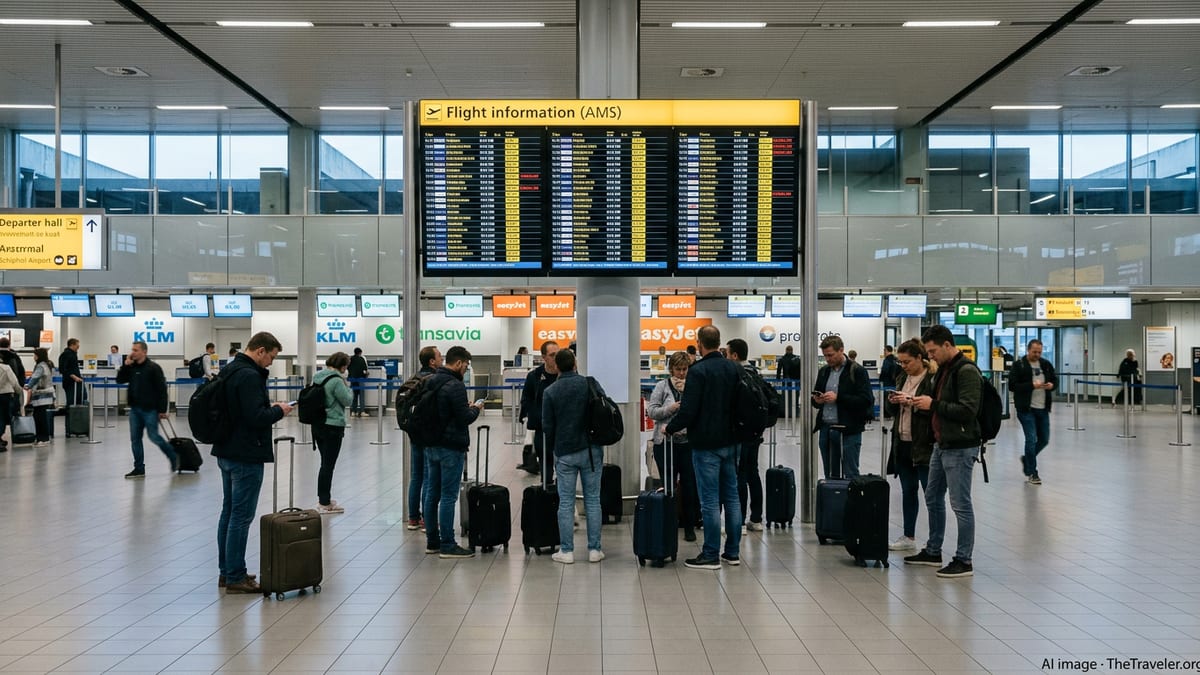
Biometric border overhaul collides with peak travel season
The European Union’s new Entry/Exit System, which fully replaced manual passport stamping for most non-EU visitors in April 2026, is at the centre of the disruption. The digital platform records travellers’ entries and exits and stores biometric data, including fingerprints and facial images, for millions of non-EU nationals crossing the Schengen Area’s external borders.
According to published European Commission documentation, the system is intended to tighten security and improve tracking of overstays, while eventually shortening processing times at busy airports and land crossings. In practice, reports from across the continent indicate that first-time registrations are taking far longer than anticipated, particularly at major holiday gateways in Spain, Portugal, France, Italy and Greece.
Recent coverage from European and international outlets describes queues stretching to five or even six hours at some airports during peak periods, with passengers missing onward connections and flights departing with many booked travellers still stuck at border control. Aviation industry briefings suggest that processing times have increased by up to 70 percent in some locations compared with the pre-EES regime.
One leading airport boss has publicly warned that the current conditions are “not bearable” as Europe moves into the busiest travel months of July and August, arguing that the system is putting unsustainable pressure on staff and facilities that were already operating close to capacity.
Aviation sector urges temporary suspension of checks
Europe’s main airline and airport associations have mounted an unusually coordinated campaign in recent days, calling on the European Commission to introduce emergency flexibilities before passenger numbers peak. In an open letter to Commission President Ursula von der Leyen, groups representing airports, flag carriers and low-cost airlines described the situation as a “critical point” and warned that border control facilities risk being overwhelmed.
The organisations argue that, without further intervention, long queues and repeated missed connections will become routine for millions of non-EU visitors this summer. They are pressing for member states to be allowed to suspend or drastically scale back biometric registrations whenever passenger volumes exceed border control capacity, at least for the core holiday period in July and August.
Industry data cited in recent reports indicate that European airports are expected to handle around 40 million more passengers in July and August than in the previous two months, amplifying the impact of even modest slowdowns at border control. Aviation leaders contend that, while many airports have invested in extra staff and infrastructure, those measures cannot fully offset the additional time needed to collect biometrics from every non-EU traveller.
An earlier joint statement from airport and airline bodies in February already warned that, without what one association chief described as “urgent corrective measures,” border waits of four hours risked becoming a regular feature of European travel. The latest appeals suggest that those warnings are now being borne out in real-time at some gateways.
EU institutions defend system but acknowledge ‘teething problems’
Publicly available information from Brussels indicates that EU institutions continue to defend the Entry/Exit System as a crucial upgrade for border security and migration management. Officials point to years of planning and investment, and argue that the majority of border crossing points are coping with the transition, even if some hotspots are experiencing acute strain.
Commission briefings and the latest State of Schengen report emphasise that member states have been granted limited flexibility to suspend biometric collection when waiting times become excessive, and that technical and staffing support is being offered to countries facing bottlenecks. The Commission maintains that the overall impact of the new system is “limited” at most airports, while acknowledging that congestion of flights at certain times of day is compounding the delays.
However, industry representatives counter that these measures are no longer sufficient. They note that queues of up to five hours go far beyond initial expectations and argue that the system is currently failing to deliver its core promise of more efficient border crossings. Some national airport operators have previously called for a slower, phased rollout or for full-scale implementation to be delayed until after the 2026 summer season.
Border agencies and airport operators are also contending with confusion among travellers, many of whom arrive unaware that they must undergo biometric registration on first entry under the new rules. Reports describe instances of passengers being funnelled into the wrong queues or needing to repeat registration when data could not be retrieved, adding further pressure at already crowded terminals.
Patchwork responses across member states
National responses to the unfolding disruption vary widely. Some countries have leaned heavily on the flexibility provisions written into the EES regulations, prioritising the flow of passengers over completing full biometric enrolment during peak hours. Others have pushed ahead with comprehensive checks, even at the cost of longer lines and missed flights.
Media coverage from southern Europe indicates that airports serving popular Mediterranean resorts have been among the most affected. Reports highlight particularly long queues at hubs in Spain, Italy and Portugal, where seasonal traffic from the United Kingdom and other non-EU countries surges during school holidays. At times, departure gates have closed while large numbers of passengers were still in border control queues.
In some cases, mixed messaging has added to the confusion. Statements from political leaders or local officials about exemptions for certain nationalities have later been clarified or contradicted, leading travellers to arrive with unrealistic expectations about fast-track treatment. Industry commentary suggests that a lack of consistent communication across member states has undermined confidence in the system and complicated frontline operations.
Behind the scenes, airport operators state in public documents that they are reconfiguring terminals, reallocating staff and adjusting flight schedules where possible to relieve pressure points. Yet they also warn that infrastructure changes cannot be executed overnight, and that the combination of record demand, new technology and tight staffing leaves limited room for manoeuvre this summer.
Travellers advised to prepare for longer waits
With European institutions so far resisting calls for a blanket suspension of the Entry/Exit System, aviation experts quoted in recent coverage suggest that travellers should brace for intermittent disruption throughout the season. Peak days around weekends and major holiday changeovers are seen as particularly vulnerable to lengthy queues at border control.
Consumer groups and travel industry observers are increasingly advising passengers from non-EU countries to allow additional time at departure and arrival airports, especially when connecting to onward flights within Europe. Recommendations commonly include checking airline guidance before travel, monitoring airport advisories and building in generous buffers between flights to reduce the risk of missed connections.
Some commentators note that the most painful delays tend to occur on a traveller’s first trip under the new regime, when full biometric enrolment is required. Once registered, subsequent crossings should theoretically be faster, although anecdotal reports indicate that data retrieval issues and inconsistent use of automated e-gates continue to cause irregular delays.
Aviation leaders stress in public statements that they remain supportive of the long-term goals of the Entry/Exit System, but argue that immediate adjustments are needed so that the coming weeks do not define travellers’ perceptions of European air travel for years to come. For now, the message from many airports is clear: summer border queues are likely to remain a feature of flying to the EU, and for some passengers they may still feel anything but bearable.