


More news on this day
Flights at Houston’s William P. Hobby Airport gradually returned to normal late Sunday after a reported general security threat prompted an evening ground stop, delays for arriving and departing aircraft, and visible law enforcement activity around the terminal area.
Get the latest news straight to your inbox!
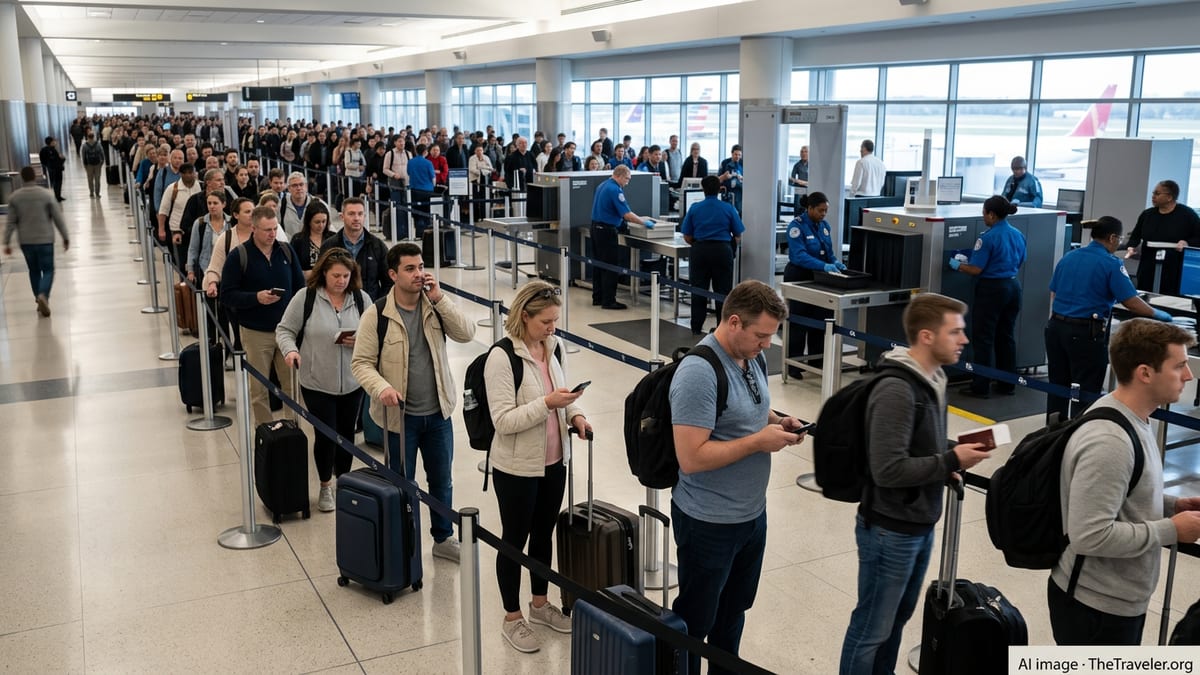
Brief disruption follows reported “general hazard” alert
Publicly available information from broadcast and social media coverage indicates that the disruption began early Sunday evening, when a security concern linked to a specific aircraft led to a precautionary response at Hobby Airport. Local television reports described the initial alert as a “general hazard,” a phrase commonly used in regional emergency communications for potential safety or security issues that require investigation.
Flight-tracking data and passenger accounts posted online show that multiple inbound flights were held on the tarmac after landing, while some departures were temporarily paused. Several travelers reported remaining on board for extended periods as ground movements slowed and aircraft waited for clearance to reach gates.
Despite the heightened activity, information available from Houston Airports and airline status pages indicates that the airfield itself remained open. Operations continued at a reduced pace while the situation was assessed, contributing to rolling delays across several evening departures and arrivals.
The nature of the reported threat has not been fully detailed in public statements as of late Sunday, but local coverage and traveler descriptions consistently reference a single aircraft being isolated so that security teams could conduct additional checks.
Flights back on track as evening progresses
By later in the evening, Hobby’s flight schedule showed signs of stabilizing, with most airlines posting only residual delays rather than ongoing holds. Online arrivals and departures boards reflected a pattern of pushed-back departure times and late inbound flights, but few outright cancellations connected to the incident.
Passengers posting on social platforms reported that pilots were eventually cleared to taxi to gates and resume normal deplaning. Some travelers described missing tight connections or arriving in Houston significantly behind schedule, while others indicated that their flights ultimately departed with only moderate delays once ground operations restarted.
Data from federal aviation status resources showed Hobby listed with general arrival and departure delays during the height of the incident. As the response wound down, those notations shifted back toward typical Sunday-evening congestion levels, suggesting that the impact was relatively contained in duration.
For many travelers, the most visible effects were on-the-ground waiting times rather than long-term schedule disruptions, with some flights departing after extended holds but still operating the same day.
Heightened security posture at one of Houston’s key airports
William P. Hobby Airport is one of two major passenger gateways serving the Houston region and is particularly significant for domestic and short-haul international traffic. Public documents show that dedicated airport police, federal security personnel, and specialized explosive-detection teams operate on-site around the clock to respond to any potential threats affecting the terminal or airfield areas.
Recent planning and operational reports emphasize that Hobby, like many busy urban airports, maintains detailed protocols for responding to suspicious items, disruptive passengers, or threats relayed to aviation authorities. These measures are designed to prioritize safety, which can result in rapid pauses to normal operations while assessments take place.
On Sunday, that posture translated into what witnesses described as a visible but controlled response: additional patrol vehicles in restricted areas, certain aircraft parked at remote stands, and interior sweeps reported inside parts of the terminal. Available coverage suggests that these actions were precautionary and limited to a specific zone rather than a full terminal evacuation.
Such responses are not unprecedented. Historical summaries of operations at Hobby and other U.S. airports show that potential threats, unattended items, or vague warnings can trigger short-lived disruptions that are resolved once security teams complete their evaluations.
Travelers face delays but major cancellations largely avoided
For passengers already in the air or queued for departure on Sunday evening, the incident translated primarily into uncertainty and extended waiting. Several described running out of onboard entertainment while parked away from the gate, and others recounted being informed only that a general security concern required a temporary hold on all movements.
Airline status pages and aviation tracking platforms, however, indicate that the overall scale of disruption at Hobby remained limited compared with widespread weather or air-traffic-control events. While some flights departed more than an hour late, many were able to operate with shorter delays once the immediate security checks concluded.
Travel industry observers note that the timing of the disruption on a Sunday, typically a busy travel day, could have led to more severe knock-on effects if the ground stop had persisted for several hours. Instead, flight operations appeared to recover within the evening, leaving airlines to manage scattered delays rather than large waves of rebookings.
According to published timetables, most carriers plan to operate regular schedules at Hobby on Monday, with only minor adjustments expected as aircraft and crews return to normal rotations.
Advice for upcoming passengers through Hobby Airport
In the aftermath of Sunday’s incident, aviation and travel resources continue to emphasize standard guidance for passengers using Hobby Airport. Travelers scheduled to fly in the next 24 hours are encouraged to monitor airline apps and text alerts closely, as gate and departure times may shift while carriers realign aircraft.
Publicly available information shows that federal aviation status tools list any active ground delays, while Houston Airports provides projected checkpoint wait times and terminal updates. Experts generally recommend arriving at the airport earlier than usual following any significant disruption, since security and boarding queues can fluctuate as operations normalize.
For those connecting through Hobby, travel-planning sources suggest building in extra buffer time, particularly for evening departures that may be operating behind schedule. Passengers with tight onward connections or important same-day plans are advised to check rebooking options in advance in case of lingering delays.
While Sunday’s reported general threat created an unwelcome interruption for many travelers, the swift resumption of flights underscores how Hobby Airport’s layered security and operational systems are structured to investigate potential hazards, restore regular traffic, and keep one of Houston’s primary air gateways functioning for domestic and international passengers.