


More news on this day
More than 100 easyJet passengers found themselves unexpectedly stranded in Milan for days after new EU biometric border checks created gridlocked queues that prevented them from boarding a Manchester-bound flight, spotlighting growing concerns about Europe’s digital border rollout.
Get the latest news straight to your inbox!
Four-Day Ordeal Highlights Human Cost of a Digital Border
According to published coverage, easyJet flight U2 1864 from Milan Linate to Manchester departed on a recent Sunday with only a fraction of its booked passengers on board after long lines built up at passport control. Reports indicate that more than 120 UK-bound travellers were still stuck in border queues while the aircraft left with around three dozen people on board.
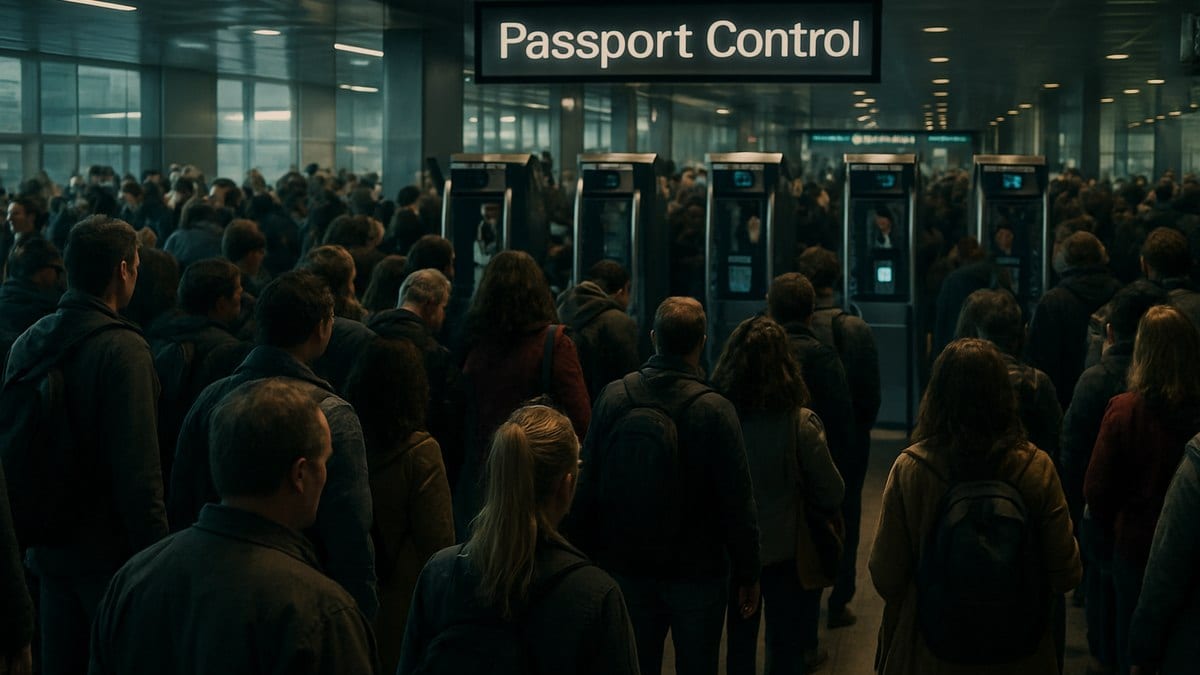
Individual accounts shared in media reports describe a chaotic scene in the non-Schengen departure area, where passengers attempting to clear exit checks under the European Union’s new Entry/Exit System were held in lines lasting up to three hours. Some travellers reportedly felt unwell in the crush, while others watched the time for boarding come and go with little clear information about what would happen if they missed the flight.
For at least one passenger, the disruption translated into an enforced four-day stay in Milan while searching for an alternative way home. Published reports describe travellers spending hundreds or even thousands of pounds on last-minute accommodation, replacement flights from other Italian airports and overland travel in an effort to return to the United Kingdom after their original journey plans collapsed.
Social media posts and comments collated in news coverage suggest that many stranded passengers were holidaymakers facing work and family commitments back home. With school terms and job schedules already fixed, some reported having to negotiate emergency time off while also trying to navigate unfamiliar consumer and passenger-rights rules in a foreign country.
How the EU Entry/Exit System Triggered Chaos in Milan
The incident in Milan is one of the first widely reported mass disruptions linked directly to the operational rollout of the European Union’s Entry/Exit System, known as EES. Introduced to tighten border controls for non-EU nationals entering and leaving the Schengen area, the scheme replaces traditional passport stamping with a digital register of travellers.
Under EES, eligible non-EU passengers are required to submit biometric data such as fingerprints and facial images alongside passport details at the border when they enter the Schengen zone for short stays. Once enrolled, that data is expected to be reused for subsequent journeys for a limited number of years, reducing the need for repeated full registrations. In practice, however, recent reports from several European hubs suggest that technical and staffing issues are slowing the process.
At Milan Linate, initial implementation appears to have collided with a busy travel weekend and a high proportion of UK passengers requiring first-time biometric capture. Publicly available information indicates that border booths struggled to handle the additional processing stages within existing staffing levels, leading to bottlenecks that spread across the non-Schengen departure hall.
While airports and border agencies manage the EES process, the consequences were quickly felt in the airline operation. The easyJet flight to Manchester reportedly had to depart within its allocated take-off slot, leaving the majority of its booked passengers on the wrong side of passport control through no direct fault of their own.
Airline and Passenger Rights Under Scrutiny
The Milan episode has reignited debate over where responsibility lies when government-run border systems derail airline schedules. Passenger-rights specialists cited in recent analyses note that European Regulation 261, which governs compensation for delays and cancellations, was designed before complex digital border checks became part of the travel landscape.
Because the root cause in Milan appears to have been state-administered border processing rather than an operational decision by the carrier, commentators suggest that it may be difficult for stranded travellers to claim standard compensation. Some legal experts argue that such events may be treated as extraordinary circumstances, potentially limiting cash payouts even when the financial impact on customers is severe.
At the same time, consumer advocates point out that airlines still have obligations to offer assistance, including rebooking and basic care such as refreshments and, in some cases, overnight accommodation. Reports from Milan describe a patchwork experience in which some passengers obtained onward travel relatively quickly while others faced days of uncertainty and rising costs.
The complexity of connecting journeys adds another layer. Travellers who had booked separate tickets, or who were flying home after onward rail or bus trips, may find that only part of their itinerary is covered under EU rules, leaving gaps that must be filled out of pocket. The Milan disruption has therefore become a case study in how digital border failures can expose grey areas in long-established consumer protection frameworks.
Warning Signs for Summer as EES Rollout Widens
Industry commentary in recent days has framed Milan Linate as an early stress test for Europe’s new border regime, raising questions about readiness ahead of the peak summer travel season. Trade bodies representing airlines and airports have previously cautioned that without sufficient resources and public communication, introducing biometric checks for millions of non-EU visitors could produce widespread bottlenecks.
Analyses in specialist travel media note that other major tourist gateways, including airports in Spain, France and the Netherlands, are also beginning to register longer queues as EES equipment and procedures come online. If the system continues to rely heavily on manual processing by border officers rather than pre-enrolment tools, observers warn that long waits could become common at popular holiday hubs.
The Milan events have also prompted discussion about how much warning passengers have received. While some governments and airlines have updated travel advisories to encourage earlier arrival at airports, coverage suggests that many leisure travellers remain unaware of how much extra time to build in for biometric registration, particularly when connecting from another flight within the Schengen area.
Travel analysts say that unless operational changes are made quickly, a scenario similar to the Milan easyJet disruption could be repeated across the continent during late spring and summer, coinciding with bank holidays and school breaks. That prospect is focusing attention on whether border authorities can accelerate processing while still meeting the security objectives that prompted the introduction of EES.
Practical Lessons for Travellers Using EU Airports
For passengers planning trips to or through the Schengen area, the Milan incident offers several immediate takeaways. First, travellers holding UK and other non-EU passports may wish to allow significantly more time than before to clear border controls, especially if they have not yet been registered in the EES database.
Second, recent coverage highlights the particular vulnerability of tight connections. Even when travellers arrive at the airport within the recommended timeframe, lengthy queues at passport control can eat into buffer time for boarding, as seen in Milan when passengers found themselves stuck between security and the departure gate while their aircraft prepared to leave.
Third, experts interviewed in consumer-facing reports advise that passengers should familiarise themselves with their contractual rights under EU 261 and any additional protections offered by their travel insurer. Keeping receipts for hotels, meals and replacement transport purchased during an unplanned stay can be important if a claim is later pursued.
Finally, analysts note that this early phase of EES implementation is likely to be volatile, with conditions varying widely between airports and even between different times of day. For now, those flying with carriers such as easyJet on busy leisure routes may wish to monitor airport reports closely, plan conservative margins for border formalities and be prepared for itineraries that do not always run as originally scheduled.