


More news on this day
More than 120 easyJet passengers were stranded in Milan after being trapped in queues for new biometric border checks, while their nearly empty flight to Manchester departed without them, raising fresh questions over Europe’s rollout of high tech border controls.
Get the latest news straight to your inbox!
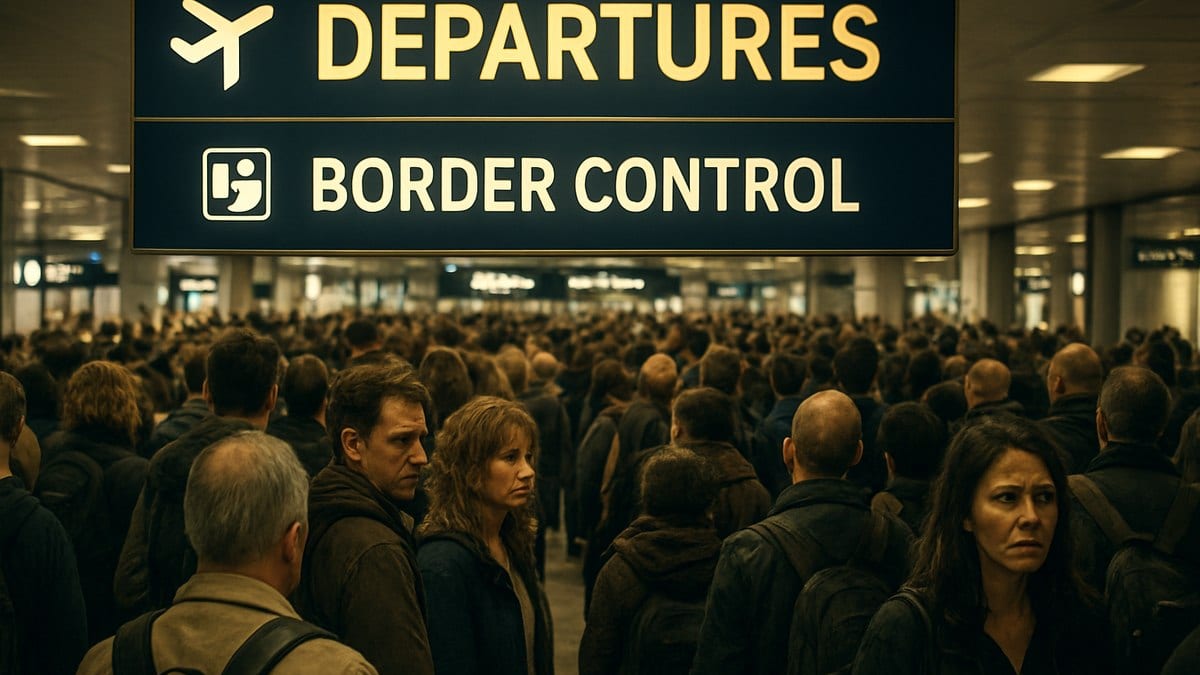
Hours Long Queues at Milan Linate as EES Bites
The disruption unfolded at Milan Linate Airport on Sunday 12 April 2026, when passengers bound for Manchester arrived several hours before departure but became stuck in gridlocked lines at passport control. Reports indicate that the bottleneck was triggered by the European Union’s new Entry Exit System, or EES, which records fingerprints and facial images for non EU nationals entering and leaving the bloc.
Travelers described queues that stretched across the departures hall and moved at what some accounts called a crawl, with only a limited number of manned booths and biometric capture stations processing a full wave of evening departures. Several outlets reported that up to three hours were needed to clear border checks, even for passengers who had reached the airport well in advance of their flight.
As the departure time approached, the easyJet service to Manchester was held for a period but could not wait indefinitely because of crew duty limits and slot constraints. When it finally left, published coverage indicates that just a few dozen passengers were on board, while more than 120 others were still trapped behind the biometric bottleneck.
Images and testimonies shared with news organisations and passenger advocacy sites showed families, solo travelers and business passengers left airside, faced with the immediate task of finding new flights home and last minute accommodation in one of Italy’s most expensive cities.
Empty Seats in the Air, Stranded Passengers on the Ground
According to multiple reports, the Manchester bound flight departed Milan Linate with around 30 to 40 passengers on board, leaving the majority of ticketed travelers behind despite their early arrival at the airport. Aviation rights platforms cited figures of roughly 122 people who failed to make it through border control before the gate closed.
For those left on the ground, the immediate priority was rebooking. Publicly available information shows that some stranded travelers were offered same day or next day alternatives to Manchester where seats were available, along with meal vouchers and limited hotel support. Others reported struggling to secure replacement flights for several days because of high spring demand, eventually turning to other airlines at much higher last minute fares.
Accounts gathered by broadcasters and travel media describe passengers sleeping in hotels far from the airport, rearranging work commitments in the United Kingdom and facing additional costs that quickly ran into hundreds of pounds. At least one traveler recounted being unable to find an easyJet seat for four days, leaving them effectively marooned in Milan while their biometric registration and missed flight continued to cast a shadow over their trip.
Online discussion forums and social media posts amplified the story, with many users questioning why an aircraft was permitted to depart with so many empty seats while ticketed passengers remained stuck in a government controlled queue a few hundred metres away.
New EU Entry Exit System Under Intense Scrutiny
The Milan incident has quickly become one of the most visible early flashpoints in the EU’s transition to biometric borders. The Entry Exit System, which is gradually replacing manual passport stamping for non EU visitors, is intended to strengthen security, automate record keeping and reduce opportunities for overstays. In practice, the first weeks of full operation have exposed serious pressure points in airport infrastructure and staffing.
Industry groups representing airports and airlines have already warned of the risk of exactly this type of disruption, citing concerns that processing times at border control could increase sharply as officers capture fingerprints and facial images for millions of travelers. A joint statement from European aviation bodies this month pointed to passenger waiting times of two to three hours at some airports, missed flights and knock on effects for flight schedules.
Reports from across the continent suggest that preparation and implementation vary widely between airports. Some hubs have invested heavily in automated kiosks and additional staff, while others are working with older layouts and limited space for new equipment. Milan Linate, a compact city airport handling significant traffic on short haul routes, appears to have struggled to absorb the extra time needed for EES checks during a busy travel period.
Travel analysts note that the underlying technology is not unique, as biometric border controls are already in use in regions such as North America and parts of Asia. The challenge in Europe lies in applying a harmonised system across multiple countries, legal frameworks and airport designs while maintaining passenger throughput during peak holiday seasons.
Who Is Responsible When Borders Block the Gate
The Milan Linate episode has also reignited debate about where responsibility lies when state run border systems cause passengers to miss flights. Passenger rights specialists point out that under current European air passenger regulations, airlines are typically liable for compensation when cancellations or long delays are within their control, such as technical faults or crew issues.
In this case, legal experts quoted in specialist media suggest that claims may be complex because the root cause appears to be government operated border checks rather than airline operations. Some advisory sites argue that passengers may still have grounds to seek reimbursement for extra costs, while others caution that outcomes could differ case by case and may ultimately hinge on how regulators interpret the interaction between border control failures and airline obligations.
The situation has fueled broader questions about whether airlines should delay departures when a large proportion of passengers are known to be queuing at passport control, and whether airports and border agencies should provide clearer, real time information to both carriers and travelers when new systems are causing major delays.
Aviation commentators observe that as long as the EES infrastructure and processes remain uneven, similar disputes over accountability are likely to recur at other European airports, particularly during the upcoming summer peak when terminals will be operating close to capacity.
Travelers Urged to Build in Extra Time and Check Airport Readiness
In the wake of the Milan disruption, travel advisors are urging passengers from the United Kingdom and other non EU countries to allow significantly more time at departure airports within the Schengen area. Several consumer and travel outlets now recommend arriving at least three hours before short haul flights, and even earlier at locations where EES rollout is known to be causing long queues.
Experts also suggest that travelers keep a close eye on airport and airline updates, as some hubs may temporarily adjust guidance, open additional border lanes or prioritise certain departures to ease backlogs. Paying attention to gate announcements and moving promptly to passport control once a gate is published may help reduce the risk of being caught in a late surge of passengers.
For now, the Milan Linate episode stands as a stark early warning of the potential for Europe’s new biometric frontier to collide with everyday travel plans. As more travelers register their details and the system beds in, pressure may ease. Until then, passengers appear to be paying the price in lost time, unexpected expenses and missed flights that, as in Milan, sometimes take off almost empty.