


More news on this day
A Ryanair flight has become the focus of growing criticism after reports indicated the aircraft departed a French airport nearly empty, leaving 192 ticketed passengers stranded at the terminal following confusion over boarding and gate procedures.
Get the latest news straight to your inbox!
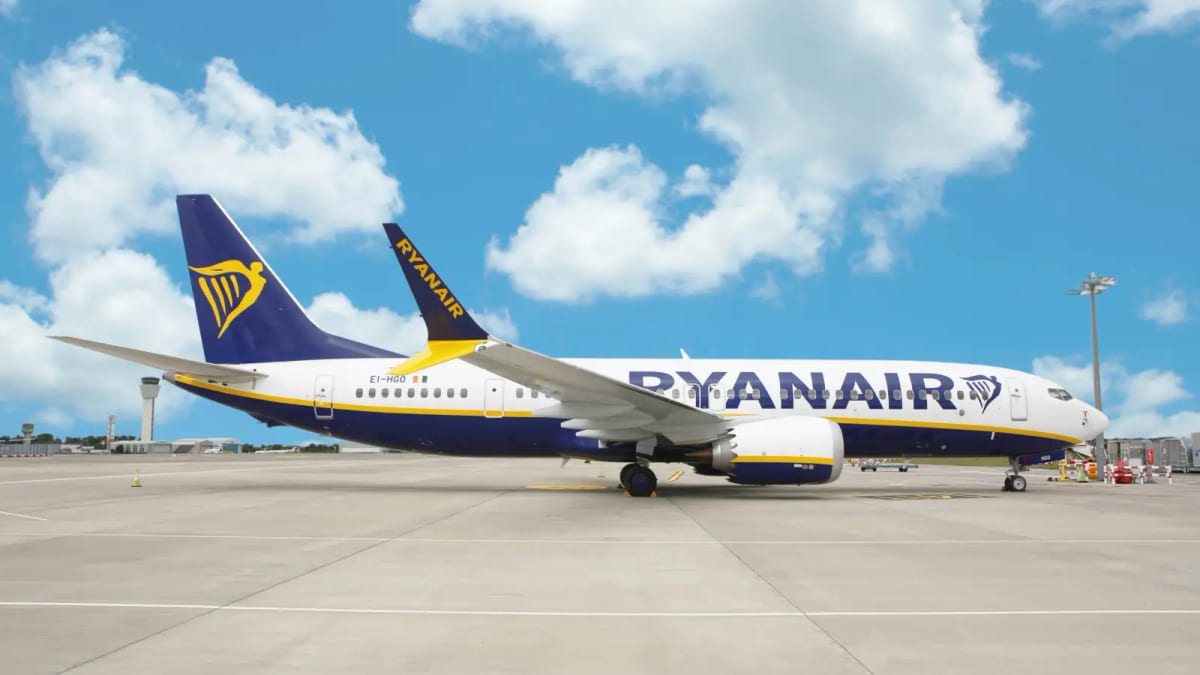
Reports Describe Empty Jet and Full Departure Lounge
According to multiple media accounts and passenger testimonies shared online, the incident unfolded at a French regional airport when travelers arrived at the gate to find boarding already closed, despite many having cleared security and holding valid boarding passes. The Ryanair aircraft then reportedly pushed back and departed with only a small number of passengers on board, while the majority remained in the terminal.
Accounts circulating on social and traditional media describe a scene of growing frustration as travelers realized the jet they expected to board was already taxiing for departure. Some passengers said they had been queueing in airport processing areas when the flight status changed, leading to confusion about whether final boarding calls had genuinely been communicated clearly and in time.
Publicly available information indicates that the flight in question had 192 booked passengers who were ultimately left behind. The number on board when the aircraft departed has not been independently confirmed, but media coverage consistently characterizes the jet as leaving “almost empty,” a description that has intensified criticism of both the airline and airport handling of the situation.
Ryanair has not issued a detailed public timeline of the events, but the carrier typically states in similar cases that boarding deadlines are prominently displayed and that passengers are required to be at the gate well ahead of departure time.
Questions Raised Over Airport Processes and Staffing
The episode has renewed scrutiny of how passenger flows are managed at French airports, particularly during busy travel periods when security and passport control queues can quickly build. Recent coverage of air travel in Europe has highlighted how bottlenecks at border checkpoints and understaffed control points can cause passengers who arrived in what they believed was good time to miss flights even while aircraft depart with significant spare capacity.
Travel industry observers note that the French aviation system has already been under pressure from a combination of high seasonal demand, staff shortages, and broader operational challenges across European airspace. Past disruptions, including air traffic control issues and strikes, have left thousands of passengers facing cancellations or diversions, contributing to a perception that the system remains fragile under strain.
In this latest Ryanair case, reports suggest that some passengers were still moving through airport formalities when the gate closed, raising questions about coordination between airport management, ground handling staff, and the airline’s own teams. Analysts say that when such gaps occur, the result can be a breakdown in communication in which travelers receive little or no real-time guidance about the risk of missing their flight.
Commentary in the travel sector also points out that low cost carriers tend to operate on tight turnaround schedules, leaving limited flexibility to delay departure for late-arriving passengers. Critics argue that this business model can clash with infrastructure realities at some regional airports, where processing capacity may lag behind demand at peak times.
Passenger Rights and Compensation Under EU Rules
The situation has also refocused attention on what protections are available to air travelers when a flight departs without them, even if the aircraft itself operates as planned. Under European Union regulations on air passenger rights, compensation typically hinges on whether a flight is delayed or cancelled, rather than on whether individual passengers successfully board.
Legal specialists in aviation note that missed departures caused by long security or border queues, or by passengers not reaching the gate before closure, are usually treated differently from cancellations initiated by the airline. In many cases, travelers may be offered rebooking options or may claim certain forms of assistance, but they do not automatically qualify for the fixed compensation amounts often awarded in cases of significant delay or outright cancellation.
Advocacy groups have argued that incidents where large numbers of ticketed passengers are left behind while an aircraft leaves nearly empty highlight a grey area in the regulatory framework. They contend that when airport or systemic factors contribute to passengers being effectively unable to access the gate in time, the burden should not fall entirely on travelers who believed they had complied with recommended arrival times.
For now, people affected by the Ryanair incident are understood to be seeking clarifications on their entitlements, including the possibility of refunds, alternative flights, or coverage of additional accommodation and transport costs incurred as a result of being stranded in France.
Ryanair’s Record and Ongoing Friction in the French Market
The episode comes against a backdrop of longstanding friction between Ryanair and parts of the French aviation sector. In recent months, publicly available reports have highlighted the airline’s decisions to withdraw or scale back operations at several French regional airports, citing what the carrier describes as uncompetitive taxation and cost structures.
At the same time, industry data and airline statements show that France has frequently featured among the countries with the highest number of air traffic control and operational delays affecting Ryanair flights. The carrier has repeatedly criticized the impact of airspace disruptions over France on its wider European network, framing these issues as a central challenge to punctual, low fare operations.
Despite this tension, Ryanair continues to carry large volumes of passengers to and from French destinations, particularly on leisure and visiting-friends-and-relatives routes. The airline’s strong presence means that operational missteps at French airports, whether related to staffing, ground handling, or communications, can quickly ripple through the travel ecosystem and draw widespread public attention.
Observers say the sight of an almost empty budget carrier jet departing while nearly two hundred would-be passengers remain in the terminal is especially striking because it cuts against the image of consistently full flights that has long underpinned Ryanair’s business model.
Calls for Clearer Communication and Better Contingency Planning
Following the incident, travel commentators and consumer advocates have stressed the need for clearer communication to passengers at every stage of the airport journey. They argue that digital tools, public address systems, and staff at checkpoints all need to convey consistent, real-time information when boarding deadlines are at risk, especially if queues build in areas that passengers cannot easily bypass.
Analysts suggest that airlines and airports should jointly review how late-running passengers are handled, particularly in cases where large groups are affected. Potential measures include better coordination between gate teams and security, earlier deployment of staff to identify travelers on imminent departures, and contingency plans that allow for short, targeted extensions of boarding where safe and operationally feasible.
The Ryanair case in France is likely to feature in ongoing conversations about passenger experience across European air travel, a sector that has faced repeated stress tests from the pandemic recovery, labor disputes, and infrastructure constraints. Aviation specialists say that while not every disruption can be avoided, incidents that leave aircraft seats empty while travelers watch from the terminal erode public confidence in the system’s fairness and predictability.
For the 192 passengers reportedly stranded, the consequences were immediate and personal: unplanned nights in hotels, missed connections, and additional costs. For airlines and airports, the episode adds to mounting pressure to demonstrate that lessons are being learned and that similar scenes can be prevented as Europe heads into its next busy travel season.