


More news on this day
Airports and airlines across Europe are warning of mounting queues, missed connections and disrupted trips as new European Union border checks bed in just weeks before the main 2026 summer holiday season.
Get the latest news straight to your inbox!
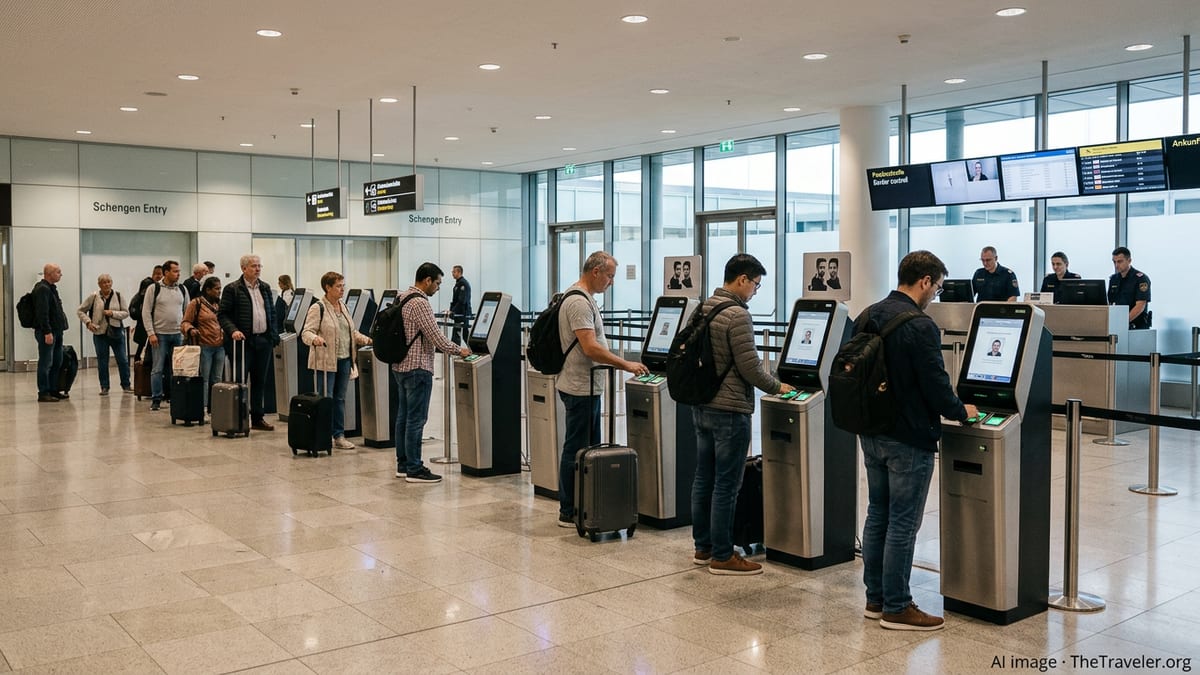
New entry-exit rules reshape border controls
The European Union’s Entry/Exit System, a biometric border database for non-EU travellers, became fully operational at all external Schengen borders in April 2026. The system replaces passport stamping with electronic registration, recording the time and place of each entry and exit along with fingerprints and facial images for most short-stay visitors from outside the bloc.
According to published information from EU institutions, the scheme is designed to tighten security, automate some checks and make it easier to spot overstays in the long term. In the short term, however, the extra data capture at manual booths and new self-service kiosks is lengthening each individual check, particularly for travellers who are registering in the system for the first time.
Airport and airline associations in Europe have repeatedly flagged that the transition is happening at the same time as a strong rebound in international travel demand. Industry analyses suggest that this combination is putting pressure on passport control areas just as passenger numbers climb toward, and in some cases surpass, pre-pandemic peaks.
Reports from major hubs including Lisbon, Rome, Madrid, Barcelona and Berlin indicate that non-EU passengers are now being advised to factor in substantially longer processing times at border control compared with previous summers.
Queues stretch to hours at key holiday gateways
Travel coverage from multiple European outlets over recent weeks has highlighted delays at a growing list of airports that serve as gateways to popular summer destinations. At some Schengen hubs, airport managers and airline executives have reported waits of one to three hours at border checks for non-EU passengers during busy periods.
Industry bodies representing airports in Europe have stated that, in peak traffic waves, the new checks have increased processing times by well over half compared with traditional manual passport stamping. In some worst-case scenarios, waiting times of several hours have been reported, prompting concerns about missed flights, overcrowding in arrivals halls and knock-on disruption throughout the day’s flight schedules.
In Italy, media reports indicate that Rome’s airports have warned of the risk of “chaos” during the high season, citing recurring technical glitches with the new system and the volume of passengers who still need initial biometric registration. Similar accounts from Spain, Portugal and parts of France describe long queues forming even before the core summer school holidays begin in late July and August.
British travellers have been particularly affected, as they are now treated as non-EU nationals at Schengen borders following Brexit. Several UK-based carriers have begun advising customers returning from European destinations to arrive three hours ahead of departure to reduce the risk of missing flights because of bottlenecks at passport control.
Airlines and airports push for flexibility
Frustration within the aviation sector has been building through the spring. Airports Council International Europe and leading airline groups have jointly called for a review of how the system is being implemented during the busiest travel months. Public documents from these organisations argue that the current configuration of kiosks, staffing levels and data capture procedures is not yet robust enough to absorb peak-season volumes without severe disruption.
Some airport operators have requested the power to temporarily suspend full biometric enrolment at times of acute congestion, reverting to faster traditional checks to clear backlogs. They argue that the priority during the initial phase of the summer should be to maintain passenger flow, particularly at terminals with constrained space where long static queues can quickly create safety and crowding risks.
Low-cost carriers, which rely on tight turnaround times and operate a large share of intra-European leisure routes, have also publicly warned of what they describe as unacceptable delays at certain Schengen border points. In some cases, flights have reportedly departed with significant numbers of booked passengers still stuck at passport control, with the disruption then carrying over to later services as aircraft and crews fall out of position.
While the European Commission has described the system as an important security upgrade, industry groups are pressing for more operational flexibility, clearer contingency plans and closer coordination between border police, airports and airlines during the coming peak weeks.
Knock-on effects for summer travel plans
The delays at border checks are feeding into a wider pattern of uncertainty for travellers heading to Europe this summer. Travel agents and consumer organisations report an increase in enquiries about how much extra time to allow at departure and transfer airports, especially for itineraries involving tight connections between non-Schengen and Schengen flights.
Passengers who need to change terminals and clear border control between flights are considered particularly vulnerable to missed connections if queues stretch beyond an hour. Industry analyses warn that even a modest increase in missed onward flights can ripple through the network, leading to higher rebooking volumes, pressure on accommodation near airports and added strain on customer service channels.
Some tourism boards and local business groups in popular destinations have expressed concern that headlines about multi-hour waits at airports could deter last-minute bookings from long-haul markets. While there is no clear evidence yet of a significant drop in demand, analysts note that travellers may pivot toward destinations within their own regions or choose itineraries that avoid complex connections through the most congested hubs.
At the same time, consumer advocates are reminding travellers that EU air passenger rights rules continue to apply where delays or missed connections are attributable to airlines or handling partners, although the classification of disruption linked to border control processes can be complex.
What travellers can do ahead of peak season
As the main school holiday period approaches, public guidance from airlines, airports and travel organisations converges around a similar set of practical steps. Passengers are being urged to check airline recommendations for arrival times at the airport, which may now be longer than in previous years for flights departing from or connecting through Schengen countries.
Non-EU travellers are being advised to ensure that passports are valid well beyond the length of their stay, to keep documents easily accessible in queues and to complete any advance forms or declarations requested by carriers before arriving at the airport. Industry guidance also suggests allowing more generous connection times when booking itineraries that involve crossing the external Schengen border between flights.
Travel experts note that conditions can vary widely between airports depending on terminal layout, staffing and how far the new technology has been rolled out. Even so, with reports of repeated congestion in some key hubs, the overall message for visitors heading to Europe in the coming weeks is to anticipate longer waits at border checks and to build extra time and flexibility into their plans.
With the summer rush only just starting, how quickly the system stabilises will be closely watched by airlines, airports and tourism businesses that rely heavily on smooth cross-border travel during the peak season.