


Flight delays and cancellations in Europe can turn a dream trip into a logistical mess, but they can also trigger valuable compensation under EU Regulation 261/2004 and UK air passenger rules. A growing ecosystem of flight claim companies promises to handle the paperwork and legal wrangling for you, typically on a no win, no fee basis. Among them, EUclaim is one of the older, more established players. This review looks at how EUclaim really performs once you compare it side by side with big names like AirHelp, Flightright and Skycop, using current 2026 information and real-world traveler scenarios.
Get the latest updates straight to your inbox!
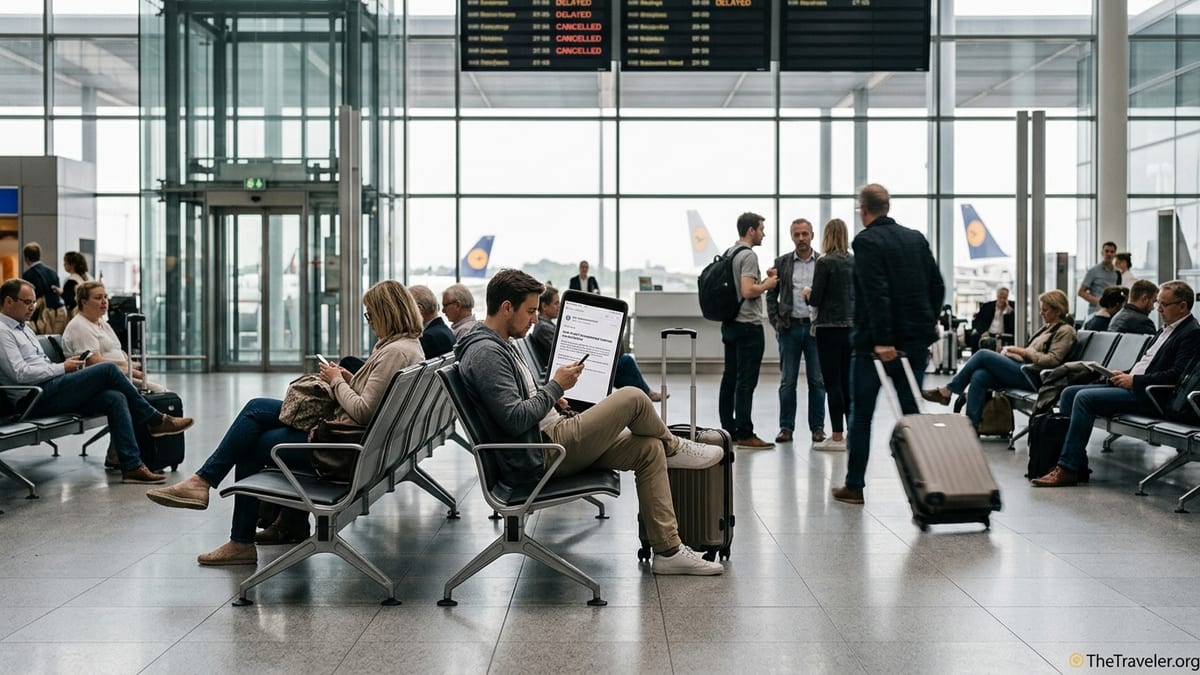
How EUclaim Works in Practice
EUclaim focuses on helping passengers claim compensation for delayed, cancelled or overbooked flights under EU Regulation 261/2004 and the equivalent UK regulations. You start by entering your flight number and date into their online checker, which cross-references a large database of flight and weather data to decide if your case is likely to qualify. If the system gives the green light, you upload your booking confirmation or boarding passes and sign a digital contract so EUclaim can act on your behalf.
From there, EUclaim contacts the airline directly, following up with reminders and, where necessary, involving in-house legal specialists or external partner law firms. The company explicitly states that it works on a no win, no fee model: you only pay them if they obtain compensation from the airline. If they lose or the airline successfully argues that the disruption was due to extraordinary circumstances such as extreme weather or air traffic control strikes, you pay nothing for their efforts.
In a typical real-world example, imagine a family of four flying from Paris to Lisbon whose flight arrives more than four hours late due to a technical fault with the aircraft. Under EU261, each passenger could be entitled to 400 euros, for a total claim value of 1,600 euros. EUclaim would assess the delay using its database, confirm that the reason is within the airline’s control, and then pursue the full 1,600 euros on the family’s behalf. If successful, EUclaim deducts its fee and transfers the balance to the passengers’ bank account.
Where EUclaim differs slightly from some competitors is the way it structures its no win, no fee arrangement. Behind the scenes, it is careful to state that success is never guaranteed and that the company retains discretion over whether to escalate a case to court. For travelers, this means EUclaim may decide not to pursue borderline or complex claims if the legal odds or costs look unfavorable compared with the potential payout.
Fees, Payouts and the Real Cost of Convenience
For English-language clients, EUclaim’s current model in early 2026 is straightforward: if they win, they charge a 31 percent success fee including VAT on the compensation amount, plus an administration fee of 33 euros per passenger. The company explains in its FAQs that in most standard cases a successful customer receives approximately 69 percent of the claim amount before VAT, minus that fixed 33 euro administrative charge per person. In some legal cases where court proceedings are required, the net percentage can vary slightly, but passengers still do not pay anything if EUclaim ultimately loses.
To understand the real cost, consider a solo traveler on a 600 euro long-haul EU261 claim after a heavily delayed flight from Amsterdam to New York on a European carrier. If EUclaim wins the case and the airline pays the full 600 euros, the 31 percent fee would be about 186 euros. Subtract the 33 euro administration fee and the traveler would receive roughly 381 euros. In effect, the traveler pays a little more than one-third of the compensation to EUclaim in exchange for not dealing with the airline or legal procedures.
Now compare this with a family of three on a 400 euro per person claim after a cancelled Barcelona to Berlin flight on an EU airline. The total compensation is 1,200 euros. EUclaim’s 31 percent fee would be around 372 euros. The administration fee then adds 99 euros for the three passengers. The family would end up with approximately 729 euros in their bank account, while EUclaim keeps around 471 euros. The percentage may feel high if you are comfortable writing complaint letters and following up with the airline yourself, but for many travelers who are busy, unfamiliar with EU261 rules or facing a language barrier, the trade-off is acceptable.
These costs place EUclaim roughly in the middle of the market. Some well-known rivals such as AirHelp typically advertise fees around 35 percent of the compensation, sometimes higher when legal action is needed, and companies like Skycop have fee levels around the mid-forties as a percentage. Flightright often charges a fee that can be broadly comparable to or slightly above the 30 percent range, depending on the jurisdiction and legal steps involved. In that context, EUclaim’s 31 percent plus a flat 33 euros per person positions it as neither the cheapest nor the most expensive option, but importantly with clearly stated costs upfront.
Speed, Communication and What Travelers Actually Experience
Beyond fees, travelers usually care most about two things: how quickly they will see their money and how well the company communicates while the claim is in progress. EUclaim indicates that, once the airline pays, it forwards compensation on fixed monthly dates, such as the 15th or 30th of the month, after deducting its fee. The bigger question is how long it takes to reach the point where an airline actually pays, and that can vary widely by case and by airline.
Recent passenger reviews on major consumer platforms in 2025 and early 2026 paint a mixed but generally positive picture. Many travelers describe situations where EUclaim obtained compensation within a few months for straightforward cases involving well-regulated European airlines, especially on intra-EU routes. For example, a business traveler flying from Frankfurt to Madrid on a German carrier reported that EUclaim secured a 400 euro payout in around ten weeks after the airline initially refused to pay when he filed the claim alone. After he turned the case over to EUclaim, the company escalated the matter and the airline ultimately settled.
Other reviews highlight longer timelines, especially for complex disputes or less cooperative airlines. One common theme involves long-haul flights where airlines argue extraordinary circumstances, such as bird strikes or air traffic control restrictions. In these instances, EUclaim may need to compile technical flight data and, in some jurisdictions, involve partner law firms to bring court actions. Travelers have reported waiting a year or more in such cases, which is not unusual across the industry and not unique to EUclaim, since court backlogs and procedural delays can be substantial in some European countries.
Communication receives reasonably good marks but is not flawless. Many passengers appreciate status updates by email when the claim moves from initial assessment to airline correspondence and, if needed, to legal escalation. Some negative reviews mention periods of silence, particularly once a case is with external lawyers or in court, when there may be long stretches without visible progress. This is similar to feedback directed at competitors like AirHelp and Skycop: once a claim enters the legal phase, patience becomes essential, and no company can guarantee quick results.
Comparing EUclaim with AirHelp, Flightright and Skycop
When choosing a claims company, it helps to see EUclaim in the broader competitive landscape. AirHelp is arguably the best-known brand globally, with aggressive online marketing and a strong presence in North America as well as Europe. AirHelp typically charges around 35 percent of the compensation, and in some cases additional surcharges when legal action is required, which can push the effective cost toward or above 40 percent. For a 600 euro claim, that might mean paying 210 to 240 euros or more in total fees, leaving you with 360 to 390 euros, similar to or slightly below what EUclaim would deliver.
Flightright, based in Germany, has built a reputation for aggressive litigation and high success rates with German and other European courts. Its fee structure often hovers in the low- to mid-thirties in percentage terms, depending on the specifics of the claim and the country involved. Flightright’s model can appeal to travelers flying frequently with German, Austrian or Swiss carriers, especially from major hubs like Frankfurt, Munich or Vienna, where it has extensive court experience. Compared with EUclaim, Flightright can sometimes be faster on cases involving German airlines, though outcomes vary and neither company publishes audited, comparable data.
Skycop, meanwhile, targets customers with a slick interface and simple marketing, but it tends to charge one of the highest fees among mainstream providers, with service charges in the mid-forties as a percentage of compensation, and mixed user feedback regarding transparency and customer support. If you value keeping as much of your compensation as possible, Skycop’s fee structure will usually look less attractive than EUclaim’s 31 percent plus the 33 euro per passenger fee.
Where EUclaim may differentiate itself is in its long history in the Dutch and German markets and its substantial technical database of flight data. For example, a traveler on a delayed Amsterdam to Rome flight might find that EUclaim’s system quickly recognizes a recurring technical issue with a particular aircraft, strengthening the claim. At the same time, AirHelp’s global brand and extensive support for multiple languages and non-European travelers can make it more visible to tourists from the United States, Canada or Asia who are booking a one-off trip to Europe. The best choice can therefore depend heavily on your route, airline and home country.
When EUclaim Makes Sense and When It Does Not
Hiring EUclaim is most compelling when your case meets three conditions. First, the value of the claim is significant, typically 400 or 600 euros per person, such as on long-haul or multi-hour delay cases. Second, the airline is known to be difficult, slow or unresponsive, which can happen with some low-cost carriers or non-EU airlines operating flights out of Europe. Third, you do not have the time, language skills or patience to argue with the airline, read legal texts and possibly pursue the matter with a national enforcement body or in small claims court.
Imagine, for example, a group of Canadian friends whose London to Rome flight on a European airline is cancelled at short notice during a busy summer travel weekend. They rebooked on a later flight and arrived in Rome almost nine hours late. Under EU261, each could have a potential 400 euro claim, turning the group’s total into a meaningful sum. Filing the claim directly should be possible, but if the airline rejects it with a form letter citing operational difficulties, the friends might give up. In this scenario, handing everything to EUclaim could mean recovering most of the money with minimal effort, accepting the roughly one-third fee as the cost of outsourcing the fight.
By contrast, if you are a frequent European traveler with good documentation and some comfort dealing with bureaucracy, you may find it worthwhile to claim directly with the airline first. Many European carriers now have online forms for EU261 compensation and respond within weeks. If the airline denies a clearly valid claim, you can escalate to the national enforcement body in the country of departure or even use simplified court procedures. In countries like the Netherlands, Germany and the UK, consumer-facing legal information is relatively accessible, and for a straightforward 250 or 400 euro case, this DIY route could save you EUclaim’s fee entirely.
Another situation where EUclaim might be less attractive is for small claims or borderline eligibility. If your potential compensation is just 250 euros and your itinerary or delay duration is complex, the net amount you would receive after EUclaim’s 31 percent fee and the 33 euro administration charge may not feel worth the effort, particularly if the outcome is uncertain. Some travelers also prefer to keep full control of the process, especially if they are concerned about signing power of attorney or long-term contracts with third-party companies.
Key Risks, Fine Print and How to Protect Yourself
Like any no win, no fee service, EUclaim’s model comes with fine print that travelers should understand before signing. The company makes it clear that if a client cancels the assignment after EUclaim has already done substantial contractual work or after legal proceedings have started, it may still charge the full success fee plus administrative costs and any adverse legal costs it has incurred. In other words, once you give EUclaim the green light and the case reaches an advanced stage, backing out can be expensive even if you no longer wish to pursue the claim.
Another nuance involves direct payments from airlines. EUclaim’s terms specify that if the airline pays compensation directly to you, your insurer or another third party after EUclaim has taken on the case, this still counts as a successful result from which EUclaim is entitled to its 31 percent and the 33 euro per person fee. Practically, this means that if you have engaged EUclaim, you should immediately inform them if the airline contacts you or sends money so that there are no disputes later about whether a fee is owed.
Travelers should also be aware that legal arrangements and fee structures can vary slightly between EUclaim divisions in different countries. The 31 percent fee and 33 euro administration charge are the current figures in the English division as of 2026, but the company itself notes that rates in other language divisions may differ based on local regulations and cost structures. Before signing, look carefully at the terms specific to your language and jurisdiction, and save a copy of the contract for your records.
To protect yourself, approach EUclaim as you would any legal or financial service. Read the terms and conditions, check recent reviews for your specific country division, and consider the size of your claim against the fee and potential timeline. If your case is marginal or you are in no hurry, you may prefer to try a direct claim with the airline first and only enlist EUclaim if you hit a wall. If you decide to use EUclaim from the outset, keep copies of your boarding passes, booking confirmation and all email correspondence, and log into your EUclaim account periodically to monitor updates rather than waiting passively.
The Takeaway
After comparing EUclaim with other major flight compensation services like AirHelp, Flightright and Skycop, the overall picture in 2026 is that EUclaim is a solid, mid-priced option with a long track record in European passenger rights. Its 31 percent no win, no fee rate plus a 33 euro per passenger administration charge sits in the middle of the industry, cheaper than some rivals that can approach or exceed 40 percent, though still a significant cut of your potential compensation.
For travelers with higher-value, clear-cut EU261 or UK air passenger claims who want to avoid dealing with airlines and legal bureaucracy, EUclaim’s combination of technical flight data, legal expertise and relatively transparent fees can provide real value. Many passengers report successful outcomes, particularly on standard intra-European routes with well-regulated carriers. At the same time, no claim company can guarantee success or speed, and long waits are common once cases enter court systems.
If you are comfortable handling paperwork, determined to keep the full amount of any compensation and dealing with a cooperative airline, a do-it-yourself claim might serve you better than any third-party service. For everyone else, especially occasional travelers facing unresponsive airlines or complex disruptions, EUclaim remains a credible choice among flight claim companies, provided you understand the costs, commit for the long haul and go in with realistic expectations.
FAQ
Q1. How much does EUclaim actually charge if my claim is successful?
If EUclaim wins your case in its English-language division, it currently charges a 31 percent success fee including VAT on the total compensation plus an administration fee of 33 euros per passenger, with the rest paid to you.
Q2. Do I have to pay EUclaim anything if they lose my case?
No, EUclaim operates on a no win, no fee model, so if they fail to obtain compensation from the airline you generally pay nothing. However, if you cancel the case after significant work or court proceedings have started, contractual fees and costs can still apply.
Q3. How long does it usually take for EUclaim to get compensation?
Timeframes vary widely. Simple, clear-cut cases against cooperative airlines can settle in a few months, while complex disputes that require court action may take a year or longer, depending on the airline and country.
Q4. Is EUclaim cheaper than AirHelp, Flightright or Skycop?
EUclaim’s fees are roughly mid-range. Its 31 percent plus 33 euros per passenger is generally lower than Skycop’s higher percentage fees and broadly comparable to or slightly below many AirHelp and Flightright fee scenarios, though exact comparisons depend on the case and jurisdiction.
Q5. Can I still claim directly with the airline if I use EUclaim?
Once you sign a contract with EUclaim, they act on your behalf. If the airline pays you directly after EUclaim has taken the case, EUclaim is still entitled to its fee, so you should not pursue a parallel claim without coordinating with them.
Q6. Is it better to file an EU261 claim myself or use EUclaim?
If you are comfortable with paperwork, understand EU261 and the airline is reasonably responsive, handling the claim yourself can save you EUclaim’s fee. If you lack time, face language barriers or deal with a difficult airline, EUclaim can be worth the cost.
Q7. Does EUclaim handle claims for non-EU residents, such as travelers from the United States or Canada?
Yes, EUclaim accepts claims from passengers regardless of nationality, as long as the flight itself falls under EU261 or relevant UK rules. Many non-European travelers use the service for trips involving EU airports or EU carriers.
Q8. What documents do I need to submit a claim with EUclaim?
You typically need your booking confirmation, e-ticket or boarding pass for each passenger. These documents prove that you were booked on the affected flight and allow EUclaim to verify the disruption and calculate potential compensation.
Q9. Can EUclaim guarantee that my claim will succeed?
No, EUclaim cannot guarantee success. It uses extensive flight data and legal expertise to select strong cases, but airlines can contest claims and courts can rule against passengers, especially where extraordinary circumstances are involved.
Q10. What happens if I change my mind after asking EUclaim to take my case?
If you cancel early in the process, you may be able to withdraw without major cost, depending on the stage reached. If EUclaim has already performed significant work or started court proceedings, its terms allow it to charge its success fee and certain legal costs even if you decide to stop.