


More news on this day
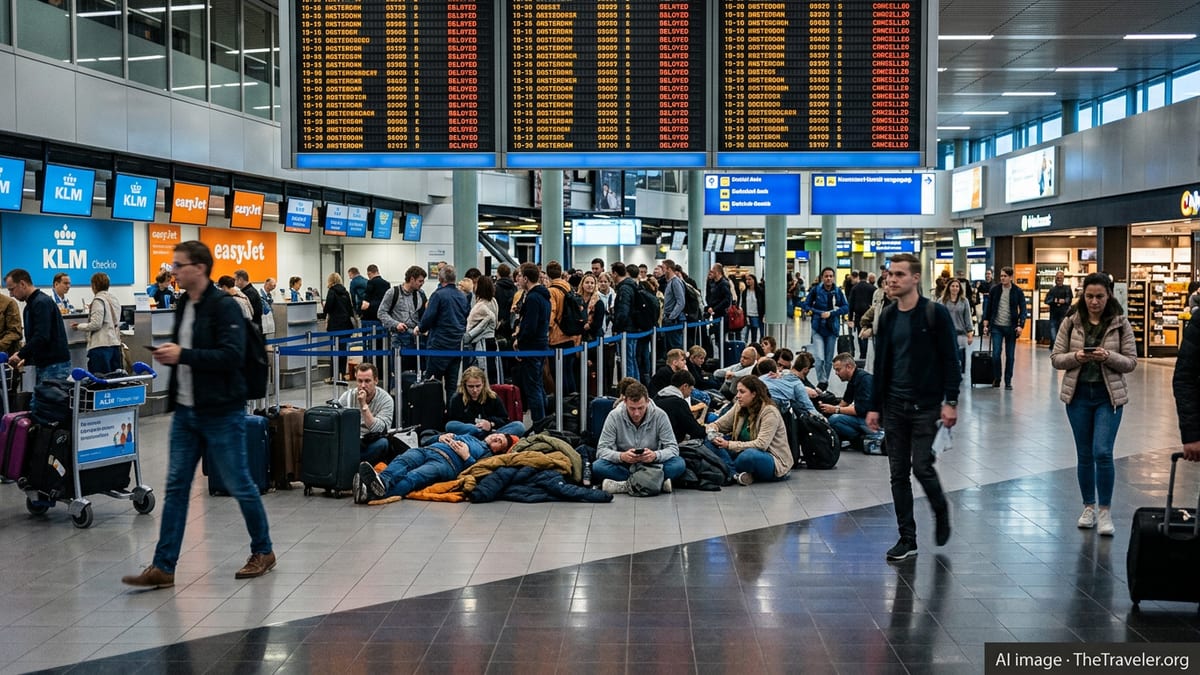
Air travel across Europe is facing renewed turbulence as a fresh wave of delays and cancellations hits major hubs in Germany, the United Kingdom, Austria, the Netherlands, Greece, Belgium and other countries, with more than 50 flights cancelled and close to 2,000 delayed in a single day according to aviation tracking data and recent media tallies.
Get the latest news straight to your inbox!
Widespread Disruption From London To Vienna
The latest figures reflect an intensifying pattern of disruption across European skies as the busy summer travel period begins. Recent daily snapshots compiled from flight-tracking platforms and regional media show dozens of outright cancellations and well over a thousand delays concentrated at hubs such as London Heathrow, Frankfurt, Amsterdam Schiphol, Vienna, Athens and Brussels.
Published coverage indicates that Germany, the UK and Austria are among the worst affected, with major carriers including Lufthansa, British Airways and Austrian Airlines adjusting schedules, consolidating services or scrubbing departures entirely on some routes. Secondary airports in the Netherlands, Belgium and Greece are also reporting knock-on effects as aircraft and crews struggle to return to position after earlier delays.
In Athens and Vienna, live departure boards on Monday showed a mixture of on-time departures alongside a growing list of late-running services and a smaller number of cancellations, particularly on short-haul routes connecting key capitals such as Berlin and London. While some point-to-point flights continue to operate close to schedule, aviation data suggests that even modest hold-ups early in the day are cascading through the network by late afternoon.
Eurocontrol’s recent European Aviation Overview, which tracks en-route and airport delay minutes, has already highlighted a gradual build-up of congestion this spring, with average delay per flight creeping up as traffic nears or exceeds pre-pandemic levels. Those structural pressures are now intersecting with localized technical issues, staffing constraints and weather-related bottlenecks to produce visible disruption for passengers this week.
Strikes, System Glitches And Capacity Strain
The causes of the latest wave of disruption are varied, but several recent flashpoints illustrate the fragility of the system. Earlier in June, a surprise work stoppage at Belgium’s air navigation service provider led Brussels Airport to cancel all flights for several hours in the middle of the day, setting off a chain reaction of missed connections and diversions across the region as airlines scrambled to reroute aircraft.
In Greece, a technical problem affecting air traffic management systems earlier this year forced temporary ground stops at all airports, including Athens International Airport. Reports from that incident described departure boards rapidly cycling between delays and cancellations, with airlines holding or re-timing flights until clearance was restored. Although operations later normalized, the event underscored how a single systems issue in a key holiday market can reverberate through European schedules for days.
Industry punctuality reports from airport and airline associations show that even outside headline-grabbing incidents, on-time performance at major hubs such as Frankfurt, London Heathrow and Vienna has been under pressure. Average punctuality at some large European airports has hovered in the mid-60 to mid-70 percent range in recent assessments, leaving limited room to absorb sudden spikes in demand, thunderstorms or operational glitches without tipping into widespread delay.
Analysts note that airlines are still balancing fleet and crew resources after several years of pandemic volatility, while airports and air navigation services work to fill staffing gaps. As peak summer departures ramp up, any misalignment between scheduled capacity and available resources can translate quickly into ground holds, extended turnaround times and missed slot windows.
Flag Carriers Under The Microscope
The impact of the current disruption is particularly visible at Europe’s flagship airlines. Lufthansa has faced rolling operational challenges at its German hubs, where dense banks of short-haul connections magnify the effect of each delay. At Frankfurt and Munich, crowded morning and evening waves are especially vulnerable, with a delayed inbound aircraft often triggering late departures across several onward routes.
In the UK, British Airways has been adjusting its network throughout the spring, trimming or rescheduling some services as it navigates tight crewing conditions and high demand at London Heathrow and London Gatwick. Recent media coverage has highlighted sporadic cancellations on European and Middle Eastern routes alongside persistent, if moderate, delays on popular holiday services.
Austrian Airlines and other Vienna-based operators are experiencing similar strains, with live timetable information showing tactical schedule changes and the occasional cancellation amid generally busy departure boards. Meanwhile, carriers such as Aegean Airlines in Greece and regional subsidiaries within larger groups are working to keep high-frequency routes between Athens, Berlin and Vienna running despite congestion in shared airspace and at intermediate hubs.
Low-cost airlines are not immune. Network disruptions at hub airports, including Amsterdam and Brussels, have recently forced major budget carriers to consolidate flights or retime departures, leaving some travellers facing last-minute changes even on traditionally resilient point-to-point routes.
What The Numbers Reveal About Delays
While headline totals such as 51 cancellations and 1,978 delays capture attention, broader datasets provide important context. Eurocontrol’s monitoring shows that average air traffic flow management delay per flight across Europe has been edging higher this year compared with more benign winter months, driven by both en-route congestion and airport capacity constraints.
Separate punctuality bulletins from European airport associations show that on-time performance tends to worsen in early summer as traffic rises, with some large hubs dipping below 70 percent of flights arriving or departing on schedule in previous peak seasons. Airports such as Athens, Brussels, Frankfurt, London Heathrow and Vienna have all seen punctuality metrics fluctuate significantly between winter and summer reporting periods, reflecting the challenge of managing high-density schedules.
Analysts caution that raw delay counts can be misleading without considering the total number of operated flights. However, the concentration of late services at a handful of strategic hubs increases the risk of missed connections and overnight disruptions for long-haul passengers, particularly those transiting between Europe and North America or the Middle East.
Travel specialists also point out that even relatively short delays can compound across multi-leg journeys. A 45-minute hold on departure from Berlin or London can be enough to strand passengers in Vienna or Athens if minimum connection times are tight and alternative flights are already heavily booked.
Passenger Rights And Practical Advice
For travellers caught up in the disruption, European consumer rules provide a degree of protection. Under the EU’s long-standing air passenger regulations, many flyers departing from or arriving in the bloc are entitled to assistance such as meals, hotel accommodation and, in some cases, financial compensation when flights are heavily delayed or cancelled for reasons within an airline’s control.
Legal experts emphasize that eligibility depends on the cause of the disruption, route and operating carrier, and that extraordinary circumstances such as severe weather or unexpected airspace closures can limit cash compensation. Nonetheless, airlines are generally required to offer rebooking at the earliest opportunity or a refund if a flight is cancelled.
Publicly available guidance from consumer groups recommends that passengers monitor their flight status closely via airline apps and airport information screens, arrive early at the airport during periods of known disruption and keep receipts for any out-of-pocket expenses incurred while waiting for rebooking. Travellers are also advised to document delays with boarding passes and screenshots in case they choose to pursue claims later.
With forecasts pointing to another very busy European summer, industry observers expect periodic flare-ups of cancellations and large waves of delays to continue, especially at major hubs in Germany, the UK, Austria, the Netherlands, Greece and Belgium. For now, anyone planning to connect through cities such as London, Frankfurt, Amsterdam, Vienna, Athens or Brussels in the coming weeks may wish to build extra time into their itineraries and remain prepared for last-minute changes.