


More news on this day
The United Kingdom has adjusted its assessment of travel to Libya, softening a long-standing blanket warning by carving out limited lower-risk areas, while still advising against non-essential trips as security, political and infrastructure risks remain elevated across much of the country.
Get the latest news straight to your inbox!
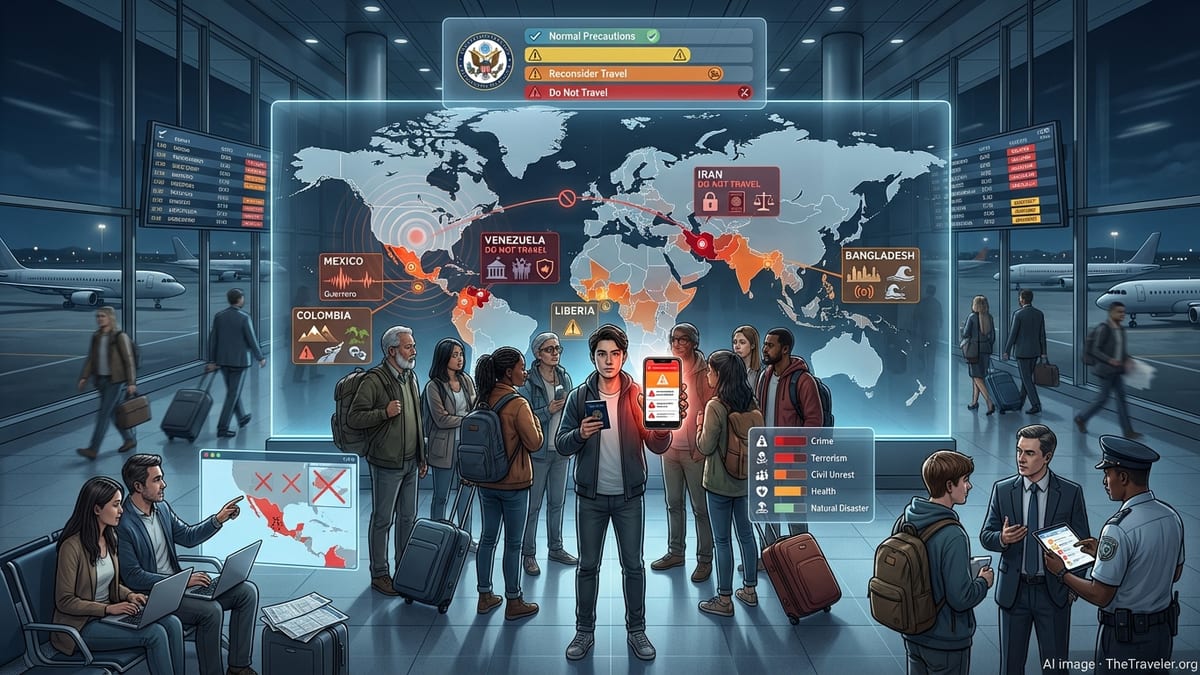
Shift from Blanket Ban to Targeted Restrictions
Publicly available UK government travel advice now distinguishes between parts of Libya, moving away from a previous position that treated the entire country as uniformly off-limits. Current guidance indicates that travel to most of Libya is still considered extremely high risk, but it now highlights specific urban centers where the formal level has been eased to “all but essential travel.”
According to the latest Foreign, Commonwealth and Development Office (FCDO) advisory, the overarching stance continues to be that individuals should avoid travel to Libya, with only narrow exceptions. The revised wording reflects a modest improvement in the security and access picture in selected locations, rather than a broad-based normalization that would support tourism or routine business travel.
This nuanced shift means Libya is no longer treated as a monolithic destination in UK risk assessments. Instead, the advisory separates out pockets where controlled, purpose-driven visits may be feasible for well-prepared travelers, while maintaining the highest level of caution across the rest of the country.
Despite that change in classification, the advisory framework still emphasizes that trips should proceed only when they are clearly essential, carefully planned and backed by robust security and evacuation arrangements.
What the Lowered Risk Level Actually Means
For travelers, the move from an “advise against all travel” position to “advise against all but essential travel” in selected Libyan cities does not equate to a green light for holidays or spontaneous trips. The FCDO scale is designed to reflect gradations of risk, and the updated Libya rating still sits among its most severe tiers.
In practical terms, a lower tier in certain areas signals that limited categories of travel, such as critical business activity, humanitarian operations or specialist professional assignments, may now be considered manageable with the right precautions. It does not imply that the security situation is stable, nor that services, infrastructure and consular support have returned to pre-conflict norms.
Insurance implications remain a major constraint. Industry analysis shows that many UK travel insurance policies exclude cover when a destination is subject to an official warning against all or all but essential travel. Some specialist underwriters offer tailored products for essential trips into higher-risk countries, but these typically require explicit clearance, detailed itineraries and evidence of corporate security support.
For holidaymakers, the advisory language continues to have a clear effect. Tour operators and airlines that cater to leisure travel generally avoid destinations subject to such strong warnings, leading to limited commercial flight options, minimal package offerings and higher logistical hurdles for any individual contemplating a visit.
Persistent Security, Political and Infrastructure Risks
The recalibration of the UK advisory comes against a backdrop of continued instability in Libya. Open-source risk assessments and recent country reviews describe an environment marked by rival power centers, intermittent armed clashes and the lingering presence of non-state armed groups, all of which contribute to an unpredictable security picture.
Analysts highlight that terrorist attacks and targeted violence have previously struck locations such as hotels, government facilities, transportation hubs and crowded public spaces. The potential for localized flare-ups means that conditions can change rapidly, sometimes with little or no warning, leaving travelers exposed if they lack real-time situational awareness and reliable local partners.
Infrastructure and public services also remain under strain. Outside a handful of major cities, access to emergency medical care, secure accommodation and reliable transport can be limited. Power cuts, fuel shortages, disrupted telecommunications and constrained banking services are all regularly cited as complicating factors for foreign visitors.
These conditions underpin the UK government’s continued resistance to endorsing general travel to Libya. While the formal risk level has been lowered for certain localities, the broader environment still involves a combination of crime, civil unrest, political volatility and constrained state capacity that is unusual for destinations open to non-essential travel.
Regional Tensions and Knock-On Effects for Travelers
The refreshed advisory also notes heightened regional tensions that could affect Libya and neighboring countries. Travel notices across North Africa and the wider Mediterranean have drawn attention to the risk that wider geopolitical developments may trigger sudden disruptions, including border closures, airspace restrictions or security lockdowns affecting airports and ports.
For Libya, such dynamics add another layer of unpredictability on top of domestic challenges. Even travelers whose activities are confined to relatively calmer cities may face last-minute route changes, delays, or the need to exit through third countries if conditions deteriorate or transport links are curtailed.
Risk consultants and security-focused publications recommend that any organization authorizing essential trips to Libya should treat regional developments as a critical planning variable. That typically includes maintaining multiple evacuation options, regularly reviewing flight availability and having contingency plans for overland movements to neighboring states that are assessed as safer transit points.
Individual travelers are also encouraged, in publicly available guidance, to build in extra time and flexibility around their itineraries to absorb potential disruption. This is particularly relevant for those who may need to connect through hubs where travel policies are closely tied to evolving security assessments.
How Travelers and Companies Are Expected to Respond
With the advisory now distinguishing between levels of risk inside Libya, responsibility for decision-making increasingly rests with travelers and the organizations that send them. Public guidance from risk specialists suggests that companies should conduct formal security assessments before approving any Libya travel, document why a trip is considered essential and establish clear thresholds for postponing or cancelling if conditions worsen.
Travel management teams are advised to work closely with insurers to confirm whether cover is valid under the current UK government rating, and to secure written confirmation where necessary. Many policies require travelers to register itineraries in advance and may mandate specific security measures, such as vetted ground transport, secure accommodation or the use of professional risk advisers.
For individuals, the key message of the updated Libya stance remains caution. The easing of the formal risk category in limited areas does not mean that Libya has moved into the same bracket as more conventional emerging destinations. Instead, it indicates that while the situation is judged to be marginally more manageable for tightly controlled essential visits, non-essential and leisure travel remains inconsistent with the UK government’s risk assessment.
As a result, experts expect Libya to remain off most mainstream travel itineraries for the foreseeable future, even as the new advisory language signals a subtle but important shift in how the UK evaluates and communicates the country’s complex risk landscape.