


More news on this day
Travelers across Europe faced another day of severe air travel disruption on June 30, as operational pressures, crowded summer schedules and lingering capacity issues combined to delay more than 1,500 flights and cancel nearly 100 services across the continent’s busiest hubs.
Get the latest news straight to your inbox!
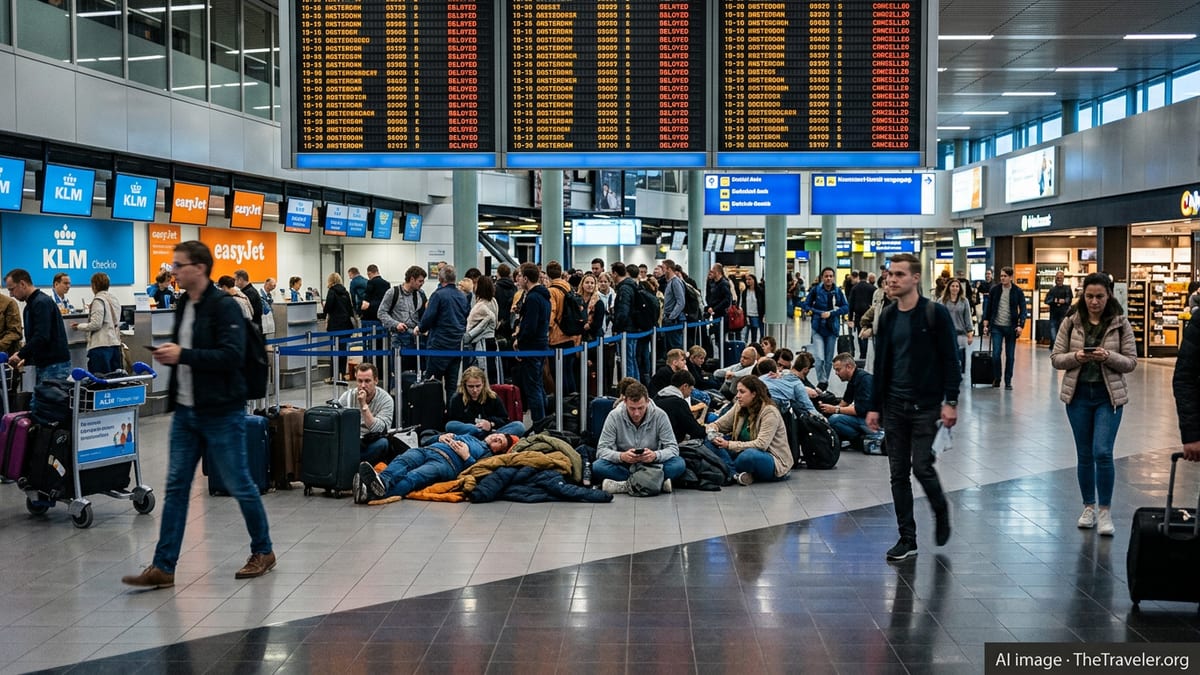
Widespread Disruption Across Key European Markets
Publicly available aviation data for June 30 indicates that England, Spain, Portugal, Norway, Scotland and Hungary were among the most affected markets, with at least 95 flights cancelled and around 1,523 delayed across Europe. The pattern continues a June trend of mounting disruption, with multiple recent days where more than 3,000 flights were delayed or cancelled across the network.
Reports from specialist travel outlets describe knock-on impacts in additional countries, including the Netherlands, Switzerland, Germany, Denmark, Sweden and Croatia. These markets collectively handle a large share of Europe’s short- and medium-haul traffic, meaning disruption in one country has quickly rippled into others as aircraft and crews fall out of position.
Major flag carriers and leisure airlines have been affected, from full-service operators to low-cost brands serving popular holiday routes. Passengers flying between northern Europe and Mediterranean destinations have faced some of the longest waits, as airlines work to reshuffle aircraft and crews within already tight summer schedules.
In several countries, the latest disruption comes on top of what passenger rights groups describe as a challenging year for punctuality and reliability. Analyses of 2026 performance so far highlight Portugal, Spain, the Netherlands and the United Kingdom among European markets with particularly elevated rates of delays and cancellations.
Amsterdam, London and Madrid Under Pressure
Amsterdam, London and Madrid once again emerged as focal points of the latest disruption, reflecting their role as major hubs for both European and intercontinental traffic. Services operated by British Airways and other UK-based carriers encountered delays at London’s main airports, while flights on Iberia and partner airlines serving Madrid and other Spanish gateways also saw schedule changes.
In the Netherlands, KLM and other operators at Amsterdam Schiphol have been contending with a combination of heavy summer demand and staffing-related bottlenecks in recent weeks. Travel industry coverage indicates that even modest schedule perturbations can quickly cascade into widespread delays when airports are operating near capacity and turnaround times are compressed.
In Portugal, Lisbon and Porto have been highlighted in earlier 2026 analyses as particularly vulnerable to disruption, with average delays significantly higher than last year and cancellation rates rising. The latest wave of delayed departures to and from Portuguese holiday destinations, including Faro, aligns with the broader pattern of pressure on the country’s aviation infrastructure.
Scandinavian gateways have not been spared. Flights affecting Norway and other Nordic markets, including services on SAS and partner carriers, have faced recurrent schedule adjustments as congestion elsewhere in Europe feeds into northern hub operations, often with several hours’ knock-on effect.
Operational Strains and Structural Bottlenecks
Industry monitoring bodies point to a combination of structural and short-term factors behind the current wave of disruption. Published briefings from European air traffic management show that en‑route restrictions, staffing constraints and sector capacity issues in parts of southern Europe, especially Spain and Greece, have added minutes of delay to thousands of flights even before local airport challenges are considered.
The rapid rebound in demand at many leisure-focused airports has, in several cases, run ahead of available ground staff and air traffic control resources. Travel analysis from recent weeks suggests that South‑West Europe, including Spain and Portugal, is seeing sustained traffic growth compared with last year, amplifying the impact when weather, technical issues or airspace constraints occur.
Fuel-related concerns, driven by geopolitical tensions and shifts in supply routes, have added another layer of complexity for some carriers. While operators with secure fuel contracts have maintained schedules, other airlines are reported to be trimming frequencies or consolidating flights to manage costs and contingency reserves, a practice that can translate into late-notice cancellations for passengers.
At the same time, high aircraft utilization during peak season leaves limited margin to recover after a disruption. Once rotations run late early in the day, it becomes progressively more difficult for airlines to return aircraft and crews to their planned positions, causing delays that stretch late into the evening and affect multiple countries along each route.
Impact on Airlines and Passengers
The latest figures signal yet another difficult day for European carriers already grappling with sustained operational complexity. British Airways, Iberia, KLM, SAS and a range of low-cost airlines have all faced fresh challenges balancing packed summer loads with stretched resources, often resorting to rolling delays, rebookings and occasional cancellations to stabilize their networks.
For passengers, the immediate impact has been long waits at departure gates, missed connections and last‑minute itinerary changes at some of Europe’s principal transfer hubs. Travelers passing through Amsterdam, London, Madrid and other major airports have increasingly been advised by consumer organizations and travel advisors to allow extra time for connections and to monitor airline apps closely for status updates.
Passenger rights organizations emphasize that most travelers departing from or arriving in the affected European countries remain covered by EU or UK compensation rules when flights are significantly delayed or cancelled for reasons within an airline’s control. However, weather and certain air traffic control restrictions can limit eligibility, leaving many passengers reliant on basic care provisions such as meal vouchers and hotel accommodation rather than direct financial compensation.
In practice, the patchwork of causes behind each delay or cancellation means outcomes can vary widely from one flight to another, even within the same airport on the same day. Travel advisors therefore encourage passengers to keep all boarding passes and written notifications of delays, and to submit formal claims where regulations appear to apply.
Outlook for the Peak Summer Travel Period
With European traffic now firmly in peak summer mode, operational data suggests that the region’s air traffic network is likely to remain under pressure in the weeks ahead. Forecasts from aviation agencies show daily flight numbers already close to or above 2019 levels in many markets, with especially strong demand on leisure routes connecting northern Europe to Mediterranean and island destinations.
Network performance assessments point to some improvements in average delay minutes compared with last year, but also underline the vulnerability of certain bottlenecks when traffic surges or when localized disruptions occur. Countries such as Spain and Portugal continue to account for a disproportionate share of delay minutes, reflecting both their popularity and the limited slack in their systems.
As a result, industry observers expect further days where hundreds of flights are cancelled or rescheduled across Europe, particularly during weekends and peak holiday changeover days. Airlines are likely to keep adjusting schedules at short notice to protect the most in‑demand routes and to maintain overall network stability, which may mean targeted cuts on less profitable or lower‑frequency services.
For travelers planning upcoming trips through hubs such as Amsterdam, London and Madrid, the latest disruption serves as a reminder to build in contingency time, consider earlier departures where possible, and ensure that contact details are up to date with airlines so that rebooking options can be communicated quickly when schedules change.