


More news on this day
Summer holiday plans across Europe were thrown into disarray today as flight-tracking data pointed to 1,988 delays and 59 cancellations affecting routes through Italy, England, Türkiye, France, the Netherlands, Greece and other countries, with major carriers such as ITA Airways, Turkish Airlines, KLM and Aegean among those seeing schedules heavily disrupted at hubs including Athens, Rome, Istanbul and Milan.
Get the latest news straight to your inbox!
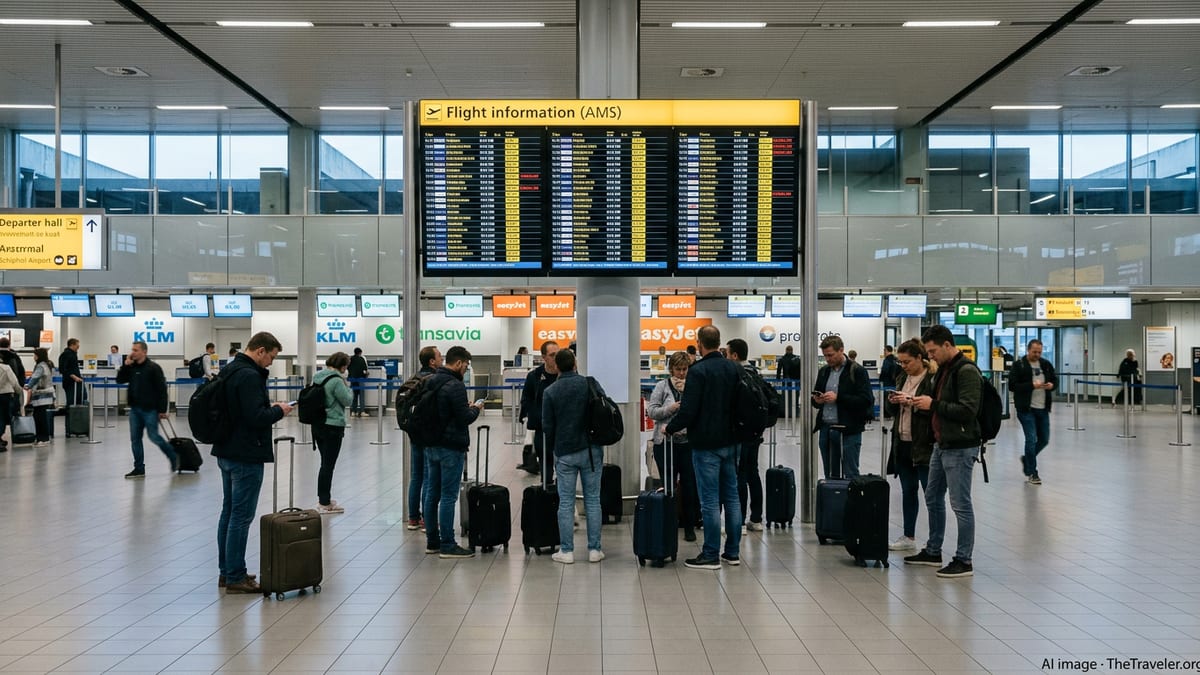
Wave of Disruption Hits Europe’s Key Hubs
Publicly available flight-monitoring data and recent industry coverage indicate that Europe’s aviation network is enduring another intense spell of disruption, with delays running into the thousands across multiple days at the start of July. The latest tally of 1,988 delayed services and 59 cancellations fits into a broader pattern that has seen comparable totals reported several times over recent weeks at major hubs in Italy, the United Kingdom, France, the Netherlands and Greece.
Rome Fiumicino and Milan Malpensa have again emerged as focal points on the southern flank of the continent, with late-running arrivals and departures spreading knock-on disruption into domestic Italian routes and onward flights into France, Germany, Switzerland and other nearby markets. Athens and other busy Greek gateways, heavily loaded with seasonal leisure traffic, continue to appear prominently in reports tracking delay totals, particularly on high-frequency services linking Greece with Italy, the Netherlands and northern Europe.
To the east, Istanbul’s role as a connecting super-hub means that timetable problems in one part of the region can quickly ripple into another. Turkish Airlines and other operators at the city’s main airports have had to manage late inbound aircraft and crew rotations as congestion and operational constraints build across the wider European airspace system, rather than from a single localised incident.
In northern Europe, Amsterdam Schiphol and London’s main airports remain under pressure after a series of busy travel days, with Dutch carrier KLM and a range of British and European airlines contending with rolling schedule changes. While the latest disruption tally is spread across dozens of carriers, connections involving these key transfer hubs appear particularly prone to extended waits and missed onward flights.
Airlines From ITA to Turkish and KLM Feel the Strain
Recent coverage of European flight performance shows that the current disruption has not been limited to low-cost operators. Full-service airlines such as ITA Airways, Turkish Airlines, KLM and Aegean have all featured in delay statistics over the past several days, reflecting the scale of congestion affecting everything from flagship intercontinental routes to short intra-European hops.
Reports summarising today’s operations place ITA Airways among the carriers most exposed to delays, in part because of its heavy concentration at Rome and Milan, where even modest timetable slippages can cascade throughout the day. When early services between Italian hubs and key European cities depart late, subsequent rotations to secondary destinations are often forced into revised departure slots or, in more severe cases, cancelled.
Turkish Airlines, which operates one of the world’s most extensive route networks from Istanbul, has been dealing with the cumulative effects of earlier disruptions in European airspace. Analysis of its 2026 punctuality trends already suggested a significant proportion of flights running behind schedule, and today’s congestion across Italy, France, the Netherlands and the United Kingdom appears to have added further strain to parts of its European schedule.
In the Netherlands, KLM’s operations at Amsterdam Schiphol continue to feel the impact of high summer demand combined with recurrent airspace and staffing constraints. Recent summaries of European flight performance list KLM among the airlines reporting sizeable numbers of delayed services on busy days, particularly where aircraft are scheduled to operate multiple legs through Amsterdam and other congested airports within the same 24-hour period.
Athens, Rome, Istanbul and Milan at the Heart of Knock-on Delays
Travel analysis produced over the past fortnight points to a recurring theme: disruption rarely remains confined to a single terminal or city. Athens, Rome, Istanbul and Milan sit on some of the densest traffic corridors in Europe, serving both as destinations in their own right and as vital transfer points linking northern and southern Europe as well as the Middle East and eastern Mediterranean.
At Athens International Airport, for example, networks operated by Aegean and other carriers link the Greek capital to dozens of islands and regional cities, while also connecting passengers onward to Italy, France, the Netherlands and the United Kingdom. When trunk routes into Athens arrive late, tight connection times for onward flights to islands or to other European capitals are quickly eroded, creating queues for rebooking and overnight accommodation at the height of the holiday season.
Rome Fiumicino and Milan’s airports face a similar pattern. Italy’s central location within Europe makes these cities natural transfer points for passengers travelling between Spain, France, Germany, the Balkans and Greece. Industry commentary notes that late arrivals from northern Europe can disrupt carefully balanced aircraft rotations, forcing ITA Airways and other airlines either to trim frequencies or to retime services in order to restore some buffer into the schedule.
Istanbul’s position as a bridge between Europe and Asia further amplifies the effect of delays. Publicly available schedule data shows heavily banked waves of departures from the Turkish hub, timed to connect European arrivals with long-haul flights. When punctuality deteriorates on inbound services from cities such as Paris, Amsterdam, London, Rome or Athens, minimum connection windows can become unworkable, prompting missed connections, baggage backlogs and rebooked itineraries extending well beyond the original travel day.
Structural Pressures: Airspace, Staffing and Peak Season Demand
Background reports on European aviation in 2026 highlight a combination of structural issues underlying today’s headline disruption figures. Eurocontrol overviews for the spring and early summer indicate that air traffic control capacity and staffing shortfalls remain key drivers of delays in several parts of the network, particularly over France, Spain and Greece, where busy sectors can quickly generate en-route restrictions and holding patterns.
At the same time, airports and airlines are moving through one of the busiest weekends of the summer, as school holidays and major events across the continent push passenger numbers close to or above last year’s peaks. Travel analysis published in recent days points to multiple instances where more than 2,000 flights were delayed or cancelled within a single 24-hour period, underscoring how thin the margin for error has become when demand, weather and staffing challenges coincide.
Operationally, the tight utilisation of aircraft and crews also plays a central role. Many European carriers schedule individual aircraft to perform several short sectors each day. Industry observers note that when an early flight is delayed, there is often limited slack in the system to recover the timetable before late evening. The result can be a cumulative build-up of delays that ultimately leads airlines to cancel selected rotations so as to reset operations for the following morning.
Weather remains another variable. Even relatively short bouts of thunderstorms, strong winds or low visibility at a hub like Amsterdam, London or Paris can trigger flow restrictions and diversions. In the context of already stretched manpower and airspace, such weather events increase the likelihood that a day that began with minor schedule pressure will end with hundreds of delayed flights and dozens of cancellations across the continent.
What Today’s Turbulence Means for Travellers
Consumer organisations and travel advisory platforms responding to recent waves of disruption emphasise that passengers affected by today’s delays and cancellations may be entitled to support under European passenger protection rules, particularly when problems stem from airline operations rather than extraordinary circumstances such as severe weather or security incidents. In many cases, that support can include meals and refreshments during extended waits, hotel accommodation where overnight stays become unavoidable, and alternative transport or refunds when flights are cancelled outright.
Publicly available guidance suggests that travellers should keep boarding passes, booking confirmations and any written notices from airlines detailing the cause and length of the disruption. This documentation can be important if passengers later seek compensation or reimbursement for additional expenses such as meals, local transport or missed hotel reservations resulting from significantly delayed or cancelled flights.
In practical terms, travel specialists recommend that anyone due to pass through pressure points such as Rome, Milan, Athens, Istanbul, Amsterdam or major London airports build extra time into connections, especially for itineraries requiring a change between different airlines or terminals. Monitoring flight status through airline apps and airport departure boards before leaving for the airport can provide early warning of schedule changes and, in some cases, the option to rebook onto less crowded services.
With the peak of the summer season still ahead, today’s figures of 1,988 delayed and 59 cancelled flights serve as a reminder that Europe’s aviation network remains highly sensitive to strain. For travellers, preparation, flexibility and awareness of their rights are likely to be as important as passports and boarding passes in navigating the weeks to come.