


More news on this day
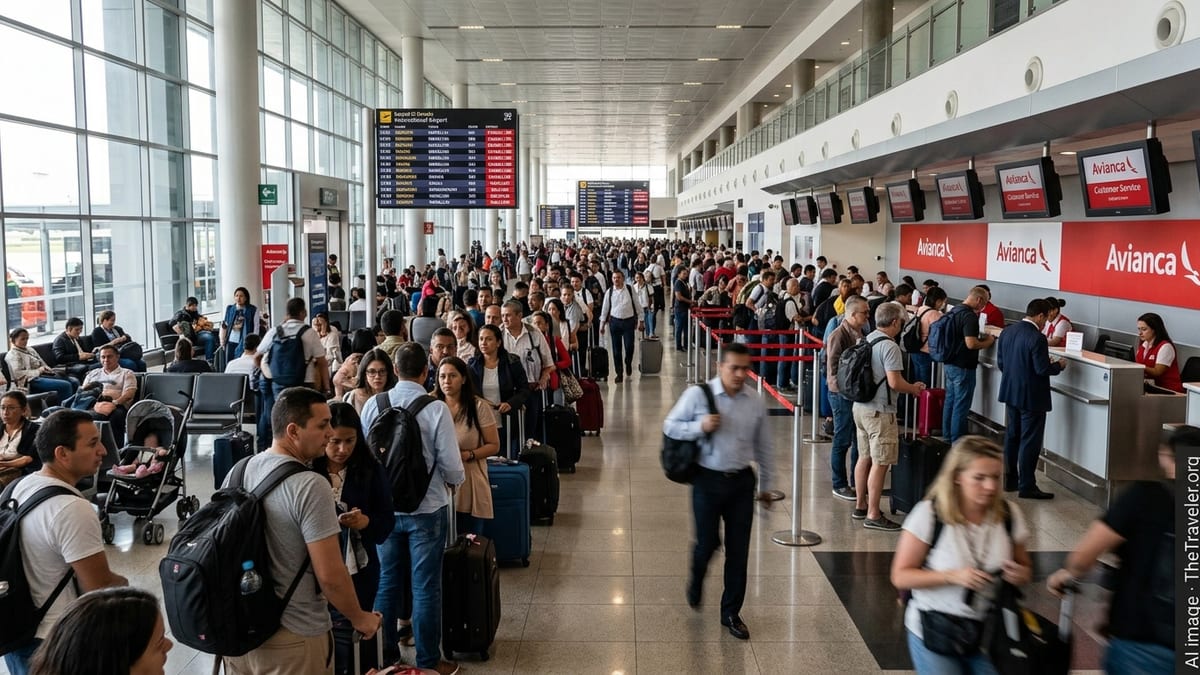
Air travel in Colombia faced a fresh wave of disruption on July 4 as a combined 71 delays and 28 cancellations involving Avianca, LATAM Colombia and United Airlines affected key domestic and international routes linking Bogotá, Medellín and Cartagena, according to live flight-tracking data and local media reports.
Get the latest news straight to your inbox!
Network Strain Across Bogotá, Medellín and Cartagena
Published operational data from major Colombian hubs shows an unusually high concentration of disrupted services across routes connecting Bogotá with Medellín and Cartagena, as well as selected international operations touching those cities. The bulk of affected flights were operated by Colombia’s two largest carriers, Avianca and LATAM Colombia, with additional disruption on United Airlines services feeding into Bogotá’s El Dorado International Airport.
Domestic trunk routes between Bogotá and Medellín’s José María Córdova International Airport and between Bogotá and Cartagena’s Rafael Núñez International Airport experienced the most visible congestion. Flight-tracking boards reflected a succession of late departures, rolling gate changes and same-day cancellations, particularly during the morning and late-afternoon peaks when business and holiday traffic converge.
While delay minutes varied widely, the combined total of 71 delayed flights and 28 outright cancellations across the three carriers resulted in missed connections throughout the day. Publicly available schedules indicate that even a relatively small number of cancellations on high-frequency routes can quickly cascade into network-wide disruption when aircraft and crews are tightly scheduled.
Holiday Demand and Weather Complicate Operations
The latest disruption coincided with strong early-July demand, a period that typically brings increased domestic tourism to Colombia’s Caribbean coast and heightened international arrivals into Bogotá. Reports from local travel operators indicate that load factors on many flights to Cartagena and Medellín were already elevated, leaving limited slack in the system when delays began to accumulate.
Operational summaries from the country’s main airports also pointed to periods of adverse weather around Bogotá’s plateau location, which can trigger spacing restrictions and temporary limitations on arrivals and departures. Even relatively short weather holds can cause knock-on effects when aircraft are due to turn quickly to operate onward flights to destinations such as Medellín and Cartagena.
In this context, aviation analysts note that carriers often have to make rapid decisions about whether to operate heavily delayed flights or cancel them outright in order to reposition aircraft and crews. The pattern of cancellations observed on July 4, with some early rotations scrubbed and later services preserved, suggests an attempt to stabilize the schedule for the remainder of the day.
Impact on Travelers and Key Tourist Markets
The timing and geography of the disruption meant that both domestic travelers and international visitors were heavily affected. Bogotá serves as the primary connecting hub for Colombia, so delays on flights to and from the capital quickly spilled over into onward journeys to secondary cities. Travelers heading for leisure destinations such as Cartagena, as well as those using Medellín as a business and tourism gateway, encountered extended waiting times, missed hotel check-ins and, in some cases, the need to rebook itineraries entirely.
Tourism operators in Cartagena and Medellín have previously highlighted the sensitivity of their businesses to flight reliability, particularly during peak weekends and holiday periods. According to prior industry surveys, many short-stay visitors schedule only two or three nights in coastal destinations. A delay of several hours on arrival can effectively remove a significant portion of their usable holiday time, reducing spending on tours, restaurants and attractions.
For Colombians traveling within the country, the disruption also raised concerns about access to essential services. In recent years, air travel has increasingly replaced long-distance bus journeys for time-sensitive trips related to work, education and healthcare. When multiple carriers experience simultaneous delays on core trunk routes, the options for same-day rebooking become limited, particularly for those on lower-cost tickets.
How Avianca, LATAM Colombia and United Handle Disruptions
Public documents outlining Avianca’s conditions of carriage describe a range of measures for significant delays and cancellations, including rebooking on later flights operated by the airline and, in specific circumstances, compensation or vouchers. The extent of assistance can depend on the length of the delay, the cause of the disruption and the type of ticket purchased, with more flexible fares generally offering broader options for changes.
LATAM Group policies for its Colombian operations similarly provide for re-accommodation on alternative flights where seats are available, with additional support such as meal or accommodation assistance in some cases. Consumer advocates in Colombia have repeatedly urged travelers to familiarize themselves with these rules in advance, noting that understanding eligibility for refunds or changes can help passengers make quicker decisions at the airport when irregular operations occur.
United Airlines, which uses Bogotá as an entry point into the Colombian market from U.S. hubs, applies its global irregular-operations framework to flights affected in the region. This typically includes attempts to reroute passengers via alternative connections or carriers within its alliance partnerships when direct services are delayed or canceled.
Despite these mechanisms, social media posts and travel forum discussions on July 4 highlighted frustration among some passengers over long queues at customer service desks and limited real-time information about estimated departure times. Travelers also pointed to the difficulty of rebooking during busy holiday weekends, when remaining seats on alternative flights are scarce.
What Passengers Can Do During Ongoing Volatility
With Colombia’s aviation network continuing to operate near capacity on popular routes, industry observers expect further episodes of disruption during the July and August high season. Forecasts for sustained strong demand, along with seasonal weather patterns and tight crew scheduling, mean that delay and cancellation risk is likely to remain elevated, particularly on Fridays, Sundays and holiday dates.
Travel experts frequently recommend that passengers build additional buffer time into itineraries that rely on connections through Bogotá, Medellín or Cartagena. Early morning departures are often viewed as less vulnerable to knock-on delays from earlier flights, while nonstop services can reduce exposure to missed connections when weather or operational problems arise.
Consumer groups in Colombia also encourage travelers to monitor flight status closely on the day of departure and to maintain up-to-date contact information in airline booking profiles so that rebooking options, vouchers or schedule changes can be communicated quickly. Keeping digital copies of ticket receipts and understanding the basic provisions of each airline’s delay and cancellation policy can help passengers secure the assistance to which they are entitled when irregular operations affect their journey.