


More news on this day
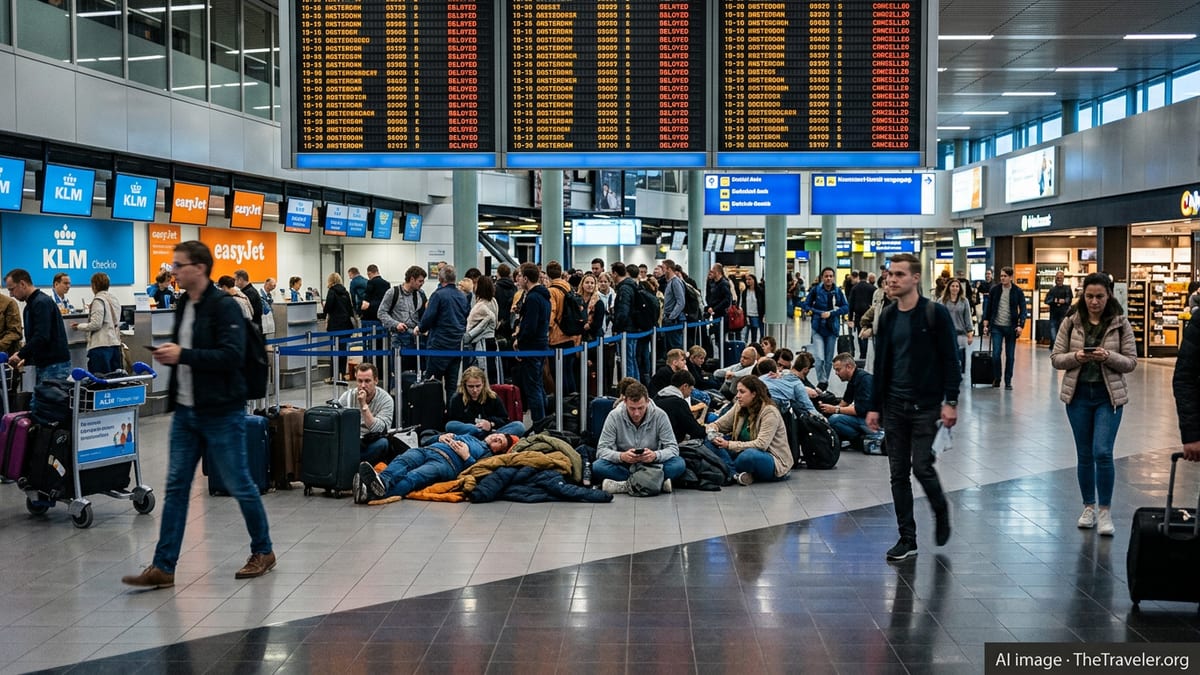
Summer air travel across Europe is facing renewed turbulence as tracking data and regional reports point to 2,577 delayed flights and at least 101 cancellations in recent days, disrupting journeys through Norway, Spain, Italy, Switzerland and other key markets, and affecting passengers flying with Lufthansa, Ryanair, Eurowings and several rival carriers.
Get the latest news straight to your inbox!
Ripple Effects From Oslo, Zurich and Other Key Hubs
Recent operational problems and weather-related disruption at major northern European hubs have triggered knock-on delays well beyond their immediate regions. Coverage from Scandinavian travel outlets and aviation trackers indicates that Oslo Gardermoen and Copenhagen have both seen clusters of cancellations and extended delays, with onward connections to cities such as Zurich, Munich and Vienna also affected as aircraft and crews fell out of position.
Analyses of flight-tracking data from early and mid-June show that when departures are paused or thinned out at a busy hub, a relatively small number of initial cancellations can rapidly multiply into hundreds of delayed flights across the network. That pattern appears to be reflected in the latest figures, with 2,577 delayed flights logged across Europe on a recent peak travel day and a further 101 services cancelled outright, hitting travelers on both short-haul and medium-haul routes.
Airlines operating dense intra-European schedules, including Lufthansa, Eurowings, Ryanair and Scandinavian carriers, are particularly exposed to these ripple effects. A single aircraft operating multiple daily rotations can carry disruption from Oslo or Zurich into later flights that touch hubs in Germany, Italy or Spain, leaving passengers facing missed connections and unplanned overnight stays.
Spain and Italy Struggle Under Early Summer Demand
Southern Europe has also emerged as a flashpoint as the main holiday season gets underway. Travel reports focused on Spain highlight days with more than 1,200 delays and dozens of cancellations at major hubs such as Madrid and Barcelona, with further pressure reported at resort gateways serving the Balearic and Canary Islands. These disruptions are often linked to weather constraints, congestion and tight turnaround times at heavily used stands and runways.
In Italy, industrial action and localized strikes at airports and among aviation workers in June have compounded the strain. Publicly available summaries of the situation describe walkouts that forced airlines to pare back schedules, cancel flights and consolidate services on certain days, affecting thousands of passengers. When ground staff, air traffic controllers and cabin crew participate in overlapping stoppages, carriers have little choice but to thin out their timetables and focus resources on core routes.
Although airlines sometimes reframe strike-related disruptions as operational or scheduling issues, broader coverage of recent events in Italy and Spain points to labor tensions as a consistent underlying factor. For travelers, the immediate impact is similar regardless of the root cause: longer queues, busy rebooking desks and a heightened risk that onward journeys across Europe may not depart as planned.
Lufthansa, Ryanair and Eurowings See Network-Wide Pressure
The latest wave of disruption is being felt most acutely by major pan-European carriers that rely on tight connections and multi-leg itineraries. Lufthansa, which has already been adjusting parts of its European network for the 2026 summer season, faces ongoing challenges balancing scheduled capacity with unpredictable bottlenecks related to storms, staffing and airspace constraints. Network changes, including the trimming of some routes, are aimed at increasing resilience but can leave fewer options for same-day rebooking when problems arise.
Eurowings, part of the Lufthansa Group and a key player in point-to-point leisure traffic, has also attracted attention from passenger-rights services for relatively high rates of delays and cancellations on certain routes. When disruption strikes, Eurowings flights feeding into or out of hubs like Zurich and Düsseldorf can become part of a broader chain of missed connections across central Europe.
Ryanair, Europe’s largest low-cost carrier, generally operates a high-utilization model that keeps aircraft flying multiple sectors per day. Reports from consumer forums and recent analyses suggest that the airline often keeps services running where possible, opting for significant delays or diversions instead of outright cancellations. However, in a congested summer environment, even modest schedule changes can have serious consequences for passengers depending on precise timings to reach cruises, tours or onward long-haul flights.
Norway, Switzerland and Northern Europe Feel the Strain
In northern Europe, Norway and Switzerland continue to feature prominently in disruption tallies. Oslo Gardermoen has recently recorded waves of delays and cancellations tied to both local issues and earlier problems at other hubs such as Copenhagen. Zurich, a crucial connecting point for traffic between central Europe and the wider world, has also seen services scrubbed or rescheduled on busy days as airlines adjust operations in response to aircraft and crew shortages.
Traveller accounts circulating in public forums describe short-notice cancellations on routes such as Zurich to Oslo and other regional links, sometimes announced less than 24 hours before departure. In several cases, passengers report being rebooked onto alternative flights with extended layovers, or being advised to travel a day later once suitable connections become available.
Because many of these flights are tied into complex connecting itineraries, even a single cancellation can upend plans booked months in advance. Northern gateways like Oslo and Zurich function not only as origin and destination airports, but also as vital transfer points for trips that span multiple European cities as well as long-haul sectors to North America and Asia.
What Disrupted Passengers Can Expect Under EU Rules
For travelers caught up in the current wave of disruption, European air passenger regulations offer a degree of protection. Under EU Regulation 261/2004, often referred to simply as EU 261, passengers flying from airports in the European Union, plus associated countries such as Norway and Switzerland, may be entitled to assistance and financial compensation when flights are heavily delayed or cancelled, depending on the cause and routing.
Publicly available guidance from passenger-rights organizations explains that compensation levels typically range from 250 to 600 euros per person for qualifying long delays or cancellations, with the exact amount determined by flight distance and arrival delay. The rules apply to flights departing from European airports on any carrier, and to flights arriving in Europe when operated by an EU or associated airline.
However, the right to compensation is not automatic. Airlines are generally not required to pay when disruptions stem from events deemed beyond their control, such as severe weather or certain categories of air traffic control restrictions. In cases linked to internal staffing problems, technical issues or many forms of strike action, recent commentary suggests that passengers should document their experience carefully and consider pursuing claims through airline channels or specialized claim services.
With early summer already showing elevated levels of disruption and peak holiday travel still ahead, industry watchers note that travelers on Lufthansa, Ryanair, Eurowings and other European carriers may benefit from building additional buffers into their itineraries, keeping digital boarding passes and notifications up to date, and familiarizing themselves with their rights if the next wave of delays and cancellations affects their plans.