


More news on this day
Travelers passing through Jakarta’s Soekarno-Hatta International Airport on June 23 faced mounting frustration as a wave of operational disruption triggered 28 flight withdrawals and 97 delays across major Indonesian carriers, stranding passengers and unsettling regional links to Singapore, Malaysia and Thailand.
Get the latest news straight to your inbox!
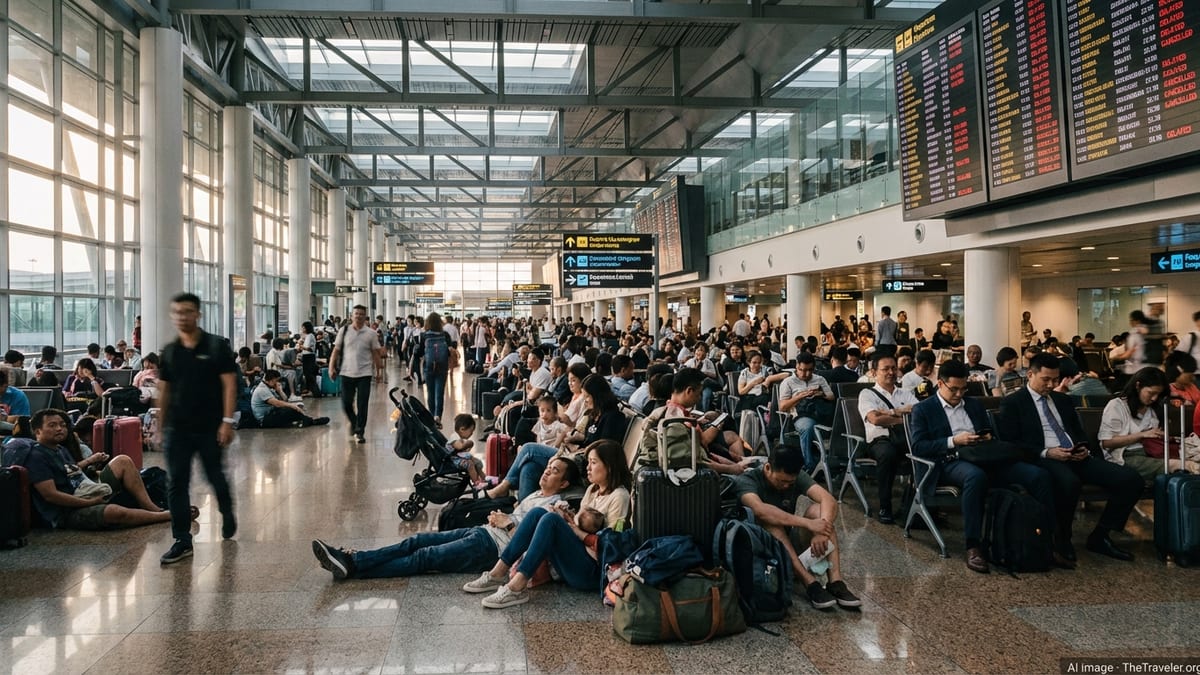
Major Indonesian Carriers Hit by Operational Turbulence
Publicly available operational data for Jakarta’s Soekarno-Hatta International Airport show that on June 23, a cluster of cancellations and extended delays affected services operated by Batik Air, Garuda Indonesia, Lion Air, Citilink and Super Air Jet. In total, 28 flights were withdrawn from the schedule while 97 others departed significantly behind time, impacting both domestic and short-haul regional routes.
Reports indicate that the disruption was concentrated among high-frequency domestic services that funnel travelers from across the Indonesian archipelago into Jakarta for onward connections. These routes are crucial feeders for international departures bound for neighboring hubs such as Singapore, Kuala Lumpur and Bangkok, amplifying the impact of each withdrawal or delay.
The affected airlines are among the country’s most heavily used carriers out of Soekarno-Hatta, collectively handling a large share of the airport’s daily seat capacity. When several of these operators experience irregular operations at the same time, the knock-on effect typically ripples across departure banks, security queues and baggage handling, intensifying the experience of congestion for travelers on the ground.
While aircraft continued to move in and out of the airport, the combination of scrapped departures and rolling delays created a pattern of uncertainty that left many passengers repeatedly rechecking status screens and airline apps to understand whether their flights would operate as planned.
Regional Connections to Singapore, Malaysia and Thailand Disrupted
Jakarta’s Soekarno-Hatta functions as a primary hub linking Indonesia with major Southeast Asian gateways. According to published coverage and timetable data, services operated by Batik Air, Garuda Indonesia, Lion Air and Citilink routinely connect Jakarta to Singapore and a range of Malaysian cities, while some schedules provide onward access to Thailand through regional partners and connections.
The latest round of disruption therefore reached beyond Indonesia’s borders. Passengers relying on Jakarta as a connection point to Singapore, Kuala Lumpur and other regional destinations faced missed onward flights, unexpected overnight stays and the possibility of being rebooked on different airlines or routings. For business travelers and holidaymakers alike, even short delays at the hub can cause missed check-in cutoffs at onward gateways.
Travel industry analyses note that Southeast Asia’s short-haul market is highly interconnected, with multiple carriers selling itineraries that combine domestic legs with regional sectors. When a domestic sector from a secondary Indonesian city into Jakarta is withdrawn or heavily delayed, travelers may find that their entire multi-segment journey unravels, especially when the ticket involves more than one airline or a separate low-cost carrier booking.
The June 23 operational picture at Soekarno-Hatta underlined this vulnerability. With dozens of delayed departures and nearly thirty flights removed from the schedule, even passengers whose international flights were still operating on time could find themselves stranded in Jakarta or at their origin airport, unable to make the key Jakarta leg that would have carried them onward to Singapore, Malaysia or Thailand.
Impact on Passengers: Missed Plans and Overnight Stays
Accounts compiled from local news reports and traveler updates describe crowded terminals, long customer service lines and passengers attempting to rearrange their journeys at short notice. Some travelers were reported to be seeking last-minute hotel rooms around the airport after missing late-evening onward flights, while others tried to rebook to early-morning departures on alternative carriers.
For travelers on tight schedules, including those with business meetings, medical appointments or tour departures scheduled soon after arrival, the timing of the delays proved particularly disruptive. In a hub environment such as Soekarno-Hatta, a delay of several hours on a domestic feeder can eliminate all realistic same-day connection options, especially when onward routes operate only a few times per day.
Families and leisure travelers were also affected. Publicly available information points to cases of travelers needing to adjust hotel bookings at their final destination, rebook airport transfers or lose the first night of prepaid accommodation because their arrival shifted to the following day. In some instances, passengers with separate tickets on low-cost regional carriers faced the added challenge of having no through-checking of luggage, requiring them to physically collect bags and recheck them, a process made far more stressful when arriving hours behind schedule.
Social media posts from the day highlighted the emotional strain of the disruption, with photographs of crowded waiting areas and boarding gates, as well as comments about limited information and evolving departure times. For many travelers, the uncertainty surrounding whether flights would depart at all was as unsettling as the delays themselves.
Operational Pressures and On-Time Performance at Soekarno-Hatta
Research on on-time performance at Soekarno-Hatta has long identified the airport as a challenging operating environment, with congestion during peak hours, high aircraft movements and complex ground operations. Academic analyses of Indonesian aviation have pointed to recurring patterns of delays among major domestic carriers, including Garuda Indonesia, Lion Air, Batik Air, Citilink and, more recently, Super Air Jet.
Industry observers note that a collection of factors can combine to produce a day of widespread irregular operations. Weather disruptions in parts of Indonesia, air traffic flow management measures, late-arriving aircraft from earlier sectors and technical checks can each contribute to knock-on delays. When multiple carriers operate tight turnarounds to support dense schedules, a relatively small disruption early in the day can magnify into more serious timetable dislocation by afternoon and evening.
Analysts also highlight the role of hub complexity. At Soekarno-Hatta, carriers may use multiple terminals and coordinate aircraft, crew and ground handling resources across a wide variety of destinations. Any imbalance, such as an aircraft requiring unexpected maintenance or a late incoming flight from an outstation, can reverberate throughout the network.
Recent studies on Indonesian flight delays emphasize that, although airlines and regulators have introduced measures to monitor and improve punctuality, days with heavy disruption still occur, particularly during periods of strong demand, holiday seasons or operational stress. The events of June 23 align with this broader pattern of periodic, concentrated disruption affecting wide swathes of the schedule.
What Travelers Using Jakarta’s Hub Should Consider Now
For travelers planning to pass through Soekarno-Hatta in the coming weeks, the latest disruption serves as a reminder to build additional buffer time into itineraries that rely on Jakarta as a connection point, especially when onward flights involve separate tickets or different airlines. Travel advisers often recommend allowing several hours between arrival and departure when transferring from a domestic Indonesian flight onto an international service.
Passengers connecting to Singapore, Malaysia or Thailand via Jakarta may wish to favor through-tickets on a single carrier or within one airline group where possible, as such arrangements can offer greater protection in the event of delays, including rebooking on the next available flight. For those using low-cost or separate bookings, checking real-time status before leaving for the airport and monitoring email or text notifications from airlines can help reduce surprises.
Observers also encourage travelers to be aware of local consumer protection frameworks related to flight delays and cancellations, which may specify when carriers are expected to provide meals, accommodation or compensation. Understanding these provisions in advance can help passengers navigate disrupted situations more effectively.
While the June 23 irregular operations at Jakarta’s main gateway caused significant inconvenience, they also underscored the central role of Soekarno-Hatta in regional connectivity. As Indonesia’s air traffic continues to grow, the ability of airlines and airport stakeholders to manage peak-period disruption will remain a key concern for travelers relying on Jakarta to link the country with neighboring Southeast Asian hubs.