


From the airplane window Helsinki looked almost monochrome, a calm grid of streets pressed against a slate colored sea. I had one goal when I landed: get the classic shot of Helsinki Cathedral rising above Senate Square, the same stark white silhouette that fills Instagram feeds and souvenir postcards. What I did not expect was to spend the better part of a day on those granite steps, watching the city move around the cathedral and realizing that the real reason to come here is not the photo, but the particular atmosphere that settles over this corner of Helsinki.
Get the latest updates straight to your inbox!
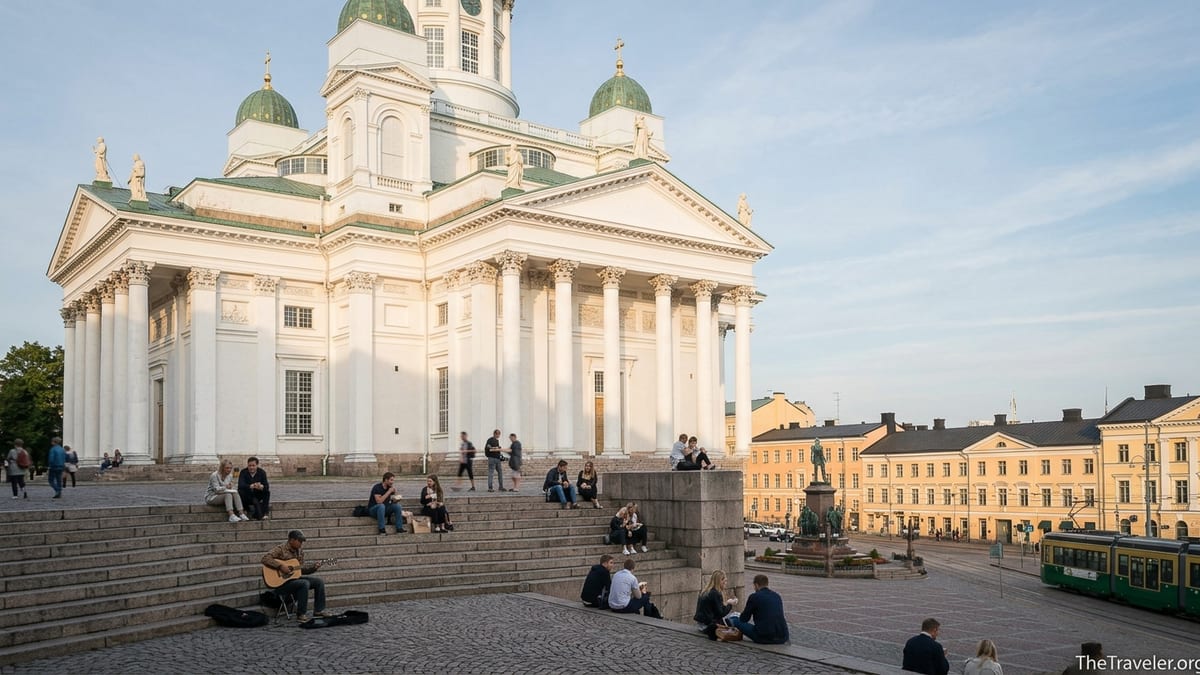
First Glimpse of a Nordic Icon
My introduction to Helsinki Cathedral began, as it does for many visitors, at the Central Railway Station. After the airport train dropped me in the city center, it was a straightforward ten minute walk along Keskuskatu and Aleksanterinkatu. Trams clanged past, the spire of the cathedral occasionally flashing between facades until suddenly the street opened and there it was: a staircase as long as a ship’s hull, crowned by a forest of white columns and green domes.
Helsinki Cathedral was completed in the mid 19th century as part of architect Carl Ludvig Engel’s grand plan for Senate Square. Today it is less a remote monument and more a living stage set. Students in black coats cut diagonally across the square, delivery vans rattle over cobblestones, and groups of visitors stand in loose semi circles, phones raised. The building dominates everything, yet somehow does not feel overbearing. Against a pale northern sky, the crisp neoclassical lines look almost minimalistic, which is exactly what makes photographers, including me, obsessed with capturing it.
My first photos were predictably straightforward. I stood near the statue of Alexander II in the middle of Senate Square, framed the cathedral dead center and tried to keep tram wires out of the shot. The result was handsome enough, but it felt like a postcard anyone could have bought at the market hall nearby. It was only when I climbed the slow, thigh burning staircase that the cathedral began to feel like a place rather than a backdrop.
Chasing the Perfect Shot Around Senate Square
If your initial plan is to visit for photographs, Helsinki Cathedral more than rewards a bit of effort. I started early, just after 8 am on an overcast summer morning, when the light was soft and the square still mostly empty. From the bottom of the steps on the western edge of the square, I could use a wide angle lens to exaggerate the staircase, making the cathedral seem higher than it really is. Locals with takeaway coffee cups became useful scale markers, tiny figures against the expanse of white marble.
Walking to the northeast corner of the square, near where Sofiankatu meets Aleksanterinkatu, gave me a completely different angle. From here, the cathedral rises above the yellow former university buildings and the ochre tones of the Government Palace. The contrast between colorful 19th century facades and the chalk white church makes for a dynamic frame that feels more like real Helsinki than a bare, sky only backdrop. Photographers I met there swore by late afternoon in winter, when a low sun slips between the buildings for a few minutes and paints everything in honey colored light.
For a less obvious composition, I wandered behind the cathedral along Kirkkokatu. Back here, parked bicycles, stone walls and the sudden appearance of the green copper domes lent a sense of discovery that is missing on the main square. One of my favorite frames came from the corner where a modest wooden door, pale green paint peeling with age, sat beneath the soaring wall of the cathedral. It was the kind of detail you miss if you only stay on the front steps for a quick selfie.
Even if you are armed with nothing more than a smartphone, small tricks help. Shooting from halfway up the steps at a slight angle keeps the facade from looking flat. Waiting until a tram passes along Unioninkatu below and including its red and cream blur in the foreground can transform a static architectural shot into a slice of city life. It quickly became clear that you could spend hours experimenting here and still not exhaust the possibilities.
Inside the Cathedral: Silence, Space and Soft Light
From the outside, Helsinki Cathedral is all about form and contrast. Stepping inside is a shift in mood. The heavy door closes behind you and the city noise drops away, replaced by an almost tangible silence broken only by the creak of floorboards and the occasional cough. The interior is deliberately restrained. White walls, pale pews and a soft grey floor allow the circular dome overhead to command attention. Natural light filters through tall windows, making midday feel like permanent, gentle morning.
Entry for casual visitors is ticketed these days, with revenue helping to maintain the building and support parish activities. You buy your ticket at the visitor center tucked into the bell tower pavilion off to the side. The price for adults is modest enough that most travelers think of it as a small contribution rather than a barrier, and there are exemptions for parish members, children and certain groups. The process was efficient: a brief queue of tour groups, a handheld scanner, and a friendly greeting in impeccable English.
Inside, flashes are discouraged and tripods are not allowed during normal visiting hours, something photography minded travelers should be prepared for. That limitation ended up shaping my experience more than I expected. Instead of obsessing over long exposure shots, I found myself simply sitting in a pew and watching. A young couple slipped in, sat for a few minutes, then quietly lit a candle. A pair of older Finns, clearly regulars, crossed themselves with the ease of habit and moved to a side pew near the pulpit. Tour groups arrived in brief, murmuring waves and then dispersed.
Architecturally, this is not a cathedral that overwhelms you with gilded altarpieces or fresco packed ceilings. Its power lies in proportion and emptiness. The circle of the dome, pierced by round windows, makes the space feel both intimate and tall. The simple altar painting and minimal decoration keep the focus on light and line. I realized that my camera, for once, could not fully translate what it felt like to be there. That realization marked the moment I understood why people stay longer than they planned.
Life on the Steps: The City’s Shared Living Room
It is outside, however, that the atmosphere around Helsinki Cathedral becomes most distinctive. The vast staircase doubles as an informal amphitheater and city living room. On a weekday around lunchtime in July, the steps are a cross section of everything Helsinki is: office workers in shirtsleeves eating supermarket salads from cardboard boxes, students in black hoodies scrolling through their phones, a group of cyclists resting their city bikes against the lower steps, and tourists with paper cones of berries from the nearby Market Square.
I found a place halfway up, where the stone was warmed by a patch of rare Finnish sunshine. A busker at the bottom of the steps tuned a guitar and began a gentle set of Nordic folk songs and acoustic covers. Children from a nearby school group raced up and down the staircase, their teachers pretending to protest while secretly enjoying the sunshine. A wedding party arrived suddenly, the bride in a simple white dress and sneakers, the groom nervously adjusting his tie. They posed briefly under the columns while a photographer directed them, then burst into laughter when a gust of wind tried to rearrange the bridal veil.
You start to notice a rhythm to the place. Mornings bring dog walkers and runners passing through on their daily circuits. Late afternoons see a wave of tired conference delegates drifting up from hotels off Pohjoisesplanadi, name badges still around their necks. As evening deepens, the square quiets, though in summer there is still a glow in the sky that keeps the cathedral’s silhouette visible well past midnight. Locals told me that at New Year’s and during major events, the steps transform into a dense crowd of people watching fireworks or listening to live music.
What makes these steps special is not any single activity but the way everyone shares the space without fuss. People leave enough room for each other, offer to take group photos for strangers and occasionally fall into conversation. I ended up chatting with a retired couple from Tampere who travel to Helsinki every summer for a weekend of concerts, and with a solo traveler from Spain who had just come from visiting the Uspenski Orthodox Cathedral across the harbor. None of us had planned to stay more than a few minutes. Each of us, it turned out, had already been there for over an hour.
From Postcard to Place: Exploring the Cathedral’s Neighborhood
One of the best ways to understand Helsinki Cathedral’s atmosphere is to explore the immediate streets that radiate from Senate Square. Walk south toward the harbor and you quickly reach Market Square, where stalls sell everything from fresh strawberries and chanterelle mushrooms in season to smoked salmon and steaming bowls of salmon soup. Take your lunch in a paper bowl back to the edge of the square and you will still see the cathedral’s domes rising above the rooftops, a constant point of orientation.
To the west, along Katariinankatu and Unioninkatu, elegant neoclassical facades house government offices, a university building and a scattering of design shops and cafes. I ducked into a small coffee bar on Aleksanterinkatu for a pulla pastry and a dark roasted filter coffee, the kind of no nonsense cafe where students review lecture notes and office workers scroll through the news. From the window, I could see a slice of the cathedral between buildings, like a familiar neighbor glancing into the street.
Head a few blocks north and the city shifts again. Near the Kruununhaka district, street trees frame glimpses of the cathedral’s side walls, and quiet residential buildings replace tourist packed storefronts. On one corner, a modest secondhand bookshop displayed Finnish crime novels beneath a handwritten sign offering discounts on foreign language titles. Upstairs, lights from apartments flickered to life as locals came home from work, a reminder that this monument is woven into a real, lived in neighborhood.
For a different vantage point, I followed a tip from another traveler and climbed up to a rooftop terrace bar on a nearby hotel during the early evening. The view across Senate Square was subtly off center, which made the cathedral feel more architectural and less staged. Office towers, harbor cranes and a thin slice of the Baltic completed the panorama. With a glass of locally brewed beer in hand and the sky slowly turning lavender, it was easy to understand why Helsinki residents speak of this area with understated affection rather than grand declarations.
Practical Tips: Getting There, Costs and When to Visit
Reaching Helsinki Cathedral is straightforward whether you are staying in the city or visiting during a layover. From Helsinki Airport, frequent I and P trains run to the Central Railway Station, and the journey takes around 30 to 40 minutes depending on the time of day. You will need an ABC zone ticket on the regional public transport system, which gives you about 80 to 90 minutes of unlimited travel on trains, trams, buses and the metro within its validity period. Once at the station, Senate Square is about a kilometer away on foot, or a short tram ride if you prefer.
There is no separate fee to stand on the steps or wander around Senate Square, and many visitors are surprised by how much time they spend there without ever entering the building. For those who do want to step inside, tickets are sold at the visitor center in the bell tower pavilion on the side of the cathedral. Prices are kept relatively modest and may vary slightly by season, with reductions and free entry for children, parish members and some other categories. Payment by card is standard in Helsinki, and even small purchases such as a coffee or tram fare are commonly made with contactless cards or mobile wallets.
Weather has a huge impact on your experience. In summer, long days and mild temperatures make the steps a social hub well into the evening. Early morning visits between June and August reward you with softer light and fewer crowds. Winter brings a different kind of magic: short days, snow dusted steps and the possibility of seeing the cathedral lit up against a deep blue afternoon sky. Pack layers and non slip shoes if you visit between November and March, as the staircase can be icy.
As for timing within the week, weekdays generally feel calmer than Saturdays, when tour buses and cruise ship groups can make the square busier. Check ahead for major events, national holidays or demonstrations that might take place on Senate Square, simply so you know what to expect. Even on crowded days, however, small pockets of quiet can usually be found by walking around the sides of the cathedral or ducking into a nearby cafe for a break.
Photography Etiquette and Respectful Visiting
Although Helsinki Cathedral is one of the city’s most photographed buildings, it remains first and foremost a place of worship for the local parish. That reality shapes how you should behave once you step inside. Photography is generally allowed, but flash is discouraged, and it is good manners to avoid taking photos during services unless you have explicit permission. On the day I visited, a short midday prayer service began while tourists were still in the pews. Most people instinctively stopped taking pictures, sat down and listened quietly for a few minutes before slipping out.
Dressing respectfully is appreciated, especially if you plan to enter the church itself rather than simply sitting outside. There is no formal dress code, but avoiding beachwear, loud slogans on clothing and hats indoors helps maintain the dignified atmosphere. Outside on the steps, the mood is more relaxed. People eat, chat and take photos freely, but there is an unspoken understanding that loud music, littering and rowdy behavior are out of place. This is not a party square; it feels closer to a university quad or public library plaza.
If you are taking portraits or more elaborate photos, be mindful of blocking pathways or monopolizing popular vantage points. I watched one influencer style shoot unfold near the top of the steps, with a tripod and outfit changes. While most locals shrugged it off, a few visitors clearly felt awkward walking through the frame to get to the doors. A better approach is to take your time but keep your equipment compact, move aside between shots and remember that everyone has an equal claim to the space.
Accessibility is reasonably good for such a historic site. Ramps and alternative entrances are available for those who cannot manage the main staircase, and staff at the visitor center can offer guidance. Inside, seating is plentiful and the open layout makes it easy to find a quiet corner. If you have specific needs, consider visiting during the first hour of opening on a weekday, when the interior tends to be most peaceful.
The Takeaway
When I first planned my stop at Helsinki Cathedral, I pictured a quick visit. I would walk from the station, climb the famous steps, take a few carefully composed photos and then move on to the next sight. What happened instead is that the cathedral became the anchor point of my entire day in Helsinki. I kept circling back: for another look at the facade in different light, for a quiet moment inside when a drizzle started, for a late afternoon coffee on the steps while watching office workers crossing the square below.
Helsinki Cathedral rewards the photographer in obvious ways. It is symmetrical but not sterile, dramatic yet clean lined, and sits on a square that naturally lends itself to wide angle shots. Yet the real value of visiting lies in how the place makes you feel. It is in the shared silence under the dome, the way strangers shift slightly so you can sit beside them on the steps, the sight of green domes floating above tram wires and market stalls as you wander nearby streets.
If you come to Helsinki Cathedral prepared only to tick it off your list or fill a memory card, you will still go home with fine images. If you give yourself time to linger, to sit, to watch and perhaps to put your camera away for a while, you will leave with something rarer: a sense of having briefly taken part in the city’s daily life. In the end, the atmosphere is what stays with you long after the photos have been edited and posted.
FAQ
Q1. Where exactly is Helsinki Cathedral located in the city?
Helsinki Cathedral stands on the northern side of Senate Square in central Helsinki, a short walk uphill from the Central Railway Station and close to the harbor and Market Square.
Q2. How do I get to Helsinki Cathedral from the airport?
From Helsinki Airport, take an I or P commuter train to the Central Railway Station using an ABC zone ticket, then walk about ten to fifteen minutes along the main streets toward Senate Square, or transfer to a tram for a brief ride.
Q3. Is there an entrance fee to visit Helsinki Cathedral?
Access to the steps and Senate Square is free, but entry to the cathedral interior for sightseeing typically requires a modest ticket purchased at the visitor center, with discounted or free admission for some groups such as children and parish members.
Q4. What are the opening hours for visiting the inside of the cathedral?
Opening hours vary by season and by day, but the cathedral is usually open daily for visitors during daytime, with extended hours in summer and shorter ones in winter, while services may affect access to parts of the interior.
Q5. When is the best time of day to photograph Helsinki Cathedral?
Early morning and late afternoon offer the most flattering light, with softer shadows and fewer crowds, while winter afternoons can be especially atmospheric when snow is on the steps and the sky turns a deep blue.
Q6. Are photography and tripods allowed inside the cathedral?
Handheld photography without flash is generally allowed for personal use inside, but tripods and bright lighting are not permitted during regular visiting hours, and it is polite to pause photography during services or events.
Q7. Is Helsinki Cathedral accessible for visitors with limited mobility?
Although the main staircase is steep, there are alternative routes and entrances with fewer steps, and staff at the visitor center can guide visitors with limited mobility to the most suitable access points.
Q8. What other attractions are near Helsinki Cathedral?
Within a few minutes’ walk you will find Senate Square’s historic buildings, the harbor and Market Square, the Uspenski Orthodox Cathedral, the Esplanade park, and several museums, cafes and design shops.
Q9. Can I attend a church service at Helsinki Cathedral as a visitor?
Yes, visitors are welcome to attend services, which are usually held in Finnish but sometimes include elements in other languages; simply enter respectfully, turn off your phone’s sound and follow the lead of the congregation.
Q10. Is it safe to visit the cathedral area at night?
Central Helsinki, including the area around Senate Square, is generally considered safe at night, though as in any city it is sensible to stay aware of your surroundings and keep valuables secure, especially when streets are quiet.