


More news on this day
Non-EU travelers planning trips to Europe can breathe a temporary sigh of relief, as new reports indicate the long-awaited European Travel Information and Authorisation System (ETIAS) will not begin before 2027, despite previous expectations of a late 2026 rollout.
Get the latest news straight to your inbox!
New Reports Point to Fresh Delay for ETIAS
The latest coverage from European travel and policy outlets indicates that the launch of ETIAS, originally projected for the last quarter of 2026, is now considered unlikely before 2027. This comes after years of shifting target dates and repeated technical and operational setbacks across the European Union’s wider digital border management program.
While official EU portals still describe ETIAS as starting operations in late 2026 with a subsequent transition period, recent reporting based on briefings from those involved in implementation suggests that timetable has effectively slipped. The current assessment is that the system will not be ready in time to process applications or support mandatory checks in 2026, extending the status quo for another peak travel season.
The development marks yet another delay for a scheme first conceived more than a decade ago, intended to mirror systems such as the United States’ ESTA by requiring advance online authorization and a fee from visa-exempt travelers visiting most of Europe’s Schengen area.
EES Growing Pains Ripple Into ETIAS Timeline
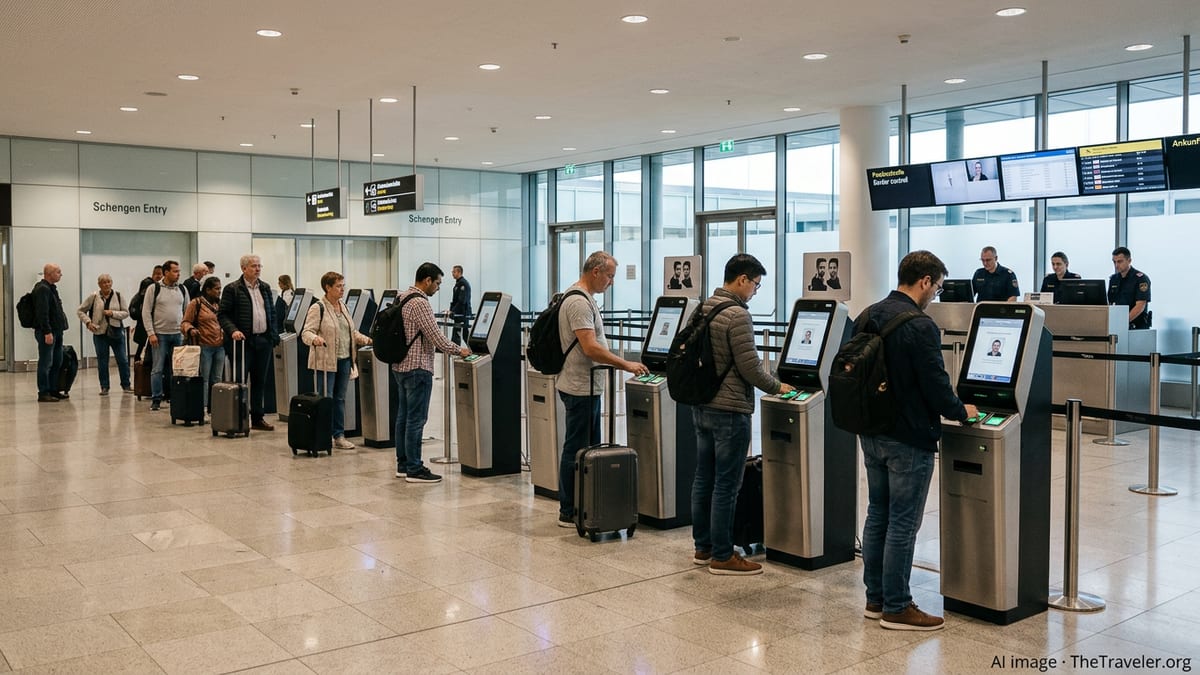
Behind the latest ETIAS delay is the troubled rollout of the Entry/Exit System (EES), a biometric border database that records the arrivals and departures of non-EU nationals. EES, which finally became fully operational across the Schengen area in early 2026 after multiple postponements, has been associated with longer queues and processing times at some busy airports and land border crossings.
Publicly available information from European institutions and industry groups shows that EES launch complexities have absorbed technical resources and highlighted weaknesses in infrastructure at certain border posts. Airlines and airport associations have repeatedly flagged bottlenecks and warned that adding ETIAS checks on top of an already stretched system could risk further congestion if not carefully phased in.
Specialist analyses note that ETIAS depends on data flowing reliably from EES and other security databases. As long as EES performance and staffing levels remain under scrutiny in several countries, policymakers appear reluctant to trigger a second major layer of controls that would affect every visa-exempt visitor.
What the Delay Means for Travelers from the US, UK and Other Countries
For now, travelers from visa-exempt countries, including the United States, United Kingdom, Canada, Australia and much of Latin America and Asia, will continue to enter the Schengen area without needing to secure an ETIAS travel authorization in advance. Passport checks, including biometric capture where applicable, remain in place under the EES framework, but no additional paid approval is required.
Earlier guidance from EU sources suggested that once ETIAS became operational there would be a grace period of at least six months before the authorization became mandatory at the border. With the latest delay, that transitional window effectively shifts further into the future, meaning trips planned for 2026, and now many in 2027, are less likely to be affected.
Travel industry reports indicate that the delay has been welcomed by tour operators, cruise lines and airlines, many of which had been preparing for a wave of questions from customers confused about whether they needed to apply, how much it would cost and where to find the official application channel. The pause gives companies more time to update booking systems and traveler communications once a firm date is eventually set.
Cost, Validity and Scope Remain Largely Unchanged
Although the start date has slipped, key design elements of ETIAS are not understood to have fundamentally changed. Public documents and previous legislative texts show that ETIAS is intended to apply to short-stay visits of up to 90 days in any 180-day period across most EU and Schengen countries for tourism, business or transit.
The authorization will be obtained online via an official portal or mobile application. Travelers will submit personal and passport details, answer basic security and public health questions, and pay a fee electronically. Proposals discussed in recent years suggest a cost higher than the initially signaled 7 euros, with several reports pointing to a 20-euro charge per adult application, though final confirmation is still awaited.
Once approved, the authorization is expected to remain valid for several years, or until the traveler’s passport expires, whichever comes first. Most applications are anticipated to be processed automatically in minutes, though a small proportion may require manual review by national units, potentially leading to longer processing times in some cases.
Next Steps and What to Watch Before Booking
Despite the new delay, European institutions continue to describe ETIAS as a central pillar of long-term border security and travel facilitation plans. The system is designed to allow authorities to screen travelers before departure, rather than solely at the border, and to reduce overstays and identity fraud by linking approvals to biometric and entry/exit records.
Future milestones to watch include any formal update to the official ETIAS website and communications from the European Commission or the EU agency responsible for large-scale IT systems once a revised timetable is agreed. Industry observers expect that, when a definitive launch window is finally confirmed, there will be several months of advance notice to allow carriers, travel agents and travelers to adapt.
Until such announcements appear in official public channels, prospective visitors are being advised by travel organizations to focus on standard requirements such as passport validity, visa rules for longer stays, and potential EES-related border wait times. For now, ETIAS remains a significant future change to travel into Europe, but one that is likely to arrive later than many had previously planned for.