


More news on this day
The United States has raised its travel advisory for Kenya to Level 3, urging Americans to reconsider nonessential trips as publicly available guidance highlights growing risks from crime, kidnappings, terrorism, civil unrest and an Ebola Bundibugyo virus outbreak.
Get the latest news straight to your inbox!
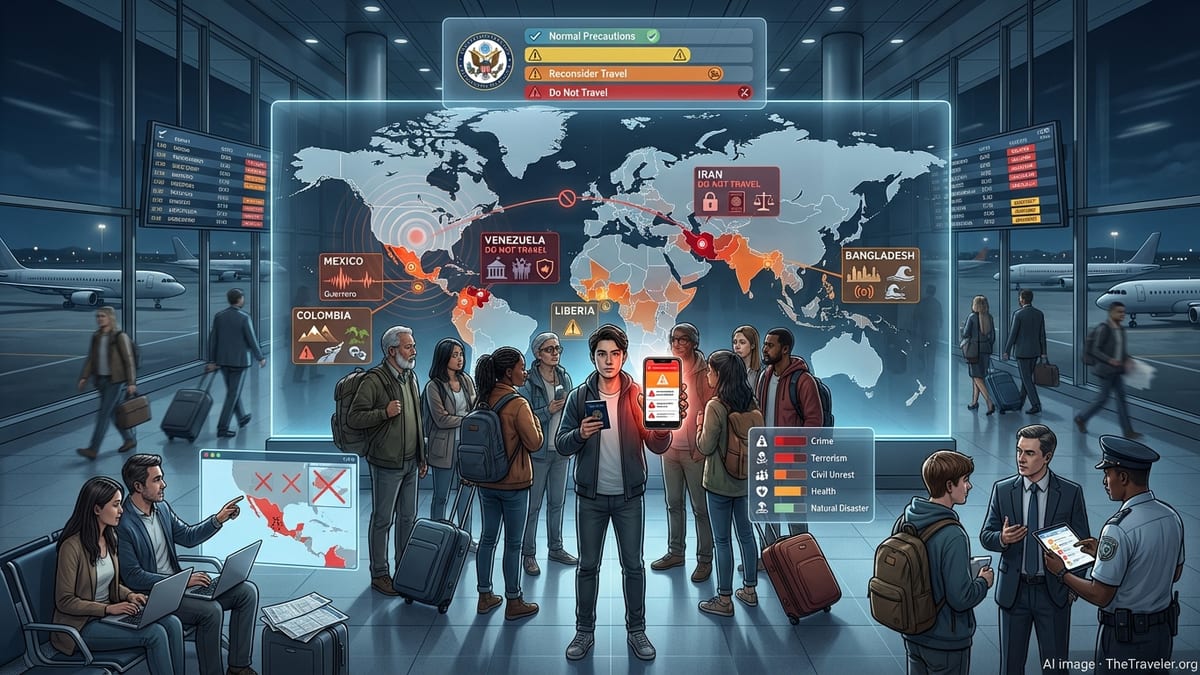
Advisory Raised to Level 3 With New Risk Warnings
According to updated guidance on the U.S. State Department’s travel advisory portal dated October 19, 2026, Kenya has been moved from Level 2, which calls for increased caution, to Level 3, which advises travelers to reconsider travel. The advisory now lists multiple risk indicators, including crime, kidnapping or hostage taking, terrorism, civil unrest, health and other concerns linked to road safety.
Published coverage from international and Kenyan media indicates that the revision replaces an earlier advisory issued in late July that had categorized Kenya at Level 2. Reports note that the new notice continues to highlight long-standing security threats while adding more explicit references to kidnapping risks and health hazards connected to an Ebola Bundibugyo virus outbreak in the region.
Travel advisories are intended as broad, country-level assessments. The current Kenya notice distinguishes between general nationwide risks and more serious concerns in specific counties and neighborhoods, where a separate, higher-level warning remains in effect.
Heightened Focus on Crime and Kidnapping Risks
The Level 3 advisory underscores persistent concerns about violent and opportunistic crime in urban and coastal centers. Publicly available information points to incidents involving armed robbery, carjacking, home invasions and theft targeting both residents and visitors, particularly in parts of Nairobi and Mombasa.
The updated language also calls attention to kidnapping and hostage-taking risks. Recent analyses of regional security trends describe abductions attributed to both criminal groups and militant organizations, especially in areas closer to the border with Somalia and along certain coastal stretches. While comprehensive national statistics are limited in open sources, advisory materials classify kidnapping as a distinct risk category warranting separate mention.
Travel guidance stresses that incidents can occur during road travel, at residential compounds and in public spaces frequented by foreigners. Travelers are urged in publicly available resources to maintain a low profile, vary routines, and carefully review security arrangements provided by tour operators, hotels and transport companies.
Area-Specific Restrictions and High-Risk Zones
Alongside the countrywide Level 3 designation, the United States maintains localized "Do Not Travel" warnings for particular parts of Kenya. The advisory specifies several Nairobi neighborhoods, including Eastleigh and Kibera, where crime, kidnapping and sporadic unrest are listed as key concerns. These areas are treated separately from the broader capital, which remains under the Level 3 reconsider travel guidance.
Additional high-risk areas highlighted in public summaries include sections of coastal and northern counties where militant activity and banditry have been reported over the years. Open reporting references counties such as Lamu, parts of Tana River, and regions near the Somalia border, where past attacks and abductions have targeted local communities, security forces and, in some instances, foreign nationals.
Advisory material notes that travel to major safari destinations, such as national parks and private conservancies, is not uniformly restricted but may involve transiting through zones categorized as higher risk. Travelers are therefore encouraged by publicly available guidance to assess route choices carefully, consult reputable operators on current ground conditions, and monitor local news for changes that could affect road or air access.
Health, Ebola Outbreak and Transportation Safety
The new warning comes amid a health emergency linked to the Bundibugyo strain of the Ebola virus. Kenyan and regional media report that national health authorities have confirmed multiple Ebola cases and are working with international partners to trace contacts and reinforce infection control. While most reported infections remain concentrated in defined clusters, coverage indicates heightened screening at border points and in major hospitals, particularly in Nairobi.
The travel advisory lists health as one of the principal risk indicators, alongside crime and kidnapping. Public health statements and news reports emphasize that travelers should review vaccination and medical guidance well in advance, verify that their health insurance covers medical evacuation, and stay informed about any quarantine or testing requirements that could affect intra-country movement.
Road safety is identified as another significant concern. Reports referencing the advisory note that traffic accidents are a leading cause of injury and death for visitors, with factors such as speeding, poorly maintained vehicles, limited street lighting and unpredictable driving patterns all contributing to elevated risk. Bus and minibus services, known locally as matatus, are frequently cited in coverage as having higher accident rates than private or chartered vehicles.
What the Change Means for Current and Prospective Travelers
The shift from Level 2 to Level 3 does not impose a ban on travel but signals that Americans should give additional weight to security and health conditions when deciding whether a trip is essential. Airlines continue to operate regular flights between the United States and Kenya, and major tourist circuits, including Maasai Mara, Amboseli and coastal resorts, remain open.
However, insurance policies, tour contracts and corporate travel rules sometimes link coverage or approvals to advisory levels. Travelers are therefore encouraged by consumer advocates and industry briefings to review the fine print of their bookings and insurance documents to understand how a Level 3 designation might affect cancellations, medical coverage or emergency evacuation support.
Publicly available information from travel risk consultancies and local tourism bodies suggests that visitors who choose to proceed with travel are focusing more on private transfers, vetted accommodation, and flexible itineraries that can be adjusted if security or health conditions change. Travelers are also being urged in open guidance to register with the Smart Traveler Enrollment Program or similar alert services, monitor local media and embassy notices, and keep contingency funds and plans in place should routes or requirements shift at short notice.