


More news on this day
The United States has raised its travel advisory for Kenya to Level 3, urging travelers to reconsider non-essential trips to the East African nation amid elevated concerns over crime, kidnapping, terrorism, civil unrest, traffic safety and a concurrent Ebola outbreak in the region.
Get the latest news straight to your inbox!
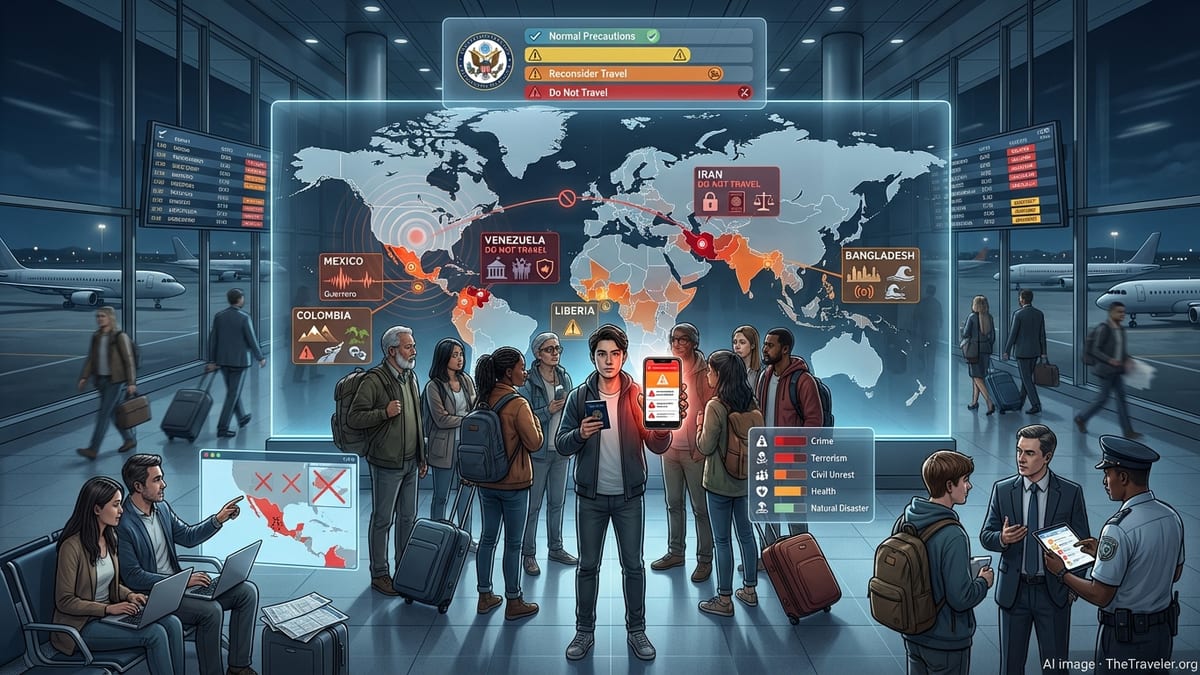
Advisory Raised to Level 3 on October 19, 2026
According to publicly available information from the U.S. State Department, the Kenya travel advisory was updated on October 19, 2026, moving from Level 2, which calls for increased caution, to Level 3, which urges travelers to reconsider travel. The revised notice cites a combination of health, security and safety factors, including crime, kidnapping and terrorism, as the basis for the heightened warning.
Travel.state.gov indicates that Kenya is now listed among destinations where travelers are advised to reconsider travel due to multiple risk indicators, specifically crime, kidnapping or hostage taking, terrorism, unrest, health and traffic safety. The update follows months of concern about regional insecurity and the spread of the Bundibugyo strain of Ebola in parts of East and Central Africa.
Kenyan and international media coverage, including reports by outlets such as The Standard and KBC in Nairobi, note that the advisory revision came shortly after Kenyan health authorities confirmed Ebola cases linked to regional transmission. These reports indicate that the United States has publicly associated the higher advisory level with both the health emergency and longstanding security concerns, particularly near border regions and certain urban neighborhoods.
The change places Kenya in the same Level 3 category as several other high-risk destinations where travelers are asked to weigh the necessity of their trips against documented security and health challenges. The advisory does not prohibit travel but signals that visitors should be prepared for elevated risk and potentially constrained government assistance in specific areas.
Specified Areas With the Highest Security Warnings
Within Kenya, the State Department guidance highlights particular regions as especially dangerous, designating several as Level 4 areas where travel is discouraged for any reason. The advisory lists counties along the Kenya–Somalia border, including Garissa, Wajir and Mandera, as areas with a significant risk of terrorism and kidnapping. These locations have experienced past attacks and cross-border incursions linked to armed groups, including al Shabaab, and continue to feature prominently in foreign travel advisories.
The online advisory also indicates heightened concern along parts of the north and northwest, including West Pokot and sections of Turkana and Marsabit counties close to the Ethiopian border. Public information from the State Department describes these regions as vulnerable to banditry and intercommunal violence, with incidents of armed ambushes and road attacks affecting both local residents and passing traffic.
Coastal areas north of Malindi, including parts of Lamu County and coastal districts of Tana River and Kilifi, are likewise identified as locations where the threat of terrorism and kidnapping is elevated. International advisories such as those issued by the United Kingdom and New Zealand echo these concerns, advising against all but essential travel to some of the same coastal and border areas due to the risk of militant attacks and abductions.
Even within Nairobi, the advisory singles out the neighborhoods of Eastleigh and Kibera. Publicly available guidance notes that both violent and opportunistic crime can occur in these districts, including armed carjackings, muggings and home invasions, and that kidnappings have been reported. The advisory indicates that law enforcement response can be limited or delayed in some incidents, particularly in congested or informal settlement areas.
Health and Ebola Concerns Add to Existing Risks
The timing of the advisory change is closely linked to health developments in the region. Kenyan news outlets report that the country has confirmed multiple cases of the Bundibugyo strain of Ebola since mid-2026, following an earlier outbreak in neighboring states that prompted a Public Health Emergency declaration by international health authorities. In response, Kenyan officials introduced enhanced screening at airports and key land border posts and designated isolation and treatment facilities in major cities.
The U.S. advisory notes that health considerations are a central factor behind the move from Level 2 to Level 3. While the detailed health protocols are published primarily by Kenyan authorities and international health organizations rather than the State Department, media coverage indicates that travelers from certain higher-risk countries are subject to electronic health surveillance forms and may face additional checks on arrival in Kenya.
In addition to Ebola, the advisory references general health risks that can affect visitors, including limited access to advanced medical care outside major urban centers and the potential difficulty of medical evacuation during an emergency. U.S. government travel resources recommend that travelers secure comprehensive travel medical insurance that covers evacuation and ensure they are up to date on routine and regionally recommended vaccinations before departure.
Health-related restrictions have the potential to change quickly, with quarantine, movement limitations or departure requirements varying based on case numbers and international guidance. Travelers planning itineraries in Kenya are advised, in public guidance, to monitor both local health ministry announcements and updates to foreign travel advisories up to and during their journeys.
Implications for Tourism, Safaris and Urban Travel
The updated Level 3 advisory arrives at a time when Kenya remains one of Africa’s most significant tourism destinations, with flagship attractions such as the Maasai Mara National Reserve, Amboseli National Park and coastal resort towns drawing visitors from around the world. Travel discussion forums and recent media features indicate that many safari circuits in the south and west of the country, removed from the highest-risk border zones, continue to operate, though operators are closely tracking security and health developments.
Publicly available safety guidance emphasizes that violent crime and road safety are major concerns in Kenyan cities, including Nairobi and Mombasa. Travelers are frequently urged to exercise caution after dark, arrange reliable airport and hotel transfers, avoid displaying valuables and use trusted, prearranged transport rather than hailing vehicles on the street. Reports indicate that traffic crashes are a leading cause of injury and death, with poor road conditions and limited enforcement of traffic regulations contributing to the risk.
For safari and beach travelers, international advisories often recommend flying between key hubs or using reputable tour companies with established security protocols, rather than undertaking long overland journeys through remote or high-risk areas. Industry reports note that some tour operators have adjusted itineraries over the years to avoid routes passing close to the Somalia border or northern coastal districts that feature in multiple governments’ highest-level warnings.
Travel-sector commentary suggests that, while the Level 3 designation may lead some visitors to postpone or reroute trips, others may still choose to proceed after conducting detailed risk assessments and securing flexible bookings. In many cases, the practical impact depends on individual risk tolerance, the specific regions being visited and the traveler’s ability to adjust plans rapidly if conditions change.
Guidance for Travelers Considering Trips to Kenya
Publicly available information from the U.S. government encourages anyone who decides to travel to Kenya to enroll in the Smart Traveler Enrollment Program, a free service that allows travelers to receive security and emergency alerts relevant to their destination. Enrollment also helps consular staff reach travelers or their emergency contacts more easily in the event of a crisis.
The advisory further recommends that travelers maintain a high level of situational awareness, develop personal contingency plans and ensure that family or trusted contacts have copies of key documents and itineraries. Guidance distributed through official channels stresses the importance of monitoring local media, following instructions from local authorities during incidents and avoiding demonstrations or large political gatherings that could turn confrontational.
Travelers are also encouraged, in publicly accessible guidance, to verify that their accommodation providers and tour operators have up-to-date safety and security measures, including trained staff, secure transport arrangements and clear procedures for responding to medical or security incidents. In regions listed as Level 4 within Kenya, foreign governments indicate that their own staff are restricted from travel, signaling that private travelers may face significant challenges if they enter these areas.
Given the combination of health, crime, kidnapping and terrorism concerns now reflected in the Level 3 advisory, prospective visitors are being urged by multiple national travel advisories to review their plans carefully, stay informed about evolving conditions and weigh the benefits of travel against the risks documented in current public guidance.