


More news on this day
The United States has updated its guidance for citizens planning trips to France, highlighting heightened risks from ongoing protests, rioting and localized curfews that have disrupted life in several major French cities this October.
Get the latest news straight to your inbox!
Advisory Level Holds, but Security Context Shifts
Publicly available information from the U.S. Department of State shows that France remains at Level 2, meaning travelers are advised to exercise increased caution due to terrorism and civil unrest. The formal advisory date currently published for France is May 28, 2025, and recent documentation lists the most recent update as August 11, 2025. However, in practice, guidance to U.S. travelers is now being framed against the backdrop of the sharp escalation in unrest seen across France in October 2026.
While the numerical advisory level has not been raised to Level 3 or Level 4 in the latest listings, France is now consistently cited in broader worldwide security messaging. A worldwide caution updated in July 2026 urges U.S. travelers everywhere to closely review country-specific advisories and any new alerts before departure, a message that has gained new relevance as images of looted shops, burning vehicles and damaged civic buildings circulate from French cities.
Consular information and archived travel-fact documentation continue to flag the twin risks of terrorism and civil unrest in France. The latest U.S. travel facts materials for France underscore that disruptive civil unrest, including both labor strikes and protests, is common and can significantly affect movement in and between cities, particularly when demonstrations occur near transport hubs and major tourist areas.
The result is a situation in which the formal advisory level has not changed, but the on-the-ground context that travelers must interpret has shifted rapidly. Travelers are being encouraged in publicly available guidance to treat France’s Level 2 status as a signal to plan carefully, stay informed about local developments and build flexibility into itineraries.
Nationwide Protests Turn Violent in Multiple Cities
France has been experiencing its most intense civil unrest in years, with nationwide protests over living costs, fuel prices, public services and education converging into a broader movement. Published coverage describes how initially peaceful demonstrations have escalated into rioting in several cities, including Paris, Lyon, Marseille and regional centers such as Limoges.
Reports from French and international outlets indicate that on and after October 17, 2026, large protests involving student organizations and revived yellow-vest networks saw clashes with police, arson attacks and widespread vandalism. In some locations, iconic civic buildings have suffered significant damage, including the historic town hall in Limoges and the main tourist office in central Lyon, both of which were hit by fires during nights of looting and street battles.
In Paris, images and eyewitness accounts compiled in recent coverage show cars set alight, shopfronts smashed and municipal buildings attacked as some protest marches degenerated into running confrontations. Suburbs and traditionally busy districts near major boulevards and squares, such as Place de la République, have seen repeated confrontations that stretched police resources and triggered intense political debate about security planning.
The unrest has not been confined to the capital. According to European and North American media reports, demonstrations have taken place in dozens of cities, often on the same day, creating a patchwork of disruptions that is difficult for travelers to anticipate using normal tourism planning tools alone.
Curfews, Closures and Disrupted Transport for Travelers
In response to the violence, French authorities have imposed night-time curfews in several municipalities, particularly following the most severe rioting. Recent coverage describes curfews or reinforced security measures in cities including Lyon and some Paris suburbs, sometimes announced at short notice after evenings of fires and looting.
These measures can directly affect visitors. Curfews may limit the ability to move around city centers at night, restrict access to restaurants and cultural venues, and lead to early closures of bars, cafés and entertainment sites. Travelers arriving late by air or rail are being advised in publicly accessible guidance to verify that their accommodation is reachable within the permitted hours and to carry proof of hotel reservations when crossing police checkpoints.
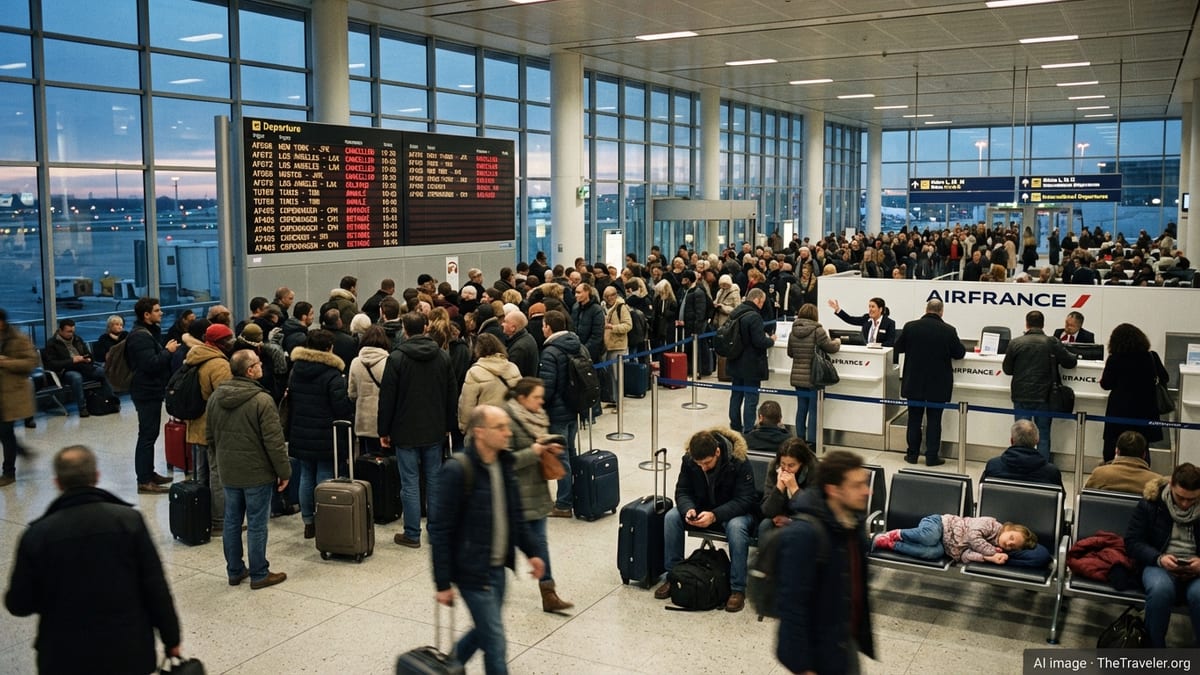
Transport has also faced periodic disruption. Domestic media and travel-industry briefings point to temporary shutdowns of metro and tram stops along planned protest routes, diverted bus lines and intermittent blockage of key ring roads and river quays around Paris and other large cities. On declared “days of action,” entire neighborhoods around assembly points may see streets closed and traffic rerouted, with taxis and ride-hailing services delayed or unavailable.
Rail services within France and cross-border routes can be affected when protests coincide with labor actions at state-owned operators. Travel forums and local advisories emphasize that detailed information on which specific lines will be disrupted often only becomes clear a day or two before each protest, making it important for visitors to monitor local news and station announcements in real time.
Tourism Sector Weighs Impact on Visitor Confidence
The French tourism industry is closely watching the situation, worried about potential damage to the country’s appeal ahead of the busy end-of-year travel period. Trade associations and destination marketing organizations cited in French business coverage report that more than 3,000 businesses, many of them shops, cafés and small hotels, have suffered damage from rioting and looting since mid-October.
Some sector leaders quoted in domestic economic reporting warn of a possible wave of cancellations, especially from long-haul markets that had only recently begun to rebound after the pandemic. Travel agency networks say that while mass cancellations have not yet materialized, concerns are particularly strong among travelers unfamiliar with France’s long tradition of protests and strikes.
At the same time, tourism officials and business owners featured in recent analyses stress that the core draws of French tourism remain intact. Flagship attractions such as the Eiffel Tower, the Louvre and the major châteaux are largely operating, although visitors may occasionally encounter modified hours or security perimeters on days when protests are planned nearby.
Industry voices argue that clear communication about what is happening on the ground is critical. Many recommend that overseas partners, including U.S. tour operators, provide clients with candid pre-departure briefings that distinguish between localized unrest in specific districts and the overall functioning of transport networks, museums and hotels.
Practical Advice for U.S. Travelers Considering France
In light of the current unrest, publicly available guidance from multiple foreign ministries converges around similar practical recommendations for visitors to France. Travelers are urged to avoid protest areas, both announced and spontaneous, and to leave immediately if they encounter large gatherings that appear to be shifting from demonstration to confrontation.
Many official advisories highlight France’s Vigipirate national security framework and associated alert levels, which underpin the country’s visible security posture around transport hubs, major tourist sites and large events. Travelers can expect to see a robust presence of uniformed personnel at train stations, airports and central squares, along with bag checks at museums, stadiums and shopping centers.
International travel-advice portals from countries such as the United Kingdom, Canada, Australia and Germany, which have all updated their France pages in October 2026, recommend that visitors monitor local media, follow municipal announcements about protest routes and curfews, and keep passport and identification documents with them at all times. Several also suggest installing local transport apps to receive real-time notifications about metro, tram and bus disruptions.
For U.S. citizens, publicly posted information encourages enrollment in the Smart Traveler Enrollment Program to receive security updates during stays in France. Given the combination of a stable Level 2 advisory and a rapidly evolving protest landscape, the emerging consensus is that travel to France remains possible for well-prepared visitors, but it now requires closer attention to local conditions and a greater willingness to adjust plans at short notice.