


More news on this day
Violent protests and a patchwork of night-time curfews in parts of France have left many would-be visitors wondering whether it is still safe to travel, just as the autumn tourism season reaches its peak.
Get the latest news straight to your inbox!
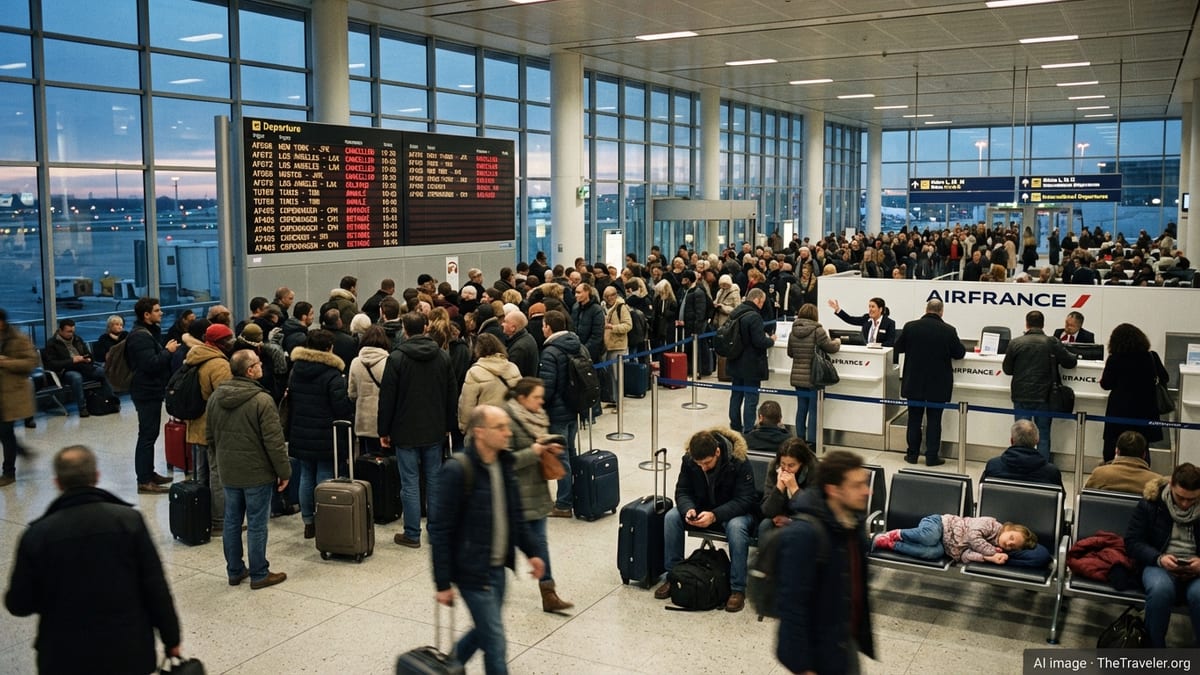
Overall travel advisories remain cautious but do not ban trips
Despite images of burning cars and vandalized city halls circulating widely since nationwide protests turned violent on October 17, most major government advisories still permit travel to France. The United States currently advises its citizens to exercise increased caution in the country, largely due to the risk of terrorism and civil unrest, but it has not issued a blanket warning against visiting. That broad advisory predates the latest disturbances and remains under review.
The United Kingdom’s Foreign, Commonwealth and Development Office notes ongoing protests and a risk of spontaneous gatherings in major cities but does not advise against non-essential travel. The guidance emphasizes that demonstrations can turn confrontational and recommends avoiding protest sites and following local announcements about temporary restrictions.
Canada’s official travel advice similarly highlights a risk of civil unrest and confirms that local curfews are in effect in certain municipalities. Australian guidance, through Smartraveller, stresses that large-scale protests occurred on October 17 and may continue, and that public safety measures such as localized curfews can be imposed at short notice. None of these advisories currently recommend cancelling ordinary tourist itineraries, though all urge close monitoring of news and official information before and during trips.
For travelers planning imminent departures, this means France is not formally closed to tourism, but conditions can change quickly in specific neighborhoods and on specific nights. Flexibility and up-to-date information are essential.
Where and when curfews apply
The most visible change for visitors has been the introduction of night-time curfews in response to rioting that followed student-led demonstrations over school conditions and the cost of living. According to recent coverage by international and French media, local authorities have imposed time-limited curfews in parts of Paris, Lyon, Nice, Lille and several smaller cities following the October 17 unrest.
In Paris, police decrees have restricted movement overnight in sensitive central areas including Place de la République and the streets around Les Halles. Reports indicate that in these zones, people are barred from being on the street between roughly 11 p.m. and 6 a.m., with some metro stations temporarily closed and an explicit ban on public gatherings after 8 p.m. in parts of the city. The measures are currently limited to tightly defined districts rather than the entire capital.
Elsewhere, curfews have been broader. In Lille and several surrounding municipalities in northern France, an evening-to-morning curfew has been applied for minors, typically beginning between 8 p.m. and 9 p.m. and lasting until 6 a.m. Local announcements in Nice have referred to a city-center curfew from 9 p.m. to 6 a.m. following property damage and confrontations with police. Lyon has seen repeated overnight restrictions in its central arrondissements, especially after a fire severely damaged the city’s tourism office during looting.
These measures are being adjusted day by day. Some zones have seen curfews renewed after quiet nights, while others have had restrictions lifted once tensions eased. Upcoming nationwide protest days, including additional marches called for late October and a announced general strike in early November, are expected to trigger fresh security measures, particularly in large urban centers.
On-the-ground reality for visitors
Published accounts from recent days suggest a contrast between dramatic scenes in specific districts and largely normal life elsewhere. Central areas directly affected by protests and curfews have experienced shopfront damage, heavy police deployments and rapid closures of metro stations, while tourist-heavy neighborhoods only a few blocks away have continued operating with relatively minor disruption outside protest times.
Museums and major attractions, including the Louvre and key sites in central Paris, have largely remained open, though some have temporarily closed early or restricted access on days when marches pass nearby. Travelers have reported ticket refunds when specific monuments were shut as a precaution. Public transport across the country continues to run, but certain metro lines and tram routes are occasionally suspended or diverted during demonstrations, especially around rally points.
The main inconvenience for visitors has been the unpredictability of protest routes and the late notice of security decisions. Demonstrations are often announced only a few days in advance and can be joined by smaller, more mobile groups that move quickly through central streets. Local media and transport operators have been publishing same-day updates on station closures and diversions, meaning travelers benefit from checking information each morning rather than relying on plans made weeks earlier.
Importantly, current reports do not suggest that tourists have been singled out as targets. Most violence has been directed at public buildings, banks, supermarkets and local government offices. However, passersby can be affected by tear gas, crowd surges or sudden changes in police tactics if they are caught in or near protest routes, particularly after dark.
Practical safety advice if you travel now
Travel advisories from several governments converge on a common message for visitors who choose to proceed with their trips: avoid protest areas, stay informed about curfews and plan evenings conservatively. This starts with monitoring local news as well as official announcements from city and regional authorities for the precise streets and times covered by new decrees.
Travelers are encouraged to keep their evenings flexible, choosing restaurants and activities within walking distance of their accommodation, especially on days when demonstrations are announced. Booking early time slots for dinners and attractions can help ensure a return to the hotel before any night-time restrictions begin or before transport services are reduced in affected districts.
Clothing and personal items can also make a difference. Advisers recommend neutral, low-key dress and leaving anything that might be misinterpreted as protest-related at the hotel. Carrying photo identification at all times is important, as police identity checks are more common around curfew zones and in areas where unrest has recently occurred.
Finally, travelers who rely on rail connections, including high-speed services between major French cities or to neighboring countries, should allow extra time around announced nationwide strike days. Even when a minimum service is legally guaranteed, timetables may be reduced and last-minute cancellations are possible. Keeping reservations flexible, where possible, reduces the risk of losing non-refundable tickets if services are disrupted.
Balancing risk, flexibility and expectations
With protests and curfews evolving day by day, the decision to travel to France now depends largely on individual risk tolerance and flexibility. Publicly available information shows that foreign governments are not currently urging their citizens to stay away, but they are highlighting a heightened risk of local disruption and occasional violence in demonstration hotspots.
For many visitors, the experience is likely to alternate between normal sightseeing and isolated episodes of visible tension, such as heavily policed squares or closed metro entrances. Those who are prepared to adjust plans at short notice, avoid rally points and accept that some attractions or neighborhoods may be temporarily off limits can still visit France while the unrest continues.
Families with very young children, travelers with limited mobility and those uncomfortable with large police or protest crowds may decide to postpone trips until after announced protest and strike dates have passed. Others may choose to continue with their plans but focus on regions and smaller cities that have seen little or no unrest, such as parts of the French countryside, coastal areas and many wine regions, which remain far removed from the main protest scenes.
Whichever option travelers choose, the current situation underscores the importance of robust travel insurance that covers trip interruption due to civil unrest, open communication with accommodation providers about local conditions, and a realistic expectation that the atmosphere in major French cities in late October and early November will be more charged than in a typical autumn season.