


More news on this day
El Al and several foreign airlines are asking Israel’s High Court of Justice to limit passenger compensation and care obligations arising from wartime flight cancellations, in a legal move that could reshape traveler protections during future conflicts.
Get the latest news straight to your inbox!
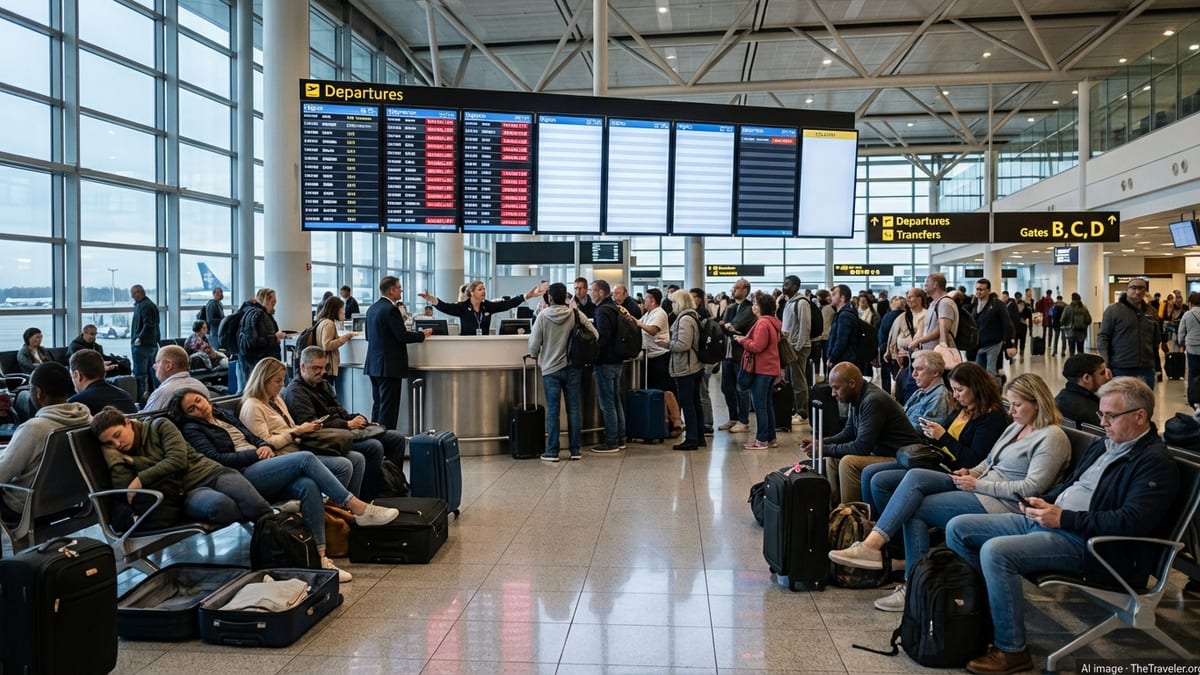
Petition targets Israel’s “Tibi Law” on passenger rights
The petition, filed this week by the International Air Transport Association alongside carriers including El Al, Air France, KLM, Delta Air Lines, Etihad Airways, Aegean Airlines and Bulgaria Air, focuses on Israel’s Aviation Services Law, widely known as the “Tibi Law.” The statute grants passengers fixed compensation, assistance and rebooking rights when flights are canceled, heavily delayed or significantly changed.
Publicly available court filings described in Israeli media indicate that the airlines are asking the High Court to rule that these obligations should not fully apply when Israel’s airspace is closed by government order during wartime. The petition names the State of Israel, the transport minister, the finance ministry and the Knesset as respondents and argues that current rules place a disproportionate financial burden on carriers for circumstances they could neither predict nor control.
Reports indicate that the carriers are not seeking to abolish passenger protections altogether, but to carve out a clear and lasting exemption for defined wartime scenarios. They also seek clarification of how far duties such as hotel accommodation, meals and alternative flights should extend when operations are legally impossible for extended periods.
Operation Roaring Lion and a 40‑day shutdown
The legal challenge stems from Israel’s recent conflict with Iran, referred to in local coverage as Operation Roaring Lion. According to information presented in the petition and summarized by Israeli financial outlets, Israel closed its airspace from 28 February 2026, effectively suspending regular operations at Ben Gurion Airport for about 40 days apart from limited evacuation and emergency services.
During that period, tens of thousands of passengers reportedly saw flights canceled to and from Israel. With no clear end date announced in advance for the closure, airlines state that they could not reliably schedule alternative flights, reposition aircraft or crews, or guarantee any specific rebooking options. Passengers who were already abroad often had to arrange their own extended accommodation or alternative routings through third countries at short notice.
The petition characterizes the shutdown as historically unprecedented in length for Israel’s civil aviation sector and presents it as a test case for how far peacetime consumer protection rules can stretch under prolonged security emergencies. Airlines argue that because the state ordered the closure, financial responsibility for the resulting disruption should not fall on carriers alone.
Airlines warn of mounting lawsuits and heavy losses
Reports from Israeli business media describe a growing wave of civil claims and class actions by passengers seeking compensation under the Tibi Law for canceled flights during Operation Roaring Lion. The petition notes that, although the law includes a clause allowing the government to ease airline obligations in exceptional circumstances, that mechanism was not activated during the conflict.
Industry coverage indicates that carriers estimate the combined damage from the 40‑day shutdown at hundreds of millions of dollars. One assessment cited by local financial newspapers places the overall hit to the aviation sector at around 1 billion shekels, with El Al alone publicly reporting losses of approximately 150 million dollars tied to the crisis period.
Airlines argue that absorbing such costs while simultaneously coping with lost ticket revenue, higher insurance premiums and rerouting expenses could undermine the economic viability of serving Israel, especially for foreign carriers operating thinner margins on specific routes. They warn that unresolved legal exposure might discourage some airlines from maintaining or expanding service if future conflicts result in similar closures.
What the carriers want the High Court to change
According to publicly reported excerpts from the filing, the petition asks the High Court to declare that the Tibi Law’s compensation and assistance provisions do not apply when Israeli airspace is closed by binding state order for an open‑ended period, making it practically impossible to operate the original flight or offer a comparable alternative. In such cases, airlines seek immunity from both flat‑rate compensation payments and unlimited care obligations.
The carriers propose several concrete adjustments if the court decides that some form of the law must still apply. One option laid out in the petition is to limit mandatory hotel accommodation to a maximum of two nights for stranded travelers during a prolonged airspace closure, rather than indefinitely. Another is to remove eligibility for fixed monetary compensation for cancellations and delays occurring while the skies are officially closed for security reasons.
Some versions of the request reported in Israeli outlets also call for the state to consider a dedicated public compensation or reimbursement mechanism that would step in when closures are ordered for national security. Under that approach, passengers might continue to receive assistance and partial reimbursement, but funding would come from government sources or a mixed scheme, not solely from the operating airlines.
Implications for travelers flying to and from Israel
For travelers, the outcome of the High Court case could significantly influence the level of financial protection available when flights are disrupted by war or major security events. At present, the Tibi Law offers Israeli passengers some of the strongest statutory rights in the region, including fixed‑sum compensation for cancellations under many circumstances, meal vouchers, accommodation and rerouting on other flights when available.
If the court accepts the airlines’ core arguments and creates a broad wartime exemption, passengers whose flights are canceled during future conflicts might receive refunds for unused tickets but lose automatic rights to fixed compensation, extended hotel stays or guaranteed alternative flights funded by carriers. Much would then depend on individual airline policies, travel insurance coverage and any separate arrangements put in place by the Israeli authorities.
Travel industry observers note that most international regimes, including European Union rules, already contain exceptions for “extraordinary circumstances” such as war or airspace closures, though specific entitlements vary. The Israeli case is attracting attention because it will test how one of the world’s more generous national passenger‑rights laws interacts with the realities of repeated regional crises and prolonged sky closures.
The High Court has not yet announced a hearing date or timeline for its decision. Until the legal questions are resolved, passengers with pending claims from the Operation Roaring Lion shutdown are expected to continue pursuing their cases in lower courts, while airlines and consumer advocates watch closely for signals on how wartime air travel disruptions will be handled in one of the world’s most sensitive aviation markets.