


More news on this day
Thousands of passengers across Europe are facing severe disruption as widespread delays and cancellations hit major hubs in Germany, France and Spain, with more than 3,200 flights delayed and nearly 200 cancelled, impacting carriers including Lufthansa, British Airways and KLM at airports such as Frankfurt and Barcelona.
Get the latest news straight to your inbox!
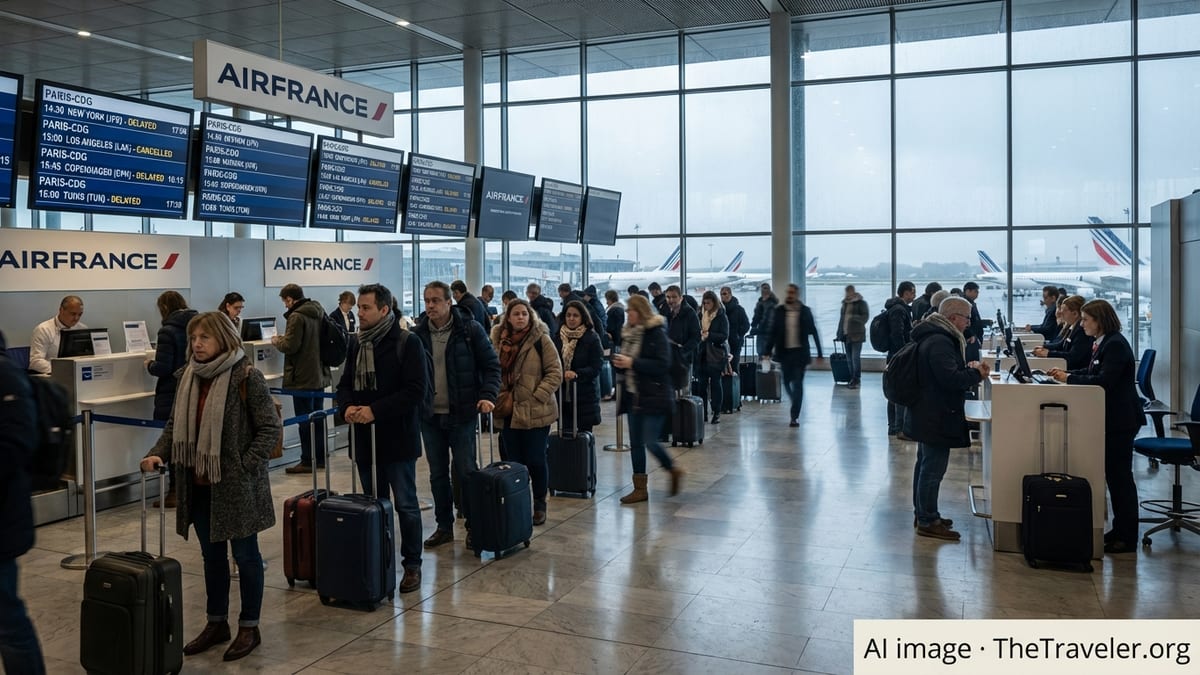
Major Hubs Buckle Under Wave of Disruptions
Publicly available aviation data for Sunday 21 June indicates that Europe’s main hubs are operating under heavy strain, with 3,209 flights delayed and 194 cancelled across the continent. The disruption is concentrated at large transfer airports, where even modest schedule changes can quickly ripple through peak summer operations.
Frankfurt, one of Europe’s busiest intercontinental gateways, has reported dozens of delayed and scrubbed departures and arrivals, affecting both short haul and long haul networks. Reports indicate that Lufthansa, already under pressure from a thinned schedule and previous cuts to short haul services, is again at the centre of many of the disruptions, with knock on effects for partner and codeshare services.
In Spain, Barcelona and other coastal gateways are seeing significant timetable slippage at the very moment leisure demand is surging. Delays on routes linking the Iberian peninsula with northern Europe are leaving passengers stuck in terminals and missing onward connections, with some travellers reporting overnight holds while they await rebooking.
French airports, including Paris and key regional cities, are also experiencing elevated levels of disruption. While the bulk of affected flights are intra European, the knock on impact on long haul operations is contributing to longer queues, missed connections and tighter aircraft rotations across the day.
Flag Carriers Among the Worst Hit
The wave of delays and cancellations is striking a wide range of airlines, but Europe’s large network carriers are bearing a substantial share of the impact. Lufthansa services through Frankfurt and Munich are experiencing late departures, same day cancellations and aircraft swaps that are complicating already complex connection patterns for summer travellers.
British Airways flights linking the United Kingdom with continental hubs such as Frankfurt and Barcelona have also faced schedule changes and delays, compounding congestion at both ends of key city pairs. Passengers connecting from long haul services into Europe’s dense short haul networks are particularly exposed, with a missed 90 minute transfer often resulting in waits of many hours for the next available seat.
KLM and other major European brands are likewise navigating irregular operations across their networks. When flights are delayed or grounded at one hub, aircraft and crew are left out of position for subsequent rotations, creating a cascade of knock on delays that can last well into the following day.
Low cost and leisure focused airlines are not immune to the disruption, but their point to point models can sometimes absorb shocks more easily than the hub and spoke systems of the big legacy carriers. Nonetheless, as smaller airports from Spain’s Mediterranean coast to regional cities in Germany and France report higher than usual delay rates, passengers across all price points are feeling the strain.
Knock On Effects for Passengers Across the Continent
The immediate consequences for travellers are widespread missed connections, long lines at service desks and uncertainty about when they will reach their destinations. Social media posts and traveller forums on Sunday describe packed waiting areas, overburdened customer service channels and difficulty obtaining clear information about rebooking options.
Some passengers report that same day alternatives on their original airline are unavailable due to high load factors during the summer peak. In these cases, travellers are being routed via secondary hubs or rebooked onto partner airlines, which can add several hours and additional stops to what were originally straightforward itineraries.
At major transfer points such as Frankfurt, Barcelona and Paris, hotels near the airport are seeing a spike in demand as disrupted travellers opt, or are instructed, to overnight and resume their journeys the following day. For families and holidaymakers with fixed check in times at resorts or cruise departures, the uncertainty around arrival times is creating further stress and additional costs.
In parallel, airport infrastructure is coming under pressure. Longer security and baggage drop queues are being reported at several hubs as delayed passengers converge on the same bank of departures. Baggage systems are also at greater risk of overload when aircraft rotations slip, increasing the likelihood of delayed or misrouted luggage.
Operational Strains Behind the “Europe Flight Chaos”
While detailed causes vary from route to route, aviation analysts point to a combination of structural and short term factors behind the current disruption. In recent months, Lufthansa and other carriers have already trimmed parts of their short haul schedules and adjusted regional networks to reflect fleet changes and cost pressures, leaving less slack in the system when irregular operations occur.
Staffing remains a sensitive issue across European aviation. Ground handling teams, air traffic control units and airline crew pools are still rebuilding capacity, and any localised shortage can quickly affect turnaround times. Weather related disruptions in central Europe earlier in June also created a backlog of repositioning needs, according to publicly available passenger accounts and industry commentary.
Airports such as Frankfurt and Barcelona are further constrained by slot and runway capacity, particularly during the morning and late afternoon peaks when waves of connecting flights are scheduled to arrive and depart in tight banks. When a small number of these flights run late or are cancelled, the carefully calibrated system can rapidly become unbalanced, resulting in widespread knock on delays.
Observers note that the situation is unfolding against the backdrop of robust summer demand. Airlines have loaded fuller schedules than in recent seasons, betting on strong leisure and business travel. That strategy leaves operators more exposed when things go wrong, as there are fewer spare aircraft, crews and seats available to absorb disruption.
What Stranded Travellers Can Do Now
Travel and passenger rights organisations advise affected travellers to document the status of their flights, keep receipts for essential expenses and seek written confirmation of any cancellation or significant delay. Under European regulations, many passengers on flights to, from or within the European Union may be entitled to assistance such as meals, accommodation and rebooking in cases of long delays or cancellations, though compensation rules depend on the specific cause and timing.
Passenger advocacy groups suggest using airline apps and websites as a first resort to manage disrupted bookings, as digital tools can sometimes offer rebooking options before airport staff are able to assist in person. However, given the volume of affected travellers, online channels are also experiencing heavy demand, and some customers report long waits in telephone queues.
Where possible, travellers facing lengthy delays are exploring alternative routings by rail or coach, particularly on busy intra European corridors between Germany, France, the Benelux countries and Spain. While these alternatives can lengthen total journey times, they may offer more predictable arrival windows for those with critical commitments at their destination.
With disruption still unfolding across much of the continent, industry observers warn that it may take several days for schedules to stabilise fully. For now, Europe’s summer flyers are being urged to monitor their flights closely, allow additional time at the airport and be prepared for last minute changes as airlines and airports work to restore regular operations.