


More news on this day
Major European airports recorded at least 1,225 delayed flights and more than 70 cancellations in a single day, according to operational data and flight tracking services, leaving passengers across the continent facing missed connections, overnight stays and disrupted holiday plans.
Get the latest news straight to your inbox!
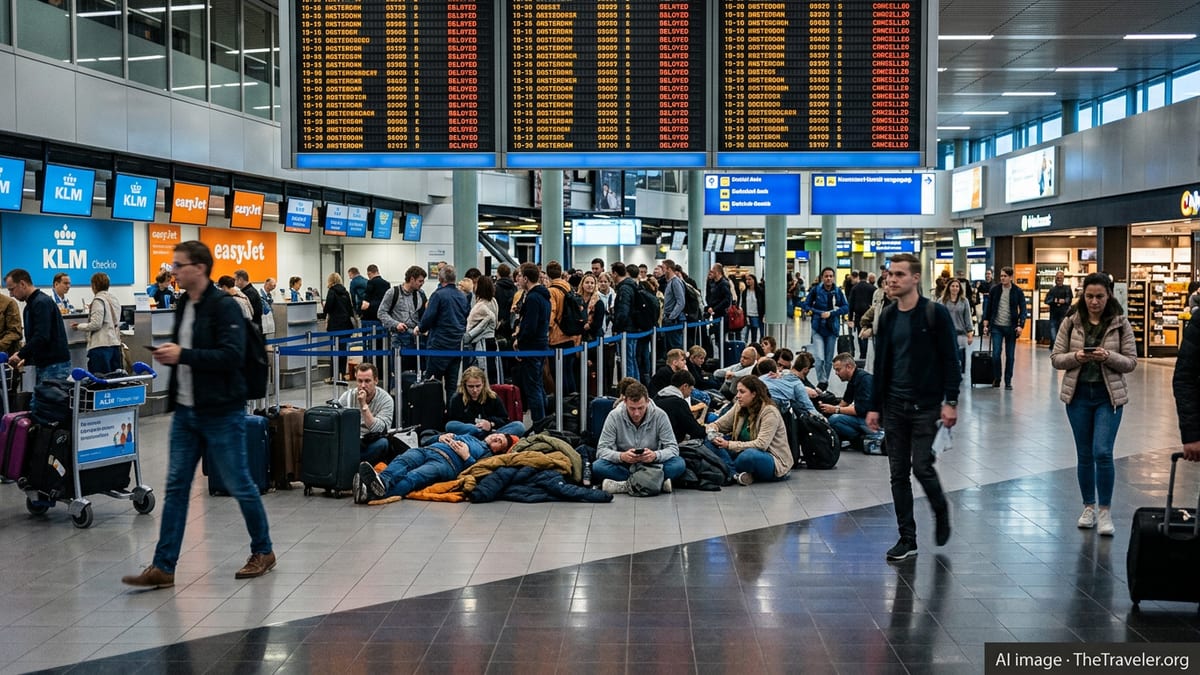
Heathrow, Schiphol and Nordic hubs among hardest hit
Flight tracking dashboards and aviation analytics compiled over the past 24 hours point to a cluster of disruption centred on some of Europe’s busiest hubs, including London Heathrow, Amsterdam Schiphol, Copenhagen and Oslo. Published coverage indicates that these airports together accounted for the bulk of the 1,225 delays logged across Europe on the affected day, along with more than 70 outright cancellations.
The scale of the disruption stands out even against a backdrop of regular operational strain at European hubs. Heathrow and Schiphol consistently rank among the continent’s busiest airports by passenger numbers, so even a modest percentage of delayed departures can translate into thousands of travellers held up at gates or stuck in queues at border control and security.
Reports also highlight spillover effects beyond the main hubs. Flights to and from France, Norway, Denmark and other European destinations experienced knock-on delays as aircraft and crews failed to arrive on time, further expanding the circle of disruption far beyond the airports where the problems were most acute.
While the disruption was concentrated in a single operational day, analysts note that its timing in the early summer period heightens its impact. Higher seasonal demand means fewer spare seats for rebooking and limited slack in airline schedules, making it more likely that a single late inbound flight will cascade into multiple delayed or cancelled departures later in the day.
Operational bottlenecks expose fragile summer schedules
Publicly available commentary from aviation specialists links the latest wave of disruption to a mix of operational bottlenecks that have been building through the year. Staff shortages in ground handling, security screening and air traffic management remain a recurring issue at several major hubs, particularly during peak morning and evening waves.
In some cases, earlier periods of disruption have already demonstrated how quickly these pressures can overwhelm airport systems. Data compiled in March and April showed days with more than 900 delays across multiple European airports, while separate tracking in late spring documented well over 1,900 delayed services and around 70 cancellations in a wider European cluster, underscoring how stretched networks can become when demand and staffing are out of balance.
Weather and airspace constraints have also been persistent complicating factors. Recent months have seen episodes where storms, strong winds or reduced visibility forced temporary capacity cuts at key hubs, while airspace restrictions and overflight reroutings have extended block times, reducing schedule resilience. When such factors coincide with already tight staffing levels, delay minutes tend to multiply rapidly across the network.
Industry observers point out that airlines have tried to build some extra buffers into timetables compared with pre-pandemic schedules, yet these margins can be eroded quickly by repeated minor slowdowns at check-in, security, boarding or baggage handling. The concentration of 1,225 delays in a single day is being viewed by analysts as another indicator that the system remains highly sensitive to shocks, especially at the busiest hubs.
Passengers stranded as missed connections ripple across Europe
For travellers, the headline figures of delays and cancellations translated into long queues, missed connections and unexpected overnight stays. Coverage from passenger-rights platforms and travel media describes travellers stranded at hub airports while waiting for rebooking options after their inbound flights arrived too late to make onward connections.
Airports like Heathrow, Schiphol and Copenhagen play central roles in European and long haul itineraries, so disruption at these hubs often leaves transfer passengers with limited alternatives. When flights are heavily booked at the start of the summer period, remaining seats on later departures can sell out within hours, particularly to holiday destinations and major business centres.
The latest disruption also strained airport services around accommodation and customer support. Recent incidents across Europe have shown that when hundreds of flights are delayed or dozens cancelled on the same day, nearby hotels can quickly reach capacity. Travellers who arrive late in the evening may find themselves competing for scarce rooms, or facing lengthy waits at airline service desks and call centres that are handling thousands of itinerary changes at once.
Travel organisations note that this pattern has repeated itself several times in recent seasons, including during periods of strikes, severe weather and technical faults. Each episode reinforces concerns that Europe’s aviation system remains vulnerable to relatively small triggers that can leave large numbers of passengers temporarily stranded.
Legal protections and what travellers can expect
The disruptions are once again drawing attention to passenger rights under European and UK regulations. Public guidance emphasises that many flights departing from or arriving in the European Union and the United Kingdom fall under compensation and care rules when long delays or cancellations occur, subject to specific conditions.
In broad terms, travellers on eligible flights who arrive at their final destination with a delay of three hours or more, or whose flight is cancelled on short notice, may be entitled to assistance such as meals, refreshments, hotel accommodation where necessary, and transport between the airport and accommodation. In some circumstances, fixed-sum financial compensation may also be due, although airlines can decline to pay when they can demonstrate extraordinary circumstances beyond their control.
Passenger advocacy groups and legal information services are using the latest disruption to remind travellers to keep boarding passes, booking confirmations and receipts for any expenses incurred while stranded. These documents can be important when submitting claims for reimbursement or compensation after the trip.
Specialists also recommend that passengers check whether delays or cancellations are part of a wider pattern affecting many flights at a given airport, as this can influence both the practical options for rebooking and the likelihood that specific compensation rules will apply. Publicly available case studies from earlier disruption days show that outcomes can vary significantly depending on the root cause of the disruption and how airlines respond operationally.
How travellers can reduce their exposure to disruption
With the latest data pointing to yet another heavy day of delays and cancellations across Europe, travel analysts are encouraging passengers to factor operational risk into summer plans. Booking longer connection times at busy hubs, especially when travelling on separate tickets, is viewed as one of the most effective ways to reduce the likelihood of missed onward flights.
Keeping a close eye on flight status is another recurring recommendation. Airline apps, airport departure boards and independent tracking tools often display schedule changes before they are announced over the public address system, giving proactive travellers a head start in seeking alternative routes or earlier rebooking options when disruption first emerges.
Experts also highlight the value of having a basic contingency plan, particularly during peak holiday weekends and school breaks. This can include knowing which alternative airports are within reach of the final destination, having a rough idea of train or coach options where available, and carrying essential items such as medications, chargers and a change of clothes in cabin baggage in case of an unexpected overnight stay.
As Europe moves deeper into the summer travel season, the day that saw 1,225 delays and more than 70 cancellations at major airports is being treated by travel observers as an early warning. Unless staffing, infrastructure and airspace constraints ease significantly, similar episodes of disruption are likely to recur, leaving passengers reliant on a combination of regulatory protections, airline contingency plans and their own preparation to navigate an increasingly fragile travel environment.