


More news on this day
European countries are quietly dialing back use of the European Union’s new Entry Exit System at busy border crossings, easing the long queues that have plagued airports, ports and land frontiers since the digital regime went live.
Get the latest news straight to your inbox!
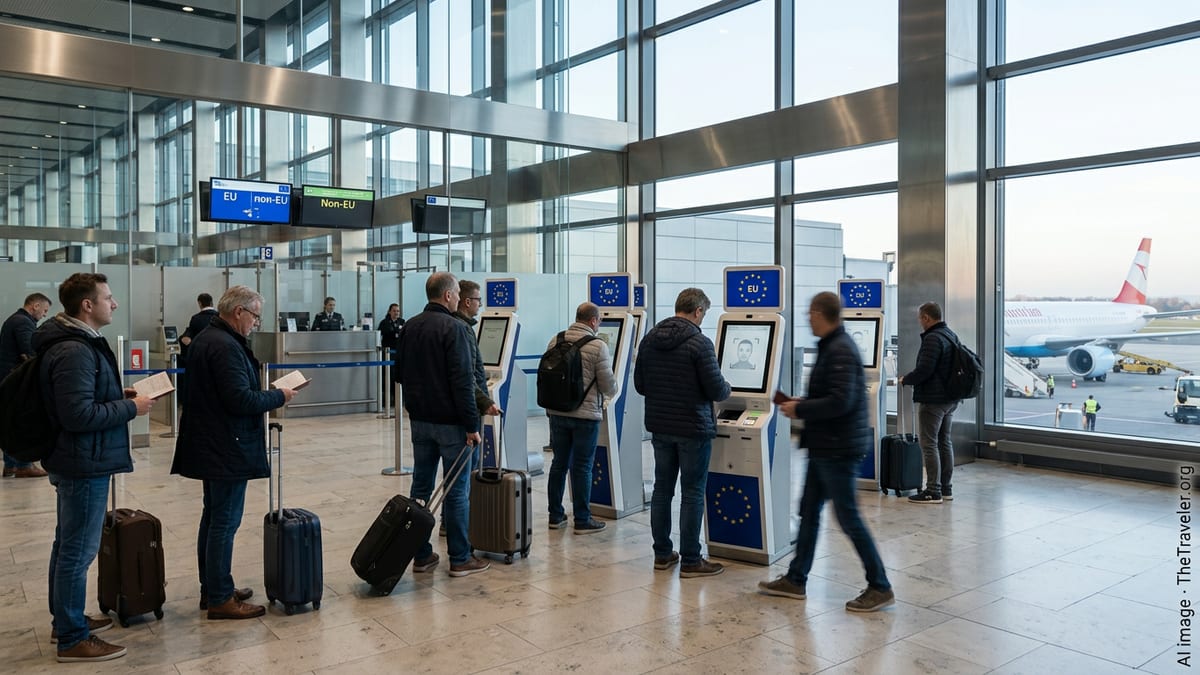
Airports Scale Back EES Checks During Peak Surges
Reports from major European hubs indicate that some airports are temporarily deactivating or bypassing the Entry Exit System when queues threaten to spill into multi-hour waits. Travellers posting on public forums over recent weeks describe biometric kiosks switched off, manual passport stamping reintroduced and entire planeloads of passengers waved through with only cursory checks when arrival halls became saturated.
This pragmatic approach marks a sharp contrast with the system’s original goal of fully digitised, systematic registration of all non EU arrivals and departures. The official rollout plan, set out in European Council communications, envisaged a progressive launch of EES from October 2025 followed by full use at all external Schengen border crossings from April 2026. Instead, airlines and passengers have documented a patchwork of practice, with EES heavily enforced at some times and places and relaxed at others.
At several Mediterranean gateways popular with summer holidaymakers, travellers report that staff now toggle between EES and traditional checks depending on the length of the line. When multiple long haul or post Brexit UK flights land at once, border officers are said to prioritise clearing backlogs over capturing biometric data on every individual, effectively pausing the new regime until crowds thin out.
While this flexible use of the system has reduced the most extreme bottlenecks, it has also introduced uncertainty. Passengers making repeat trips within a few months say they have been asked to enrol biometrics multiple times because earlier journeys were processed manually rather than through EES, undermining one of the scheme’s core promises of faster crossings on subsequent visits.
Ferry Ports and Land Borders Adjust to Avoid Gridlock
The shift away from rigid EES checks is not limited to airports. At busy ferry terminals linking the United Kingdom and continental Europe, French border staff stationed on the UK side have reportedly scaled back additional EES related questioning and biometric procedures during peak getaway weekends after early summer brought tailbacks and missed departures.
British travellers heading for road trips into France and beyond had braced for lengthy inspections this year, after early warnings from transport operators that digital registration could stretch processing times at vehicle booths. In practice, anecdotal accounts suggest that checks at some ports have alternated between full EES capture and more traditional passport inspection as officials seek to keep traffic flowing toward ferries and trains.
On the EU’s eastern flank, accounts from motorists and coach passengers at land crossings such as those between Serbia and neighbouring member states highlight similar improvisation. In the first weeks after EES became operational, long stationary lines were widely reported as guards captured fingerprints and facial images at roadside booths. More recent testimonies indicate that some crossings now shift to lighter touch procedures during heatwaves or heavy holiday peaks, with EES use narrowed to a sample of travellers rather than everyone in the queue.
These adjustments appear designed to prevent the kind of overnight gridlock that drew criticism earlier in the rollout period. However, they also mean that border experiences can vary dramatically from one crossing to another, and even from one hour to the next at the same checkpoint.
From High Tech Promise to On the Ground Reality
The Entry Exit System was conceived years before its launch as a flagship upgrade to Europe’s external borders, replacing ink passport stamps with a shared biometric and travel history database. EU institutions have described it in official material as a tool to strengthen security, detect overstays and eventually speed up controls by allowing automated verification of travellers who have already enrolled.
Implementation has been repeatedly delayed by technical integration challenges and concerns from member states about infrastructure readiness. When the phased rollout finally began in late 2025, the learning curve became immediately visible. Airports and border posts that invested early in additional kiosks and staff generally reported smoother adaptation, while others struggled with broken equipment, software outages and limited space to separate EES first timers from previously registered visitors.
Publicly available commentary from airport managers and travel industry representatives has highlighted a core tension between policy ambitions and physical constraints. Many facilities were designed for traditional document checks and lack the floor space and staffing to run biometric stations at the scale the new rules envisage, particularly when several large aircraft arrive back to back. As a result, front line teams have at times resorted to suspending digital procedures altogether when confronted with elderly passengers, families with children and long snaking queues.
The outcome so far is an uneven landscape where the full digital border concept exists mostly on paper, while everyday practice is driven by real time crowd management. Some travellers breeze through using automated gates linked to EES, others wait for hours and are processed manually, and a growing number say they no longer know what to expect when they reach an EU frontier.
Member States Seek Breathing Space Ahead of Next Travel Waves
Official EU communications still frame the progressive rollout of EES as on track, but signs on the ground suggest member states are prioritising short term stability over strict adherence during the busiest travel months. Local media in several countries have reported that border authorities have been granted leeway to throttle or pause EES use temporarily if queues exceed set thresholds, effectively turning what was meant to be a uniform regime into a flexible toolkit.
This breathing space is particularly important at tourist heavy destinations where summer arrivals are critical to local economies. Airport and port operators continue to call for clearer guidance, more funding for staffing and infrastructure and better passenger information so that travellers know whether and how they will be registered. In parallel, technology contractors are working to stabilise systems and upgrade kiosks that have struggled under heavy use.
Travellers planning trips into the Schengen Area in the coming months are being advised by airlines, tour operators and passenger groups to arrive earlier than they might have done before the new system, especially if flying at peak times or crossing by car at popular holiday routes. At the same time, multiple reports from recent weeks suggest that the worst case scenarios of four hour queues at every major gateway have not materialised, largely because countries have been willing to quietly ease off EES when necessary.
Looking ahead to future holiday seasons and the planned expansion of related travel authorisation schemes, the current phase is likely to shape how political leaders, border services and the travel industry balance security objectives with the imperative to keep people and goods moving. For now, the long queues that once looked inevitable at Europe’s digital borders are being dodged not through flawless technology, but through on the spot decisions to pause it when the lines grow too long.