


More news on this day
EVA Air is accelerating the premium economy arms race in 2026, joining Japan Airlines and Singapore Airlines in using extra legroom, upgraded cabins and refined service to reposition long haul travel from Taipei, Paris and Tokyo.
Get the latest news straight to your inbox!
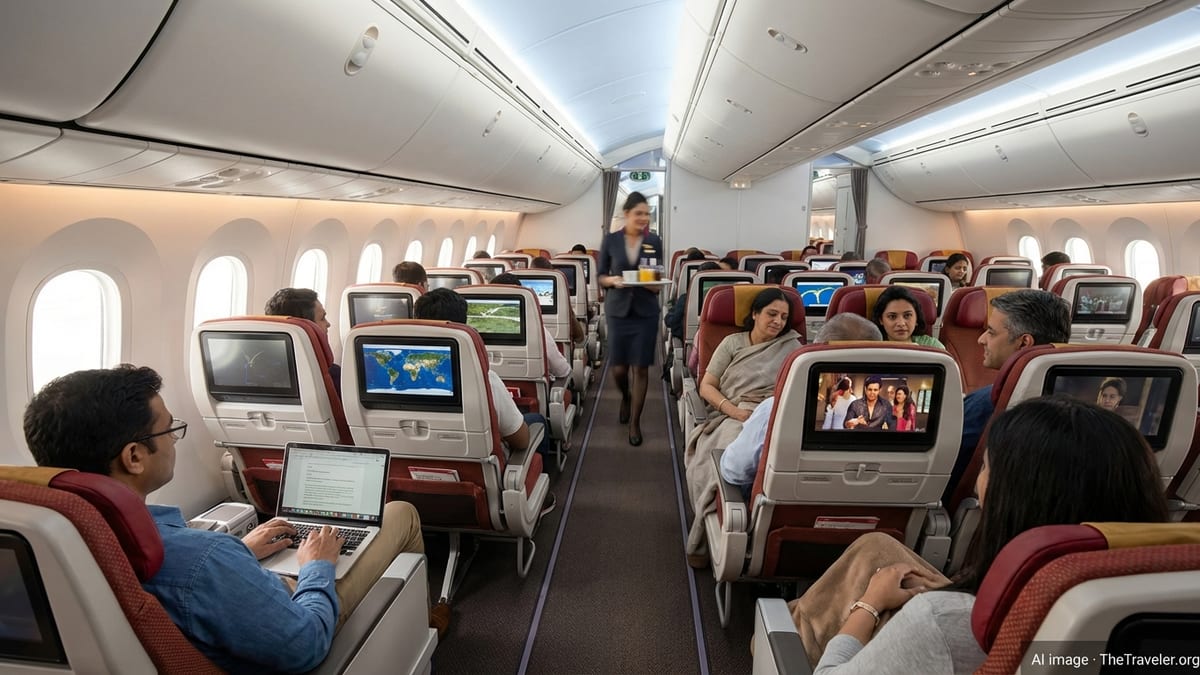
EVA Air Bets on 42 Inch Pitch to Bridge Business and Economy
Publicly available information about EVA Air’s newest premium economy product indicates that the Taiwanese carrier has adopted a 42 inch seat pitch, one of the most generous layouts currently advertised in the premium economy segment. Industry coverage of the airline’s 787 9 and retrofitted widebody cabins notes that EVA Air is framing this cabin as a bridge between standard economy and business, rather than simply a slightly larger economy seat.
Marketing materials and inflight feature lists show that the latest premium economy seat comes with a wider footprint, deeper recline, upgraded cushioning and individual entertainment screens around 15.6 inches, along with expanded storage and power options. Observers highlight that these changes bring elements traditionally associated with business class into the premium economy price bracket, especially on key long haul routes linking Taipei with major European gateways.
Reports from recent launches on European routes suggest that the airline has begun to deploy the revamped cabin on services between Taipei and cities such as Vienna and Munich, with expectations that Paris will follow as additional aircraft are reconfigured. For travelers flying between East Asia and Europe, this places EVA Air into direct comparison with established premium economy products offered by Singapore Airlines and Japan Airlines.
The move is significant because EVA Air historically built its reputation on a strong economy and business class proposition out of Taipei. By pushing seat pitch to roughly 42 inches in premium economy, the carrier is signaling that comfort on overnight sectors to Europe and North America is becoming central to its brand, and that it intends to compete aggressively in the mid cabin space rather than leaving it as an afterthought.
Japan Airlines Sets the Benchmark From Tokyo With 42 Inches
Japan Airlines has been one of the early leaders in the spacious premium economy trend. Official cabin descriptions for the airline’s Airbus A350 1000 flagship, now operating on core routes such as Tokyo to New York and, more recently, Tokyo to Paris, specify a premium economy seat pitch of approximately 107 centimeters, or 42 inches. Industry analysis notes that this is among the most generous legroom allocations available in any premium economy cabin worldwide.
The Japanese carrier has emphasized that its new premium economy was designed from the ground up for longer sectors, pairing the 42 inch pitch with a wider seat, enhanced recline, substantial legrest and a high resolution 4K entertainment screen. Seat layouts on the A350 1000 aim to balance density with personal space, using refined cabin finishes, larger partitions and improved lighting to create a noticeably quieter environment compared to standard economy.
Recent route announcements show that these A350 1000 aircraft are now scheduled on flights between Tokyo Haneda and major European capitals, including Paris. For travelers originating in Europe and connecting through Tokyo to destinations across Japan and Asia, this effectively standardizes a high end premium economy experience on both transpacific and transcontinental legs.
Aviation analysts note that Japan Airlines has long used comfort as a differentiator, winning repeated awards for seat design in the main cabin. Extending that philosophy to premium economy with a 42 inch pitch signals that the airline sees strong demand in 2026 from passengers willing to pay more for space and privacy without the cost of business class, particularly on routes where overnight timings make seat comfort a priority.
Singapore Airlines Holds Its Ground With Refined 38 Inch Comfort
In contrast to EVA Air and Japan Airlines, Singapore Airlines continues to offer a premium economy product built around a seat pitch of about 38 inches on widebody types such as the Airbus A350 900, A380 and Boeing 777 300ER. Seat maps and independent cabin guides published in 2026 consistently list this configuration, placing the airline slightly below the 42 inch benchmark on pure legroom but still comfortably ahead of most standard economy cabins.
Travel reviews and product overviews suggest that Singapore Airlines differentiates its premium economy through overall experience rather than maximum pitch alone. The cabin typically features wider seats of roughly 19 inches, adjustable calf and footrests, large entertainment screens, premium noise reducing headsets and upgraded dining, often including enhanced main course choices and welcome drinks on long haul flights. Dedicated check in counters, priority boarding and increased baggage allowances are also standard parts of the package.
From a network perspective, Singapore Airlines has steadily expanded premium economy coverage across its long haul network to Europe and North America, including services from Singapore to Paris and other major European hubs. For travelers connecting from regional points in Southeast Asia into these long haul sectors, the consistency of the product can be as important as the absolute seat pitch.
Industry observers point out that Singapore’s approach underscores a key theme in 2026 premium travel: airlines can still compete effectively with a 38 inch configuration if the soft product, service flow and cabin design are strong enough. However, as more competitors move to 40 inches or beyond, the gap in legroom is becoming more visible in head to head comparisons, especially among frequent flyers who closely track seat specifications.
What 42 Inches Really Means on Long Haul Flights
The jump from the industry standard premium economy pitch of around 38 inches to 42 inches may look small on paper, but comfort specialists and cabin designers note that those four extra inches translate into noticeably more personal space, particularly on overnight flights. Passengers gain additional room for knees and shins when reclining, more space to cross or stretch legs and greater clearance when the person in front reclines fully.
On aircraft with 2 4 2 premium economy layouts, a 42 inch pitch can also make it easier to leave a window or middle seat without disturbing neighbors, since the available footprint between seat rows is larger. This can be particularly valuable on 12 to 15 hour routes between East Asia and Europe, where movement during the flight is important for comfort and wellbeing.
The enhanced pitch often goes hand in hand with deeper recline and more substantial legrests, which shifts the overall posture closer to a cradle style position rather than an upright economy stance. Combined with larger entertainment screens and improved storage for personal items, the result is a cabin that feels more like an entry level business class of a decade ago than a slightly upgraded economy section.
For airlines, offering 42 inches in premium economy requires a trade off in seat count, reducing the number of passengers that can be accommodated in the same cabin footprint. EVA Air and Japan Airlines appear to be accepting this reduction in density in pursuit of higher yields from passengers who might otherwise choose business class or competing carriers, signaling confidence that demand for mid tier comfort will stay robust in 2026.
What Other Airlines Are Missing in the 2026 Luxury Travel Race
The renewed focus on generous premium economy from Taipei, Tokyo and Paris highlights what some competitors may be missing in the 2026 luxury travel landscape. Many global carriers continue to treat premium economy as a marginal upgrade, offering pitches in the 37 to 38 inch range with modest recline and limited differentiation in service, effectively relying on fare value rather than a step change in comfort.
By contrast, EVA Air and Japan Airlines are marketing 42 inch cabins as a core part of their long haul strategy, positioning them squarely between economy and business and targeting travelers who prioritize rest but cannot justify a full business class fare. When compared against these products, airlines that have not refreshed their mid cabins risk appearing dated, particularly on routes where overnight rest is critical.
Analysts tracking aircraft orders and retrofit programs note that some carriers are investing heavily at the very top of the market, introducing new suites with doors in first and business class, while deferring meaningful upgrades to premium economy. The developments from Taipei and Tokyo suggest that this approach may leave revenue on the table, as more passengers look for value focused luxury and are increasingly aware of specific seat measurements like 42 inch pitch.
For travelers planning 2026 itineraries between Asia and Europe, the emerging pattern is clear. The most competitive airlines are not only adding more flat beds in business class but are also rethinking how much space and privacy they provide one cabin down. As EVA Air joins Singapore Airlines and Japan Airlines in elevating premium economy from Taipei, Paris and Tokyo, carriers that continue to offer only incremental improvements risk being left behind in a market where inches now matter as much as gourmet menus and designer amenity kits.