


More news on this day
Travel operations at Germany’s Leipzig/Halle Airport faced serious disruption this week after an explosive-laden drone was discovered next to a Ukrainian cargo aircraft and a separate cargo jet reported a mid-air collision with an unidentified object.
Get the latest news straight to your inbox!
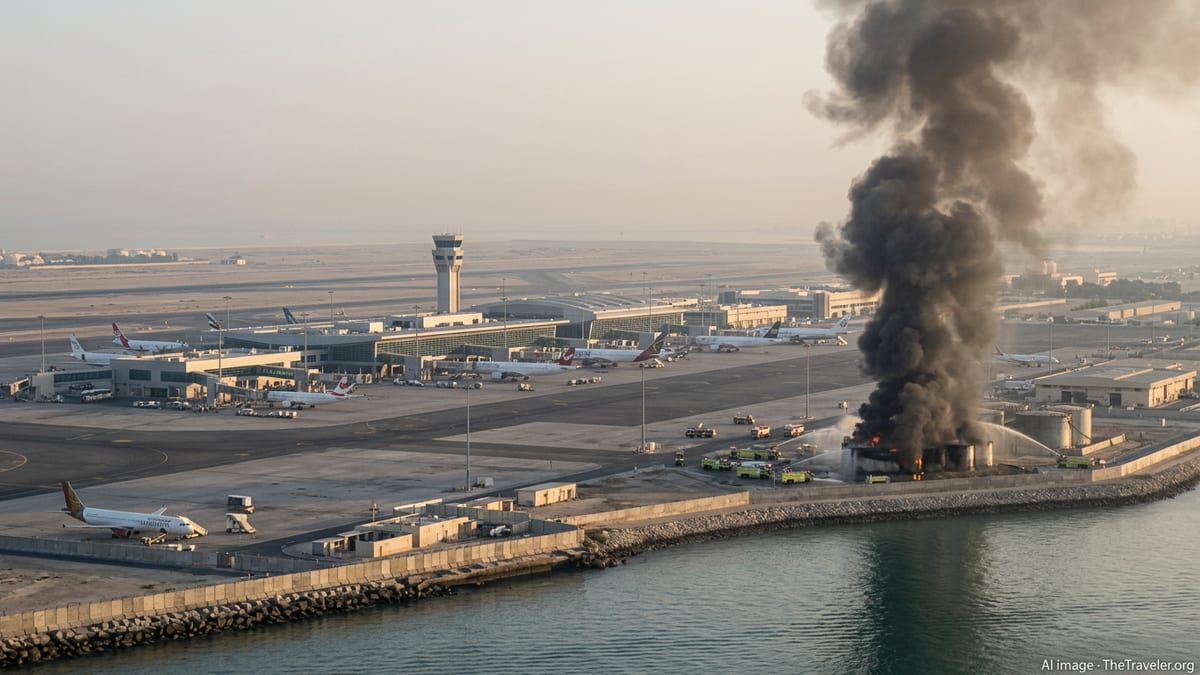
Runway closed after discovery near Ukrainian Antonov
According to published coverage, the incident unfolded late Tuesday at Leipzig/Halle Airport in eastern Germany, a major European cargo hub that also serves as a base for Ukraine’s Antonov Airlines. Airport staff reportedly spotted a small drone close to an Antonov An-124 transport plane parked near the south runway, prompting an immediate security response and the temporary closure of one of the runways.
Police specialists used a bomb-disposal robot to secure the device, which reports indicate had been fitted with an explosive charge and a detonator. Initial assessments described the drone as a modified commercial-type aircraft adapted to carry a significant quantity of explosives. Investigators later confirmed that the detonator had been removed and the drone was rendered safe before being transported away for further forensic analysis.
Images distributed in German and international media showed security teams working around a large Ukrainian cargo aircraft in a cordoned-off area of the airfield. Publicly available information suggests that no passengers were involved, as the aircraft in question was a freighter, but the proximity of the drone to the plane has raised pointed questions about how close the operation came to damaging an aircraft loaded with sensitive cargo.
Leipzig/Halle’s role as a logistics hub for both civilian freight and military transport connected to Ukraine has amplified the symbolic impact of the discovery. The airport routinely handles equipment and humanitarian supplies for Ukraine, and the presence of a weaponized drone directly adjacent to a Ukrainian-registered aircraft is being widely interpreted as a targeted act rather than random criminal activity.
Mid-air collision adds to safety concerns
Compounding the alarm, a separate cargo aircraft operating for a major logistics company reported a mid-air collision with an unidentified object shortly after departure from Leipzig/Halle. The crew continued to Hannover, around 200 kilometers to the northwest, where the plane landed safely. Ground inspections later revealed minor damage consistent with an impact during flight.
Investigators are examining whether the collision is linked to the explosive drone found on the ground, with some aviation-focused reporting suggesting the aircraft may have struck a second small unmanned object near the airport. As of the latest updates, authorities have not publicly confirmed that both events were part of a coordinated operation, but the temporal and geographic proximity has led aviation analysts to treat them as potentially connected.
For travelers and cargo operators, the episode underscores how small unmanned aircraft can quickly escalate into serious safety hazards near busy airports. Even a relatively light drone ingested into a jet engine can cause significant damage, and in a worst-case scenario could contribute to loss of control during critical phases such as takeoff or landing.
While no injuries were reported and scheduled passenger services experienced mainly diversions and short delays, the combination of an explosive-laden device on the apron and a reported airborne collision has elevated concerns in the aviation community about evolving tactics that blend sabotage with airspace disruption.
Security investigation focuses on hybrid threat
German security agencies have opened a wide-ranging investigation that, according to open reporting, is examining potential links to broader acts of sabotage across Europe since the start of Russia’s full-scale invasion of Ukraine. Analysts cited in German and international media describe the Leipzig incident as fitting into what they term a “hybrid” threat environment, where relatively low-cost tools such as commercial drones are adapted for strategic disruption.
Early statements from senior German officials, summarized in press reports, characterize the discovery of an explosive drone directly on airport grounds as a significant escalation in risk. While previous drone sightings have forced temporary suspensions of air traffic at German airports, including Berlin and Munich in recent years, those incidents generally involved unidentified objects without confirmed explosive payloads.
Published coverage also notes that investigators are tracing the drone’s components and flight path to determine whether it was controlled locally from near the airport perimeter or preprogrammed to approach specific aircraft. That forensic work is expected to scrutinize electronic parts, explosives residue and any onboard data storage that might reveal test flights or previous missions.
For now, officials have avoided publicly naming any suspected perpetrator. Nonetheless, the combination of a Ukrainian cargo plane as an apparent focal point and Germany’s prominent role in supporting Kyiv has led many commentators to speculate about the geopolitical backdrop. Security experts quoted by European outlets argue that even an unsuccessful attack can achieve psychological and political effects by sowing doubt about the safety of vital transport corridors.
Implications for European aviation and travel
From a travel perspective, the Leipzig/Halle incident highlights the vulnerability of key hubs that serve both civilian and military traffic. The airport is an important node in overnight express networks as well as a transit point for equipment destined for Ukraine, meaning any prolonged disruption would quickly ripple through air-cargo schedules, just-in-time supply chains and, indirectly, passenger travel that relies on the same infrastructure.
In this case, disruptions were comparatively limited, with reports describing a temporary runway closure, flight diversions and some delays while the bomb-disposal operation and initial safety checks took place. Passenger itineraries through Leipzig/Halle and nearby airports such as Berlin and Hannover nevertheless experienced knock-on effects as aircraft and crews were repositioned.
European regulators and airport operators have already been under pressure to strengthen counter-drone defences after a series of disruptive incidents over the past decade, from mass flight cancellations at Gatwick in the United Kingdom to more recent suspensions of operations at German and Baltic airports due to drone sightings. The Leipzig episode, involving a device carrying explosives and a separate mid-air collision, is likely to intensify demands for more robust detection and interception systems.
Travel industry observers point out that advanced counter-drone technologies, including radar, radio-frequency detection and jamming equipment, are being introduced at some major hubs, but coverage remains uneven and often classified. For passengers, the most visible impact may be occasional runway closures and diversions when suspicious objects are detected, a trade-off that airports appear increasingly willing to make in the name of safety.
Rising drone activity near conflict-linked infrastructure
The Leipzig case comes amid a broader pattern of drone-related incidents across Europe tied to the ongoing war in Ukraine. Publicly available data compiled by international organizations shows that several NATO countries have reported incursions of military or suspected military drones into their airspace, as well as unexplained drone activity near critical infrastructure such as power plants, ports and air bases.
In Germany specifically, there have been previous temporary shutdowns of airports following drone sightings, but without confirmed explosives involved. The presence of a weaponized device at a cargo hub strongly connected to Ukraine logistics is viewed by many analysts as part of a trend in which aviation nodes, rail yards and fuel depots become attractive targets for low-cost disruption.
For travelers, these developments translate into a more complex risk landscape. The likelihood of a drone-related incident affecting an individual flight remains low, yet the consequences of a serious collision or successful attack could be severe. As a result, national regulators and airlines are expected to keep tightening safety margins, including quicker decisions to divert flights, close runways or halt departures if drones are reported nearby.
Travelers passing through major European airports may see few overt signs of these changes beyond occasional delays and a heavier presence of security personnel near airfield perimeters. Behind the scenes, however, the Leipzig/Halle incident is likely to accelerate investments in detection technology, revised emergency procedures and closer coordination between aviation authorities and national security services, with the goal of keeping both passengers and critical cargo moving despite an increasingly contested airspace.