


More news on this day
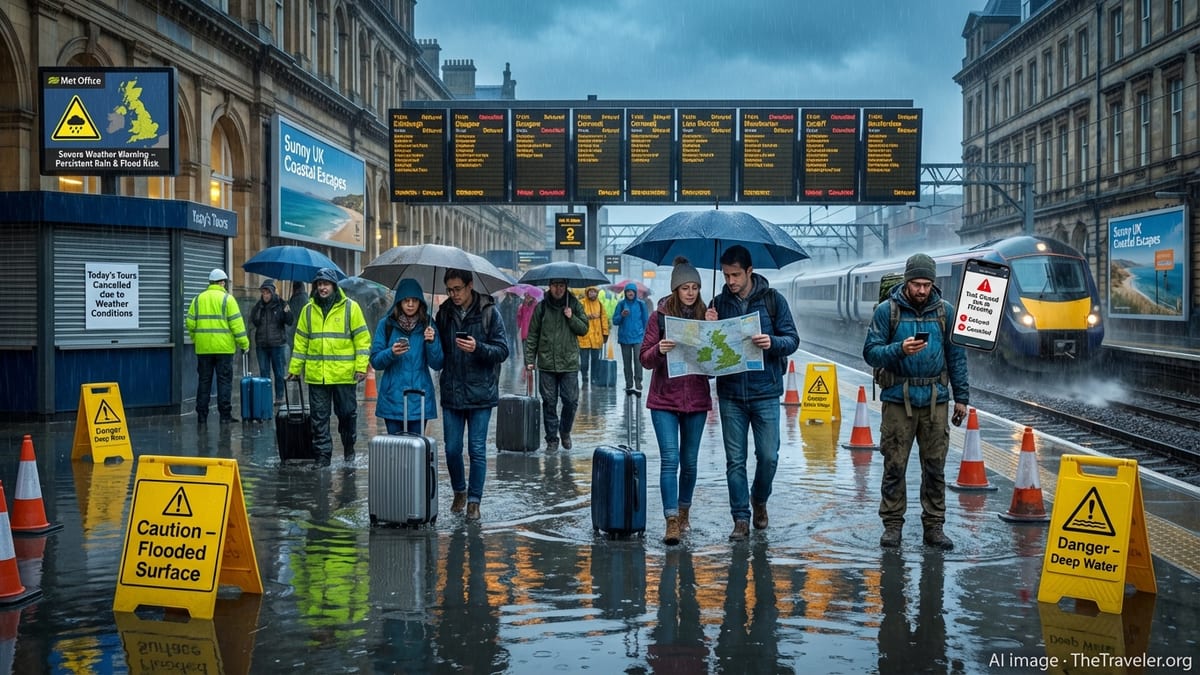
Unsettled and extreme weather across the United Kingdom is again disrupting the rail network, with a mix of storm damage, flooding and looming heatwave conditions prompting route suspensions, emergency speed limits and warnings of short-notice cancellations for commuters.
Get the latest news straight to your inbox!
Major Routes Hit by Weather-Related Suspensions
Rail passengers in several regions are facing significant disruption as operators respond to a fresh spell of extreme weather. Reports from recent storms describe lines in the South West of England closed by flooding and debris after powerful winds and heavy rain, forcing Great Western Railway and other operators to suspend services on affected stretches while checks and repairs are carried out.
In Scotland and northern England, isolated routes have also seen services suspended or heavily reduced in recent days because of waterlogged tracks and damage to overhead lines, according to publicly available incident summaries and passenger reports. In some areas, sections of track remain shut for extended inspections, with replacement buses not always available or able to match normal frequencies.
These localised closures come as the wider rail network prepares for further disruption linked to rising temperatures. Weather alerts indicate that parts of England are moving toward another period of hot conditions, increasing the likelihood of more pre-emptive suspensions and timetable cuts on vulnerable routes.
Commuters are being advised through operator updates and media coverage to expect amended timetables on days when weather warnings coincide with known problem areas, particularly where lines are exposed to flooding risks, high winds or prolonged direct sun on older infrastructure.
Why Extreme Heat and Storms Shut Down Railways
Network Rail and industry publications have repeatedly highlighted that much of Britain’s rail infrastructure was designed for cooler, more temperate conditions. During heatwaves, steel rails can expand and, in some cases, buckle if temperatures on the metal far exceed the air temperature. Technical documents on extreme heat planning describe widespread use of temporary speed restrictions to reduce stress on the track, which inevitably slows services and leads to knock-on delays.
Overhead power lines are also susceptible to heat. When temperatures climb, the wires can sag, increasing the risk of contact with trains or infrastructure. To manage that risk, some electric routes are operated at reduced speeds or, in more severe cases, taken out of service until the coolest parts of the day. Engineering reports discussing operations during recent UK heatwaves outline how service levels were deliberately reduced to balance safety, asset protection and passenger demand.
Storms and intense rainfall bring a different set of hazards. Heavy downpours can overwhelm drainage systems and trigger flooding on tracks, as well as landslips on embankments where soil has been dried and destabilised by earlier hot, dry weather. Regulatory and safety committee papers describe procedures in which services are suspended when water reaches critical levels around conductor rails or when earthworks show signs of movement, with lines only reopening once engineers sign off repairs.
Climate adaptation reports for the UK rail network point to a growing pattern of extreme weather events producing higher levels of unplanned disruption. Analysis of recent years indicates more frequent weather-related failures and higher compensation costs, underscoring the pressure on operators to act cautiously when severe conditions are forecast.
What Today’s Disruption Means for Commuters
For passengers, the immediate impact is felt through cancellations, slower journeys and crowded services that remain in operation. When speed restrictions are imposed over long stretches, journey times can lengthen by 15 to 30 minutes or more, which then affects connections across the network. Publicly available journey planners often switch to showing “disruption” or “amended timetable” notices, and some services disappear from schedules until operators confirm what can safely run on the day.
Recent episodes of electrical failures and hot-weather related problems have also shown how quickly issues on one part of the network can cascade. An outage affecting signalling or power in a major hub can lead to widespread knock-on delays and cancellations across multiple operators, with disruption often continuing into the following day even after the initial fault is fixed.
When multiple routes are affected at once, rail replacement buses can be hard to resource at short notice, particularly during peak travel periods. Passengers sharing experiences online describe occasions where no replacement road transport has been available, leaving travellers to seek taxis, rebook for another day or alter plans entirely.
Commuters who must travel despite warnings may find that trains which do run are busier than usual, as services are thinned out and passengers from cancelled trains crowd onto those that remain. Air conditioning can struggle on very hot days, and delays can become more uncomfortable on older rolling stock or in cases where trains are held at signals or between stations for extended periods.
How to Check if Your Train Is Affected
Rail industry guidance suggests that, during periods of extreme weather, passengers should treat timetables as provisional until close to departure. When heat alerts or storm warnings are in force, journey planners and operator information feeds may not finalise exact services until a day or even hours before travel, once engineers and control staff have reviewed the latest weather data and asset checks.
Public information from train companies typically advises passengers to check their journey on the morning of travel and again shortly before leaving for the station. On days with amber or red-level weather alerts, some operators have historically recommended travelling earlier or later to avoid the hottest part of the day, while acknowledging that even early services can be affected by overnight damage or precautionary restrictions.
Media coverage and passenger forums indicate that social media feeds for train companies and the main national rail information service can provide early clues about emerging problems, including local flooding, signal faults and speed limits being imposed at short notice. However, these channels may lag behind operational decisions when disruption is evolving quickly, and passengers are often reminded that services can change even after they have boarded.
Travellers with inflexible commitments, such as medical appointments or time-critical work, are urged in consumer advice coverage to consider alternative routes or transport modes on days when “do not travel unless necessary” messages are widely shared. Where possible, building in additional transfer time and avoiding the last available train of the day on a given route can provide more options if services are disrupted.
Your Rights on Delays, Cancellations and Safety
Consumer guidance on rail travel in Britain sets out that passengers are usually entitled to compensation under national “Delay Repay” schemes when journeys are significantly disrupted, even when the cause is extreme weather. Exact thresholds and amounts vary by operator, but many schemes offer partial refunds for delays of 15 to 30 minutes and above, with higher payments for longer delays or outright cancellations.
Reports of recent incidents suggest that, where no trains or replacement services are running and passengers are stranded far from home, operators may reimburse reasonable additional costs such as overnight accommodation or taxis, provided receipts and valid tickets are supplied. These arrangements are assessed case by case and are not guaranteed, so travellers are advised in publicly available advice to keep documentation and to submit claims promptly.
Safety considerations remain central when services are curtailed. Network-wide planning documents emphasise that trains may be cancelled in advance rather than risk failures in service, such as stalled trains in high heat or floodwater reaching electrical equipment. While frustrating in the short term, these measures are presented as necessary to protect passengers, staff and infrastructure in conditions that exceed original design expectations for the Victorian-era network.
With forecasts signaling more frequent extremes of heat, rain and wind in the years ahead, rail industry planning papers indicate that further investment in resilient infrastructure, smarter monitoring of weather impacts and clearer passenger communications will be needed. For now, commuters are being urged to stay alert to weather-related updates, allow extra time for journeys and be prepared for sudden changes when the forecast turns severe.