


Ministro Pistarini International Airport, better known as Ezeiza (EZE), is Argentina’s main international gateway and the starting point for most long-haul trips to and from Buenos Aires. Recent renovations have created a modern departures complex while keeping a separate, older arrivals terminal, which means the airport can feel confusing on your first pass. This guide walks you step by step through arrivals, departures, baggage claim, connections and ground transport exits, with concrete examples of where travelers typically get turned around and how to stay oriented.
Get the latest updates straight to your inbox!
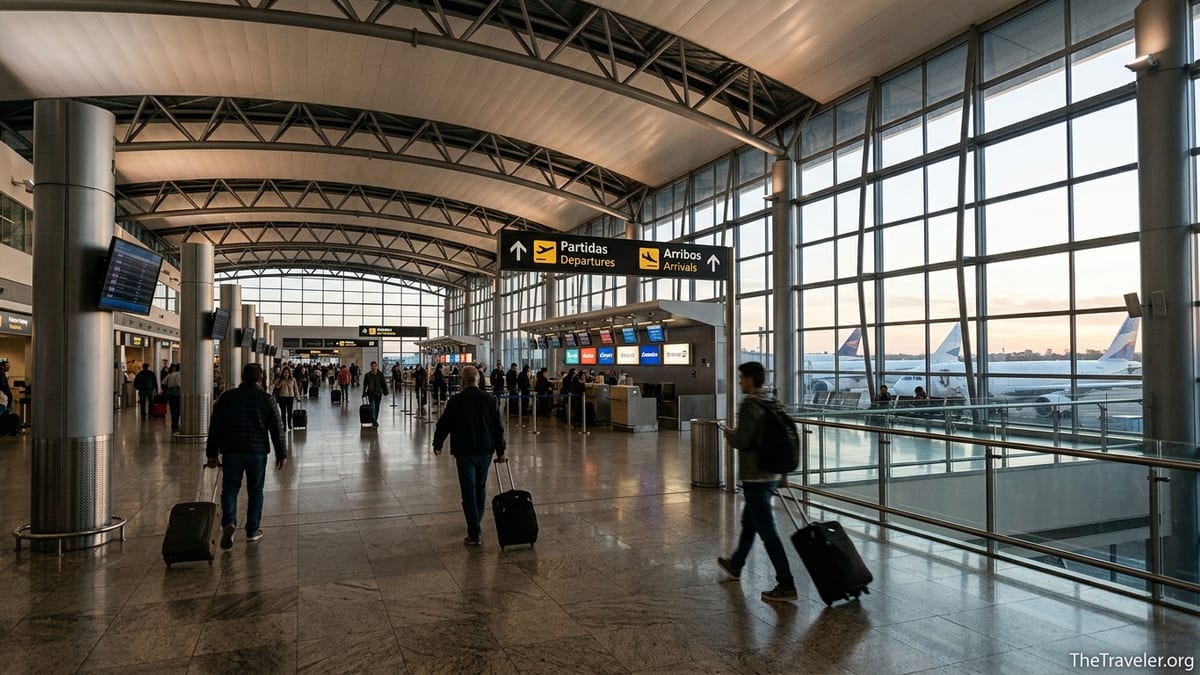
How Ezeiza Airport Is Laid Out Today
Ezeiza sits about 35 kilometers southwest of central Buenos Aires and is organized as a linear set of terminals that function as one airport. Today there is a modern central departures building, often referred to locally as the new departures terminal or simply “Partidas,” flanked by the older Terminal A and Terminal C. The key operational detail is that almost all international arrivals are processed in Terminal A, while check in for most international departures has moved into the new central hall. This “arrivals in one building, departures in another” design is what confuses many first time visitors.
Think of the complex as three main boxes aligned west to east: Terminal C on one end, the glass fronted departures building in the middle with its big, bright check in hall, and Terminal A on the other end. At ground level these are connected by a covered walkway outside the terminals. Inside security, the gate areas connect back into the new departures building, so you may board your flight from the new gate concourses even if you checked in at Terminal A or C in the past. Airline emails and boarding passes sometimes still reference older terminal codes like “IA” or “P,” so it is best to follow the airline name and “Salidas / Departures” signage on the day rather than relying only on older codes.
Domestic and regional flights have gradually been concentrated into dedicated areas, with the former Terminal C now used largely for domestic arrivals and some regional operations. That means a traveler flying from Madrid to Buenos Aires will typically arrive at the international arrivals hall in Terminal A, while a passenger arriving from Mendoza on Aerolíneas Argentinas may find themselves in the domestic arrivals area closer to Terminal C. The walking distances between these halls are reasonable, but if you arrive during a busy bank of long haul flights the crowds and overlapping signage can make the walk feel more complicated than it really is.
Because construction and remodeling works in Terminal A are ongoing, layouts of some waiting areas and landside corridors can shift slightly from year to year. Core flows, however, remain stable: international flights disembark into the arrivals level of Terminal A, passengers walk through immigration control and baggage claim, emerge into the main public hall and then choose between ground transport options or, for same airport connections, the inter terminal walkway leading back toward the central departures building and Terminal C.
Arrivals: From Aircraft Door to Public Hall
On arrival at Ezeiza, most international passengers deplane via airbridge into the arrivals level of Terminal A. After a short walk along glass walled corridors you reach the immigration hall marked “Migraciones.” Non residents join the visitor line, while Argentine citizens and some residents use separate channels. Queues can vary considerably depending on the bank of flights; landing at 6 a.m. when several overnight flights from Europe and North America arrive can mean a wait of 45 minutes or more, while mid afternoon flights often clear in 15 to 20 minutes.
After passport control you move directly downstairs to the baggage claim area. Carousels are clearly numbered, and electronic screens show your flight number and origin city, for example “AR1303 Miami” or “IB6841 Madrid.” It is common for bags from several flights to share neighboring belts, so double check that you are standing at the right carousel. Oversized baggage such as sports equipment and musical instruments is typically delivered to a dedicated corner near the standard belts; look for signs reading “Equipaje Especial” and ask a uniformed airport staff member if your skis or surfboard do not appear with the regular luggage.
Once you have your bags, you proceed through customs screening. Argentina uses a simple system here. All passengers go through a mandatory baggage X ray area before exiting into the public hall, so keep your luggage on carts or close at hand. Officers may ask basic questions about your trip or request that you open a suitcase for inspection, though most passengers are waved through quickly. Travellers who purchased duty free goods on arrival collect these either just after passport control or at a kiosk just before customs, depending on the routing of your specific flight.
Where many people get disoriented is immediately after customs. You exit into a broad arrivals hall in Terminal A with a high ceiling, rows of seating for people waiting, and a mix of cafes, currency exchange counters and car rental desks. On busy evenings, dozens of drivers hold printed signs near the barriers. Official taxi and ride desks are usually located a bit further inside the hall, closer to the exits that lead to the curbside area. Travelers expecting a single clear exit labeled “Taxis” are sometimes surprised to find multiple sliding doors numbered 1, 2, 3 and so on. If you have prebooked a transfer, agree in advance on a door number, for instance “Puerta 4 de arribos,” to make it easier to meet your driver.
Departures: Check In, Security and Boarding
Departing from Ezeiza has become more straightforward since the new departures hall opened. Most international airlines now use the central glass fronted building for check in, which is signed everywhere as “Partidas / Departures.” Outside, you are dropped at elevated roadways or ground level curbs; both lead into the same huge hall inside. Large video boards immediately inside the entrances show flight numbers, airline logos and check in island letters. For example, Aerolíneas Argentinas long haul flights may use island A, while European carriers like Air France or Iberia might be on islands C or D.
Allow generous time for departure formalities, especially on Fridays, Sundays and around holidays. International passengers are generally advised to arrive about three hours before scheduled departure. In practice, if you are flying a morning flight to São Paulo or Santiago on a weekday and already checked in online with only hand luggage, two hours may be sufficient, but long haul flights to Madrid, Rome, New York or Miami can see heavy check in lines as multiple wide body aircraft depart within similar time windows. Check in staff at some airlines will close baggage acceptance precisely at the published cutoff time, so do not assume flexibility.
After check in you proceed toward security screening and exit immigration. Ezeiza consolidated many of these controls in the renovated departures area, but you should still expect two distinct steps: first, the standard security screening with x ray and metal detector, then the migration control booths where your passport is stamped for exit. Electronic gates exist for some passports, but many travelers will use staffed booths. Once you clear both, you emerge into the airside departures concourse with a duty free store, restaurants and several gate piers extending toward the aircraft parking positions.
Gate numbers at Ezeiza correspond to specific concourses. For example, gates in the 1 to 10 range may be closest to the central departures hall, while higher numbered gates extend further along the building. Boarding announcements are usually bilingual in Spanish and English. Travelers frequently underestimate walking time to the more remote gates, particularly when departing from the far end of a pier used by certain South American flights. As soon as your gate is posted, check the terminal screens and note not only the number but also the reference to which wing or corridor leads there. This is especially helpful when your boarding pass was printed early with a provisional gate that later changes.
Baggage Claim, Lost Luggage and Rechecking for Connections
Baggage claim at Ezeiza is centralized for international arrivals in Terminal A. Once you reach the carousel area, trolleys are free and plentiful, and there are restrooms and water fountains at the rear walls. Airline baggage offices for major carriers such as Aerolíneas Argentinas, LATAM and the larger international airlines are generally located just off the carousel hall or in a corridor leading toward customs. If your bag does not appear, you go to the office of the airline that operated your last flight, not necessarily the airline on which you began your journey.
In the event of mishandled baggage, staff will create a Property Irregularity Report and provide a reference number. Many Buenos Aires hotels are accustomed to receiving delayed bags from Ezeiza and will sign for them even if you are out sightseeing when the courier delivers. Travelers should keep essential items like medications, a change of clothes and electronics in hand luggage, especially on itineraries involving tight connections through Ezeiza, since overnight delays are not uncommon during peak seasons or when thunderstorms affect multiple incoming flights.
If you are connecting from an international flight to a domestic one at Ezeiza on a through ticket with the same or partner airline, your bags may be checked through to your final Argentine destination. For example, someone flying from New York to Córdoba via Buenos Aires on a single Aerolíneas Argentinas ticket may find their luggage tagged straight to Córdoba. However, current procedures still often require you to collect checked bags at Terminal A, pass through customs, and then drop them at a dedicated domestic connections counter in the public arrivals or departures hall. Signage for “Conexiones” can be modest, so ask airline staff at the arrivals exit where to recheck.
Travelers on separate tickets, such as arriving with Iberia from Madrid and then flying a low cost carrier to Bariloche, must always collect bags, exit customs and then check in again at the appropriate counter for the next flight. In this case, you will emerge into the Terminal A arrivals hall, follow signs or ask for the walkway to the central departures building, and then locate the desks for your domestic airline. Plan at least four hours between flights when tickets are separate, to allow for passport control, baggage wait times, customs and the walk back to departures. Late evening and early morning banks of arrivals can sometimes stretch the process significantly.
Ground Transport Exits and Getting Into the City
Once you pass customs and enter the public hall in Terminal A, the next key decision is how to get into Buenos Aires. The airport sits at the end of the Riccheri expressway, which feeds into the city’s ring road and major avenues. Most visitors choose between official taxis, rides booked in advance, chauffeured transfers, app based ride services and several bus options. The main ground transport exits are just beyond the clusters of cafes and kiosks in the arrivals hall, with signage pointing to “Taxis,” “Remises,” “Buses” and “Estacionamiento / Parking.”
Official taxi services operate fixed fares from Ezeiza to central Buenos Aires neighborhoods such as Microcentro, Palermo or Recoleta. You typically go to a branded counter in the arrivals hall, tell the agent your destination, pay or receive a printed slip, and then exit through a specified door to meet your car in the signed taxi area. Many travelers mention Taxi Ezeiza as a long standing company with a counter near well known fast food outlets in the hall. Using the official desks reduces the risk of scams compared with accepting unsolicited offers from independent drivers who may approach you as soon as you leave customs.
For more budget conscious travelers, public buses link the airport with the city. A notable route is Line 8, which connects Ezeiza with downtown Buenos Aires, including areas near Plaza de Mayo and the central bus terminal, using the expressway for part of the journey. The airport stop for these buses is not always obvious to newcomers, and the journey can take well over an hour depending on traffic, so this option is best suited for seasoned urban travelers comfortable navigating local transit and using the SUBE fare card system. Private shuttle buses and minivan services also run to popular areas and can be booked online in advance or at desks in the arrivals hall.
App based ride services operate at Ezeiza with varying visibility, depending on current regulations. Pick up areas for these services are often located a bit farther from the main doors than traditional taxis. If you use such an app, confirm the exact door or curb designation where your driver will meet you. Because the curb area in front of Terminal A is busy with family pickups, buses, hotel shuttles and taxis all stopping and going, it helps to agree on a specific meeting point such as “outside Door 5, next to the pharmacy” rather than a generic “arrivals exit.” This is one of the most common places where mismatched expectations lead to missed connections and frustration.
Domestic, Regional and Same Airport Connections
Ezeiza’s role is gradually shifting as more domestic flights move between the city’s two airports, Ezeiza and the closer in Aeroparque Jorge Newbery. At Ezeiza itself, domestic and regional flights primarily use certain sections of the terminal complex, including areas adapted from the old Terminal C. If you arrive internationally and then connect onward to a domestic destination like Ushuaia or Salta, you will likely walk from the Terminal A arrivals hall along the covered landside walkway to the central departures building, where check in for your onward flight takes place.
The walk between terminals is straightforward but longer than many first time visitors expect, particularly if pushing a fully loaded luggage trolley. Signage is bilingual and usually references “Conexiones / Connections” or the domestic airline names. The route is outdoors but covered, so you are protected from rain but still exposed to ambient temperatures. During summer heat waves in Buenos Aires, it can be warm and humid even under the canopy, so keep a water bottle handy, especially after a long overnight flight.
Regional flights within South America, such as services to São Paulo, Lima or Santiago, may depart either from the international gate areas or from zones adjacent to domestic operations, depending on airline and bilateral agreements. Passengers often assume that all short flights must be domestic and accidentally follow signs for “Cabotaje” or “Vuelos Nacionales,” only to realize at the last moment that their Lima flight was departing from the international concourse. Always cross check the wording on your boarding pass and the departures screens; if your destination city is outside Argentina, even if the flight is short, you should normally follow “Vuelos Internacionales” signs.
Same airport connections that involve changing from an international to a domestic flight on separate tickets require you to clear immigration and customs, exit into the public area, and then effectively start again as a normal departing passenger. This can feel counterintuitive if your next flight leaves from a gate just one pier over from where you arrived, but the split layout of arrivals and departures makes it unavoidable. To reduce stress, build in a comfortable buffer and resist scheduling the last domestic flight of the evening after a long haul arrival, since delays can leave you unexpectedly overnighting near the airport.
Where Travelers Get Confused and How to Stay Oriented
Most confusion at Ezeiza stems from the physical separation between arrivals and departures, evolving terminal names, and a mix of signage that reflects both the old and new layouts. One classic example is the traveler whose boarding pass lists “Terminal A” but whose airline has actually moved check in to the new central hall. They might ask a taxi to drop them at Terminal A, only to find that the main check in counters have relocated. In practice, if your flight is international, you can simply ask the driver to take you to “Salidas internacionales” and then check the video boards inside the building to confirm the check in island.
Another frequent confusion point is the inter terminal walkway for connections. After emerging from customs in Terminal A, signs pointing toward “Partidas” and “Conexiones” can be partially obscured by crowds and commercial stands. Travelers in a hurry may instinctively head straight for the nearest exit doors and taxi area, then realize they still need to find the departures building. A simple rule of thumb is to pause in the arrivals hall, look for the large departures icon overhead, and follow that toward the covered corridor before stepping outside. If you are unsure, approach any uniformed staff member or information desk and show your onward boarding pass.
Ground transport is another area where details matter. Multiple doors along the front of Terminal A open onto similar looking curbside zones used by taxis, private cars, buses and shuttles. Someone agreeing to meet a friend “at arrivals” without naming a door number or service desk can easily spend half an hour searching the crowd. When arranging pickups, specify “Terminal A, Arrivals, Door 3” or whatever reference your contact prefers. Hotel shuttles typically use particular bays, so confirm these in your booking email and plan to wait where the hotel suggests, not simply at the nearest exit.
Language and labeling nuances can also throw visitors. Domestic flights are often labeled “Cabotaje” on signs, and the word “Remises” refers to pre booked car services similar to private transfers. A traveler scanning for “Private transfer” may miss the right counter, while another looking only for “Domestic” might overlook “Cabotaje” signage leading to their departure area. Taking a moment to note the Spanish terms alongside English translations on information boards will pay off when you are tired from a long flight and making quick decisions in a crowded hall.
The Takeaway
Ezeiza International Airport is in the middle of a long term transformation that has delivered a bright, efficient departures terminal while keeping the tried and tested arrivals flows in a separate building. The result feels unfamiliar at first, especially if you are used to compact airports where you land, collect bags and check in again all within a few steps. Once you understand that almost all international arrivals funnel through Terminal A and most check in for departures happens in the central hall, the layout becomes much easier to navigate.
Plan extra time when connecting, pay close attention to terminal and gate information on airport screens, and agree on precise meeting points for ground transport and pickups. Use official taxi desks or well established transfer companies, and treat the walk between terminals as a built in part of your journey rather than a last minute surprise. With a bit of advance orientation and these practical details in mind, you can move through Ezeiza with confidence, whether you are arriving in Argentina for the first time, catching a domestic connection or heading out on a long haul night flight home.
FAQ
Q1. Which terminal do international flights arrive at in Ezeiza?
Most international flights arrive at the dedicated arrivals facility in Terminal A, where immigration, baggage claim and customs are located before you exit to the public hall.
Q2. Where do I check in for an international departure from Ezeiza?
The majority of international airlines now use the central departures building signed as “Partidas / Departures,” a modern glass fronted hall between Terminal A and Terminal C with large check in islands and flight information screens.
Q3. How long does it take to walk between Terminal A and the main departures hall?
The covered walkway between Terminal A and the central departures building typically takes around 5 to 10 minutes at a normal pace, slightly longer if you are pushing a heavy luggage trolley or traveling with children.
Q4. Can I stay airside when connecting from an international to a domestic flight at Ezeiza?
In most cases you must pass through immigration, collect your checked baggage, clear customs in Terminal A and then recheck bags landside for your domestic flight, even if it is on the same ticket.
Q5. What is the safest way to get a taxi from Ezeiza into Buenos Aires?
The safest option is to use the official taxi or transfer desks inside the Terminal A arrivals hall, pay or register your trip at the counter, then go to the designated curbside pick up area indicated on your receipt.
Q6. Is there public bus service from Ezeiza to central Buenos Aires?
Yes, several bus routes serve the airport, including a version of Line 8 that runs between Ezeiza and downtown areas. Travel time can be long and you need a local SUBE card to pay the fare.
Q7. How much time should I allow before an international departure?
It is advisable to arrive around three hours before your international flight, and slightly earlier during busy evening banks of departures or major holidays, to allow for check in, security and exit immigration.
Q8. Where are rental car offices located at Ezeiza?
Major car rental companies maintain counters in the public arrivals area of Terminal A. After completing paperwork at the desk, staff direct you to pick up your vehicle in the nearby parking area.
Q9. What should I do if my baggage is lost or delayed on arrival?
If your luggage does not appear on the carousel, go to the baggage service office of the airline that operated your last flight, located near baggage claim or along the corridor toward customs, and file a report before leaving the secure area.
Q10. Are there good places to wait for friends or family in the arrivals area?
Yes, the Terminal A arrivals hall has seating areas, cafes and recognizable landmarks such as major coffee chains that make convenient meeting points; agree on a specific spot and, if possible, a numbered exit door.