


Planning a trip to Buenos Aires and unsure whether to fly into Ezeiza International Airport (EZE) or Aeroparque Jorge Newbery (AEP)? Both airports serve the same metropolitan area but offer very different experiences. Choosing the right one can save you time, money and stress, especially if you are connecting to domestic flights or staying in central neighborhoods like Palermo, Recoleta or Microcentro.
Get the latest updates straight to your inbox!
Overview: Two Very Different Gateways to Buenos Aires
Buenos Aires is served by two main airports. Ministro Pistarini International Airport, universally known as Ezeiza or simply EZE, sits around 35 kilometers southwest of downtown in the province of Buenos Aires. It is the country’s primary international gateway and the main hub of Aerolíneas Argentinas, handling most long-haul flights from North America, Europe and beyond.
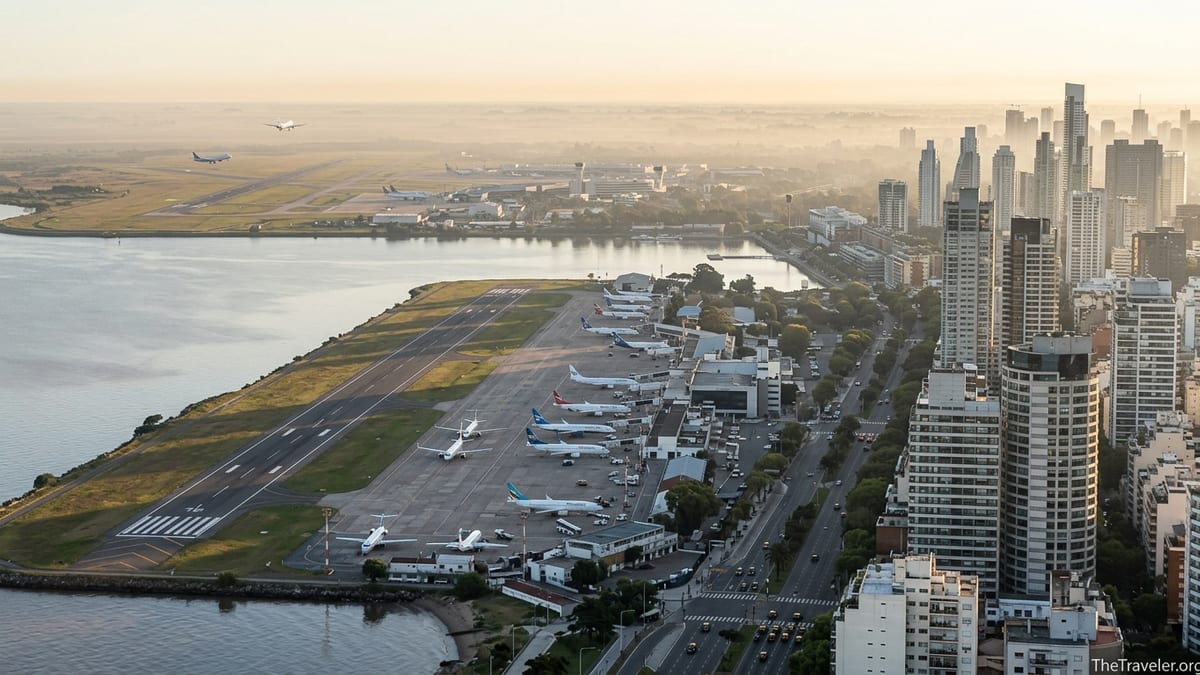
Aeroparque Jorge Newbery, or AEP, is the city airport. It lies right on the Costanera waterfront next to Palermo and a short ride from Microcentro. Aeroparque focuses on domestic routes and short regional international flights to neighboring countries such as Brazil, Chile, Uruguay, Paraguay, Bolivia and Peru, including busy city pairs like São Paulo–Buenos Aires and Santiago–Buenos Aires. This split means many travelers will naturally arrive on a long-haul flight at Ezeiza and then continue their journey within Argentina from Aeroparque.
In practice, Ezeiza tends to be the entry point for travelers coming from cities like New York, Miami, Madrid, Paris or London, while Aeroparque is what locals think of when they say they are “going to the airport” for a weekend in Mendoza, a work trip to Córdoba or a hop to Montevideo. Understanding this division is the first step in deciding which one best suits your itinerary.
There is no absolute “best” airport in general, but there is usually a clearly better choice for your specific route, budget and schedule. The ideal option for a backpacker connecting to Patagonia at 6 a.m. can be very different from the smart choice for a business traveler popping down from São Paulo for two days of meetings.
International Flights: When You Can (and Cannot) Choose
Ezeiza is the default choice for almost all long-haul flights from outside South America. Major carriers such as American Airlines, Delta, United, Iberia, Air France, Lufthansa and others operate into EZE rather than Aeroparque. If you are flying from North America, Europe, Africa or Asia on a through ticket, your inbound or outbound journey will almost certainly use Ezeiza.
Aeroparque, by contrast, has seen a steady expansion of regional international services in recent years. Several Brazilian airlines, along with Aerolíneas Argentinas and JetSMART, operate direct flights from cities like São Paulo, Rio de Janeiro and sometimes Brasília and Porto Alegre into AEP. There are also regional links to Santiago de Chile, Montevideo, Asunción, Santa Cruz de la Sierra and Lima. In many schedules from Brazil, you will see a choice between flights to EZE and AEP on the same airline, often at similar prices.
For travelers starting in neighboring countries, Aeroparque can be more convenient. For example, a passenger flying from São Paulo–Guarulhos to Buenos Aires on LATAM or Gol may find several daily options into AEP as well as into EZE. If that traveler is staying in Palermo Soho and only in town for 48 hours, landing at AEP can shave 30 to 45 minutes off each airport transfer and reduce ground transport costs. On the other hand, someone connecting the same day to a long-haul departure to Europe will want to ensure both flights use EZE to avoid an airport change across the city.
The key rule is simple. If you are coming from outside South America or continuing beyond the region on the same ticket, expect to use EZE. If you are flying in from Brazil, Chile, Uruguay, Paraguay, Bolivia or Peru, check carefully whether your ticket arrives at AEP or EZE. If you have the option and your plan is a short city break in Buenos Aires, Aeroparque is usually more convenient.
Domestic Connections: Building Itineraries Across Argentina
Most domestic flights in Argentina now operate from Aeroparque, not Ezeiza. That includes popular routes to Mendoza for wine country, Bariloche and San Martín de los Andes for Patagonia’s lakes region, El Calafate for access to the Perito Moreno glacier, Ushuaia in Tierra del Fuego, Salta and Jujuy in the northwest, and Iguazú for the famous waterfalls. For many travelers, this makes Aeroparque the natural springboard for internal travel.
A common real-world itinerary illustrates the issue. Imagine you are flying from New York to Buenos Aires in November and then on to El Calafate. The New York–Buenos Aires flight lands at EZE at around 8 a.m. Your domestic options to El Calafate that same day almost all depart from AEP around midday or mid-afternoon. That means you must clear immigration at Ezeiza, collect your luggage, transfer across the city to Aeroparque and check in again. Depending on traffic, this journey typically takes around one to one and a half hours by taxi or car service, so most agents recommend allowing at least four to five hours between scheduled arrival at EZE and departure from AEP.
In contrast, a traveler flying from São Paulo for a long weekend in Mendoza may choose a Guarulhos–Aeroparque flight, spend the first night in Palermo, then take a morning Aeroparque–Mendoza flight without ever leaving the city airport. This is a far simpler, more relaxed connection. The entire domestic hub function of Aeroparque is designed around precisely these kinds of itineraries, combining regional international routes from Brazil and Chile with onward flights to the rest of Argentina.
Whenever possible, it is advantageous to keep all your flights on one ticket with the same airport. A through ticket São Paulo–Buenos Aires–Bariloche, all via Aeroparque, is less stressful than one that arrives at EZE and departs from AEP with only a short layover. But if a mixed-airport itinerary is unavoidable, build in generous padding. Delays at immigration, traffic jams on the expressway or a queue at check-in can quickly turn a tight two-hour connection into a missed flight.
Getting to Downtown: Time, Traffic and Convenience
From a city-access perspective, Aeroparque wins easily. It is essentially inside Buenos Aires proper, on the edge of Palermo and a quick ride from key central areas such as Recoleta, Microcentro and Puerto Madero. In light traffic, a taxi from Aeroparque to Palermo Soho might take 10 to 15 minutes. In heavier afternoon congestion, that might stretch to around 25 minutes, but you are still moving through city streets rather than traversing the outer suburbs.
Ezeiza, on the other hand, sits far outside the city center. The usual route from EZE into town follows a combination of highways and main avenues that can be heavily congested during morning and late-afternoon rush hours. In good conditions, travelers report journeys of 40 to 50 minutes from Ezeiza to Microcentro or Palermo. In peak traffic or if there is an accident, that can easily climb to 70 to 90 minutes.
For example, a business traveler arriving at Ezeiza at 8 a.m. on a weekday and heading straight to a meeting near the Obelisco might budget 90 minutes to make sure they arrive on time. Contrast that with a traveler who lands at Aeroparque at the same hour; even with urban traffic, the shorter distance means they might be at their hotel in Recoleta within 20 to 30 minutes of exiting customs.
Neither airport is directly connected to the city’s subway system at the time of writing, so all travelers rely on taxis, ride-hailing services, airport shuttles or local buses. For most visitors, particularly on arrival after a long flight, a pre-booked transfer, official taxi or ride-hailing app from either airport will be the most practical choice. However, the shorter distances from AEP to the city’s main neighborhoods translate directly into lower travel times and less scope for delay.
Transfer Costs and Typical Prices
The exact cost of transfers in Argentina changes frequently because of inflation and adjustments in taxi tariffs. However, the relative difference between Ezeiza and Aeroparque is consistent: getting to and from EZE is significantly more expensive in absolute terms, while AEP rides remain much cheaper thanks to its location within the city.
Recent traveler reports and local transfer guides suggest that a typical app-based ride from Ezeiza to Palermo or Recoleta might cost the equivalent of around 20 to 30 US dollars, depending on the exchange rate at the time and demand in the app. Official airport taxis sold at the counter inside EZE work on fixed fares to different areas of the city and can be in a similar range or slightly higher. Shared shuttle buses from Ezeiza into central Buenos Aires generally offer lower per-person prices but operate on fixed schedules and may stop at central terminals rather than individual hotels.
From Aeroparque to central neighborhoods, the difference is clear. Taxi and rideshare fares are often closer to the equivalent of 6 to 12 US dollars for typical destinations like Palermo, Recoleta or Microcentro, again depending on the current exchange rate and time of day. A traveler landing in AEP from São Paulo and heading to a hotel in Palermo might report paying a fraction of what they spent on the ride from Ezeiza on a previous trip, even though both transfers were taken in licensed taxis.
Public buses also serve both airports, but they are slower and can be crowded. For example, city bus routes run along the Costanera avenue near Aeroparque, connecting to the subway network in Palermo and downtown. The fare can be extremely low compared with taxis, but reaching your hotel with heavy luggage on a packed bus is not always realistic. From Ezeiza, using a combination of buses and suburban trains can further cut costs, but journey times often exceed 90 minutes and require changes that are confusing if you have just arrived after an overnight flight. Most first-time visitors choose to pay more for point-to-point transfers, especially from EZE.
Common Booking Mistakes and How to Avoid Them
The single most common mistake visitors make is not noticing that Buenos Aires has two different airports and booking flights into one and out of the other without enough time to transfer. A real example: a traveler from Europe booked an arrival into EZE at 9:30 a.m. and a separate domestic ticket from AEP to Bariloche departing at 11:30 a.m. On paper, a two-hour layover looked reasonable. In reality, by the time the long-haul flight landed slightly late, passengers disembarked, immigration queues cleared, bags were collected and a taxi was hailed, there was virtually no chance to reach Aeroparque, check in and clear security in time.
A variation on this mistake happens when travelers book a long-haul flight departing Buenos Aires from Ezeiza but schedule a domestic or regional arrival into Aeroparque on a separate ticket just a couple of hours earlier. If a late-afternoon flight from Ushuaia into AEP is delayed by weather, as often happens in Patagonia, the traveler may miss an overnight EZE–Europe flight. Without a through ticket linking the two journeys, the long-haul airline is under no obligation to rebook them for free.
Another frequent oversight involves late-night and very early morning arrivals. While transfers between Ezeiza and Aeroparque are generally available at all hours, options such as shared shuttles and some bus routes operate at reduced frequency overnight. A traveler landing at Aeroparque close to midnight with a connection from Ezeiza at 6 a.m. should think carefully about where they will spend the intervening hours. Waiting landside for hours in either airport is tiring, and sleeping options airside can be limited depending on current security and terminal arrangements.
The safest strategy is to double-check airport codes when booking and, whenever possible, keep your flights on a single ticket routed through the same airport. If a cross-city transfer between EZE and AEP is unavoidable, build in at least four to five hours between scheduled arrival and departure and avoid booking the last flight of the day on the second leg.
Which Airport Is Better for Different Types of Travelers?
For most long-haul leisure travelers from North America or Europe, Ezeiza will be unavoidable as the entry point. In this case, the key is to plan for a comfortable transfer rather than trying to game the system. Pre-book a car service or use a reputable ride-hailing app, have your address written down clearly and expect to spend close to an hour getting into town. If you are continuing straight on to Patagonia or the northwest, consider spending at least one night in Buenos Aires before flying down from Aeroparque so that a delay on your inbound flight does not cause you to miss an internal connection.
Regional business travelers from Brazil, Chile or Uruguay might have more choice. If your schedule allows, pick flights that use Aeroparque and stay in central neighborhoods such as Recoleta, Retiro or Puerto Madero. Arriving at AEP in the morning and being at a meeting near Plaza San Martín 30 minutes later is entirely realistic on a weekday, something that is almost impossible if you land at Ezeiza at the same time.
Backpackers and budget-conscious travelers should look not only at airfares but also at total trip cost. A slightly cheaper ticket into Ezeiza could become more expensive once you add a long taxi ride to the city and an airport change for a domestic flight. On the other hand, if you are staying in accommodation near the Obelisco or in San Telmo and your inbound flight arrives late at night, paying a bit more for a direct flight into Aeroparque from a regional hub might reduce both stress and transport costs even if the headline airfare is higher.
Families with small children and older travelers often value simplicity over marginal savings. For them, minimizing the number of transfers and airport changes usually matters more than squeezing in a tight same-day connection. Staying overnight in Buenos Aires between international and domestic flights, using Aeroparque as the domestic hub, and avoiding cross-city airport transfers in the dark or in heavy traffic can turn a complicated itinerary into an enjoyable start to the trip.
The Takeaway
The choice between Ezeiza International Airport and Aeroparque Jorge Newbery is less about which airport is “better” in an absolute sense and more about which one fits your specific journey. Ezeiza is the unavoidable gateway for most long-haul flights to and from North America, Europe and other distant regions. Aeroparque is the efficient city airport that powers domestic travel and regional hops around South America.
If you are flying long-haul, assume you will use Ezeiza and budget for a one-hour transfer to or from central Buenos Aires, possibly longer in heavy traffic. If you have the option, plan your domestic flights from Aeroparque, ideally with at least one night in the city between international and internal legs to avoid rushing across town. Travelers arriving from neighboring countries should look carefully at whether their airline offers flights into AEP, especially for short business trips or weekend breaks based in downtown neighborhoods.
Pay attention to airport codes when booking, avoid tight cross-airport connections and remember that transfer time and cost are just as important as airfare when comparing options. With a little advance planning, you can choose the airport that best matches your itinerary and step into Buenos Aires with confidence rather than confusion.
FAQ
Q1. Is Ezeiza or Aeroparque better for first-time visitors to Buenos Aires?
For most first-time visitors arriving from North America or Europe, Ezeiza will be the natural choice because that is where almost all long-haul flights land. If you are coming from a neighboring country and have a choice, Aeroparque is often more convenient thanks to its short transfer time to central neighborhoods.
Q2. How long does it take to get from Ezeiza to downtown Buenos Aires?
In light traffic, expect about 40 to 50 minutes from Ezeiza to central areas such as Microcentro or Palermo by taxi or ride-hailing app. During rush hour or if there are incidents on the highway, the drive can take 70 to 90 minutes, so it is wise to allow extra time.
Q3. How long does it take to get from Aeroparque to downtown?
Because Aeroparque is within the city, transfers are much shorter. In typical conditions it may take 10 to 20 minutes to reach Palermo or Recoleta by taxi, and around 20 to 30 minutes to reach Microcentro or San Telmo, depending on traffic and exact location.
Q4. How much does a taxi or rideshare cost from Ezeiza into the city?
Prices vary with inflation and exchange rates, but recent travelers often report app-based rides in the range of roughly 20 to 30 US dollars to central neighborhoods. Official airport taxis sold at fixed counters are usually in a similar or slightly higher band.
Q5. How much does a taxi or rideshare cost from Aeroparque to central neighborhoods?
From Aeroparque, fares are typically much lower because of the short distance. Many travelers pay the equivalent of about 6 to 12 US dollars for a taxi or rideshare to areas like Palermo, Recoleta, Retiro or Microcentro, depending on time of day and traffic.
Q6. Is it safe to transfer between Ezeiza and Aeroparque at night?
Many travelers do make this transfer at night without problems, using official taxis, pre-booked cars or reputable ride-hailing apps. However, options such as shared shuttles and some public transport lines may be less frequent. If you have a late-night or early-morning connection, planning ahead and booking a reliable door-to-door service is advisable.
Q7. How much time should I allow between flights if I need to change airports?
If you must connect between Ezeiza and Aeroparque, it is prudent to allow at least four to five hours between scheduled arrival and departure. This gives a margin for delays at immigration, baggage claim, traffic and check-in. Tighter connections are risky, especially on separate tickets.
Q8. Can I stay airside when transferring between Ezeiza and Aeroparque?
No. The two airports are in different locations and are not connected airside. You need to clear immigration if arriving from abroad, collect your luggage, travel by road between the airports and then check in again at the second airport, passing through security once more.
Q9. Which airport is better for domestic flights within Argentina?
Aeroparque is usually better for domestic flights, as most internal routes now operate from there and it is far closer to central Buenos Aires. It offers frequent services to destinations such as Mendoza, Bariloche, El Calafate, Ushuaia, Salta and Iguazú, making it the main domestic hub.
Q10. Should I try to keep all my flights on the same ticket and airport?
Yes. When possible, booking all legs on a single ticket that uses the same airport reduces the risk of missed connections and avoids having to transfer across the city. If you cannot avoid mixing EZE and AEP, give yourself plenty of time and consider spending a night in Buenos Aires between flights for peace of mind.