


More news on this day
Air travel across the Northeast was thrown into disorder Monday, September 21, 2026, after an FAA-described air traffic control equipment outage triggered ground stops affecting Newark Liberty International Airport and Philadelphia International Airport, with delays and cancellations rippling far beyond the region.
Get the latest news straight to your inbox!
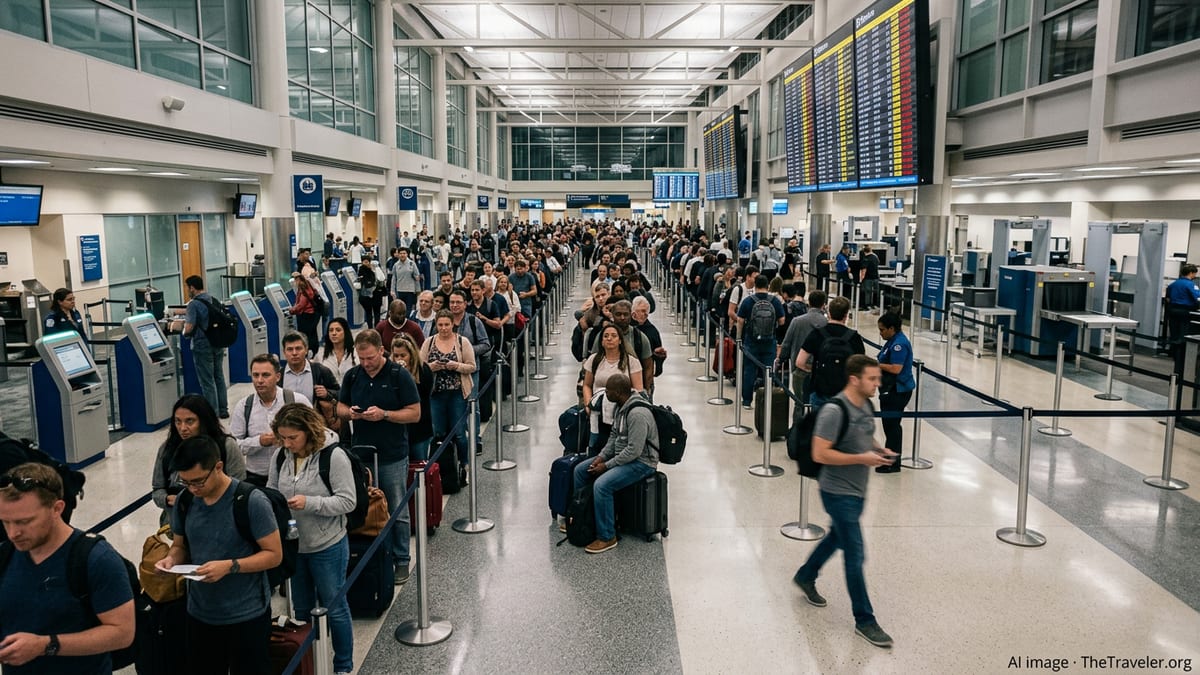
What happened and why Newark and Philadelphia were hit
Published coverage indicates the disruption centered on the Philadelphia Terminal Radar Approach Control facility, commonly called the Philadelphia TRACON, which manages arrival and departure flows for multiple airports in the corridor, including Newark (EWR) and Philadelphia (PHL). When key communications links were impaired, the FAA used traffic management tools to restrict or pause inbound flights to keep aircraft separated and reduce complexity while the system stabilized.
Reports described the incident as involving air traffic control communications issues and “equipment outage” advisories, with information pointing to damaged fiber lines connected to the system. Multiple outlets reported that a construction-related incident in New Jersey cut a fiber line, complicating operations and forcing the FAA to meter, delay, or temporarily halt arrivals to several airports that depend on the affected air traffic facility.
While travelers often assume delays are driven by congestion at an airport itself, this incident highlighted how a single point of failure in the broader air traffic network can slow or stop traffic into multiple airports at once. Newark’s outsized role as a hub for United Airlines, and Philadelphia’s role as a major American Airlines station, meant the disruption quickly translated into missed connections and displaced aircraft and crews across both carriers’ networks.
How the ground stops spread across the Northeast corridor
The earliest impacts were most visible at Newark and Philadelphia, where inbound flights were held at their origin airports under ground stop orders. Published coverage also indicated the FAA’s restrictions expanded to include other high-volume airports and satellite fields, including New Jersey’s Teterboro, and spillover impacts on New York City-area airports as traffic managers tried to keep the system safe and orderly.
Travelers far from the Northeast also felt the effects. As aircraft and crews were delayed coming out of the region, downstream departures across the country began departing late or canceling, especially on routes where an inbound aircraft rotation is required to operate a later flight. Even when ground stops end, a backlog can persist for hours as airlines and air traffic management work through queues of delayed arrivals and rescheduled departures.
Separately from the specific communications failure, some airports in the broader region also dealt with routine weather-related disruptions during the day, which can compound a recovery once the airspace system begins to move again. For passengers, that mix can make it hard to determine whether a delay is driven by local weather, aircraft availability, crew legality, or the air traffic restrictions connected to the outage.
Flight cancellations and delay totals: what travelers saw Monday
By late Monday, widely published disruption trackers and news coverage pointed to substantial cancellation and delay totals, with Newark frequently singled out as one of the hardest-hit airports. Coverage citing FlightAware described hundreds of delayed flights at Newark and Philadelphia, with Newark at times leading the country in overall disruption for the day.
At the airport level, the experience for passengers varied. Some travelers faced long holds at the gate awaiting clearance into the arrival stream, while others never boarded because the inbound aircraft or the operating crew was stuck elsewhere. As airlines tried to rebalance, certain departures moved with heavy delays, while others canceled outright to preserve aircraft and crews for later flights.
Even after operations began resuming at some airports, travelers were still advised through public channels to expect rolling delays into the evening because the system had to absorb pent-up demand. For passengers, this often shows up as gradually changing departure times, intermittent boarding updates, and tight connections that become unworkable once arrival sequences remain constrained.
What to do if you are traveling through EWR or PHL next
For passengers traveling in the next 24 to 48 hours through Newark or Philadelphia, the most practical step is to watch the airline’s app for aircraft assignment changes and updated departure and arrival estimates, not only the original schedule. When a network disruption hits a hub or focus city, the risk is less about a single delayed flight and more about aircraft and crew rotations shifting throughout the day.
Publicly available FAA status pages can also help travelers understand whether delays are still being driven by air traffic initiatives such as ground stops or ground delay programs. Those programs typically indicate that flights to a destination are being held at their origin and assigned controlled arrival times, which can be more informative than a generic “late inbound aircraft” message.
If rebooking becomes necessary, travelers generally have better odds when they act early and consider alternate routings that avoid the affected airspace, including switching to different nearby airports if seats are available. In the New York and Philadelphia region, that can mean comparing options across multiple airports, though travelers should also factor in ground transportation time and cost, since the fastest flight is not always the fastest door-to-door trip during a disruption.
Why this outage renews focus on ATC resilience and aging infrastructure
Monday’s disruption also revived broader questions about resilience in the air traffic system, particularly in the Northeast where airspace is dense and weather, congestion, and equipment constraints can quickly cascade. Published coverage described the affected Philadelphia-area air traffic facility as tied to earlier disruption episodes impacting Newark, underscoring how interconnected the region’s air traffic operations have become.
Recent reporting has also pointed to federal efforts to modernize elements of air traffic control infrastructure and staffing. Reuters coverage referenced congressional funding approved last year to address aging air traffic control systems and to bolster controller hiring, reflecting longstanding concerns about both technology and staffing pressure points that can exacerbate disruptions once they begin.
For travelers, the takeaway is that recovery from a communications or equipment outage is rarely immediate, even after the underlying fault is corrected. Airlines must reposition aircraft, crews must be re-paired with aircraft and legal duty windows, and air traffic managers must safely meter the backlog into already busy airports, meaning the effects can linger well into the next day depending on the scale of the shutdown and the time required to unwind it.