


More news on this day
The Federal Aviation Administration is flagging thunderstorms as a potential disruptor for travelers passing through Denver International Airport and major Florida hubs, with conditions that can prompt air traffic restrictions, ground-delay programs, and rolling departure holds as storms build and move across busy arrival corridors.
Get the latest news straight to your inbox!
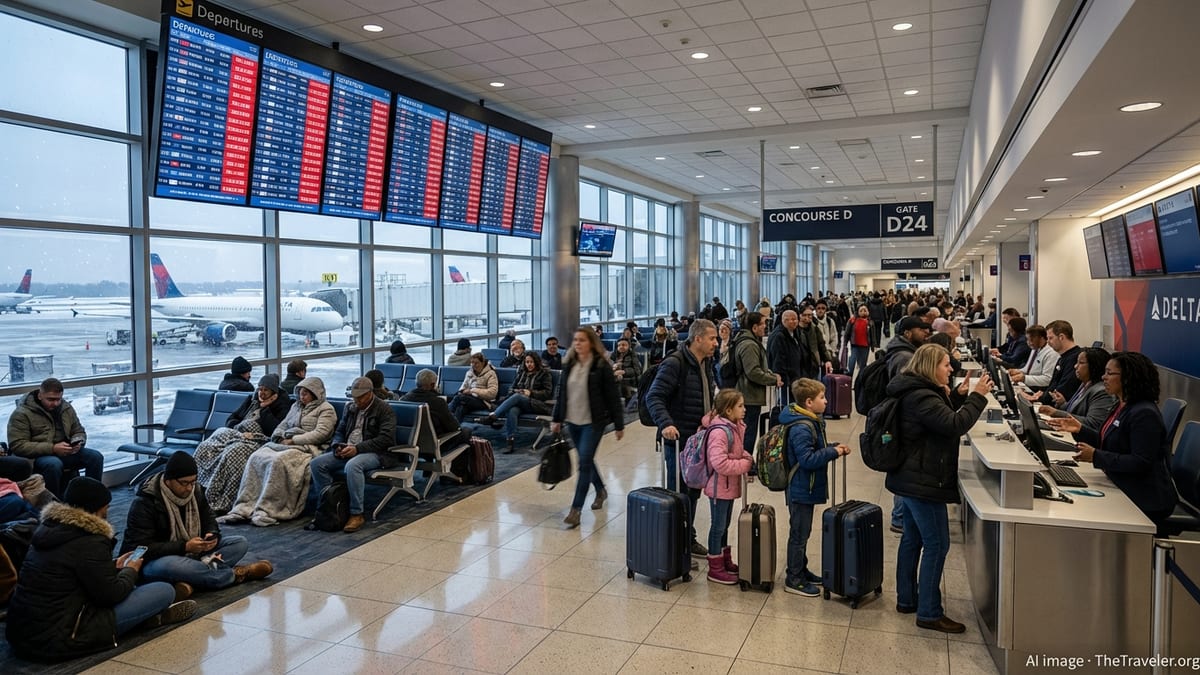
What the FAA warning means for travelers right now
Published FAA planning guidance has highlighted thunderstorm impacts around Denver (DEN) and South Florida airports including Miami (MIA) and Fort Lauderdale (FLL), a pattern that often leads to arrival rate reductions and flow restrictions when storm cells approach key runways or the airspace feeding them. The FAA’s daily outlook for Friday, September 18, 2026, listed thunderstorms that could slow air traffic in Denver, Fort Lauderdale, and Miami, among other cities.
By early Saturday, September 19, 2026, FAA airport-status pages indicated generally light delays at several Florida airports at the time of the update, while Denver showed signs of broader traffic-management activity. For travelers, the practical takeaway is that restrictions can be applied and removed repeatedly throughout the day as storms redevelop, especially during peak afternoon and evening departure banks.
It is also important to distinguish between passenger-facing “flight restrictions” and aviation-system actions. In thunderstorm scenarios, the most common impacts are traffic management initiatives such as ground-delay programs, miles-in-trail restrictions, and occasional ground stops for arrivals when capacity drops sharply due to weather near an airport or along arrival routes.
Denver: a high-volume hub vulnerable to rapidly changing convective weather
FAA real-time status information for Denver International Airport on September 19, 2026 showed a traffic management program affecting inbound traffic, with general arrival delays reported as 15 minutes or less at the time of the FAA update. Even when the posted delay averages look modest, storm-driven constraints can cascade quickly because Denver’s runway use and approach paths can be heavily affected by convective activity in the region.
For travelers, Denver disruptions frequently show up first as departure holds at origin airports, aircraft waiting for a gate upon arrival, or flight-time extensions due to reroutes around storm cells. A single thunderstorm cluster near final-approach fixes or departure corridors can narrow usable airspace, forcing controllers to space aircraft farther apart and reduce the number of arrivals and departures per hour.
Additional planning complexity can come from the broader National Airspace System, because weather impacts elsewhere can constrain aircraft and crews that are scheduled to pass through Denver. On stormy days, restrictions across multiple metro areas can compress schedules and make rebooking harder later in the day.
Florida airports: why storms can trigger delays even when skies look clear
Florida’s major airports operate in airspace where thunderstorms can block commonly used arrival and departure corridors. FAA operational materials have previously outlined how convective weather in South and Central Florida can lead to tactical route adjustments, holding for inbound flights, and possible ground stops when storm coverage becomes widespread.
On September 19, 2026, FAA status pages for Miami (MIA), Fort Lauderdale (FLL), and Orlando (MCO) showed general gate-hold, taxi, or airborne delays of 15 minutes or less at the time of their updates. That snapshot does not guarantee a smooth day, because Florida’s strongest thunderstorm impacts typically intensify in the afternoon and early evening, when heating and sea-breeze boundaries can rapidly build storms near the terminals.
The FAA’s Command Center also issues advisories when it anticipates regional impacts. An example earlier in August 2026 highlighted expectations of departure and arrival delays and airborne holding into Central Florida airports due to thunderstorms, with delays of up to 30 minutes noted in the advisory message. Advisories like that are not limited to one airport; they are often tied to a wider airspace region and can affect multiple airline schedules at once.
How airlines and the FAA manage thunderstorms, and what passengers can do
The FAA’s publicly available weather-delay guidance describes how air traffic planners use forecasts to anticipate reduced capacity, then coordinate strategies such as reroutes, metering arrivals, and delaying aircraft on the ground until weather clears. Because thunderstorms can be tall and turbulent, and because lightning and heavy rain can slow ramp operations, the system often prefers delaying flights on the ground rather than placing too many aircraft in airborne holding.
For passengers, the most useful steps are operational rather than speculative. Check flight status frequently, including the inbound aircraft’s position if your airline provides it; when thunderstorms are forecast at a hub, delays often originate from where the aircraft is coming from, not just the departure airport. Consider earlier departures when available, because afternoon convection tends to be more disruptive in both Colorado and Florida during storm-prone periods.
It also helps to recognize which rebooking options remain realistic once restrictions begin. When traffic management initiatives are in effect at a major hub, seats on later flights can fill quickly, and minimum connection times may become irrelevant if inbound flights are metered into the airport. Travelers with tight connections through Denver or South Florida may want to proactively review same-day standby or confirmed-change policies in their airline app before arriving at the airport.
Finally, travelers should avoid conflating traffic-management restrictions with broader airspace restrictions such as Temporary Flight Restrictions. Thunderstorms typically drive operational programs and delays rather than TFRs, and the best near-real-time indicators for passengers remain airport status pages, airline flight updates, and the FAA’s National Airspace System status feeds.