


More news on this day
Flights in and out of Newark Liberty International Airport and Philadelphia International Airport faced widespread delays Monday after the Federal Aviation Administration ordered ground stops linked to a communications and radar outage affecting the busy Northeast airspace corridor.
Get the latest news straight to your inbox!
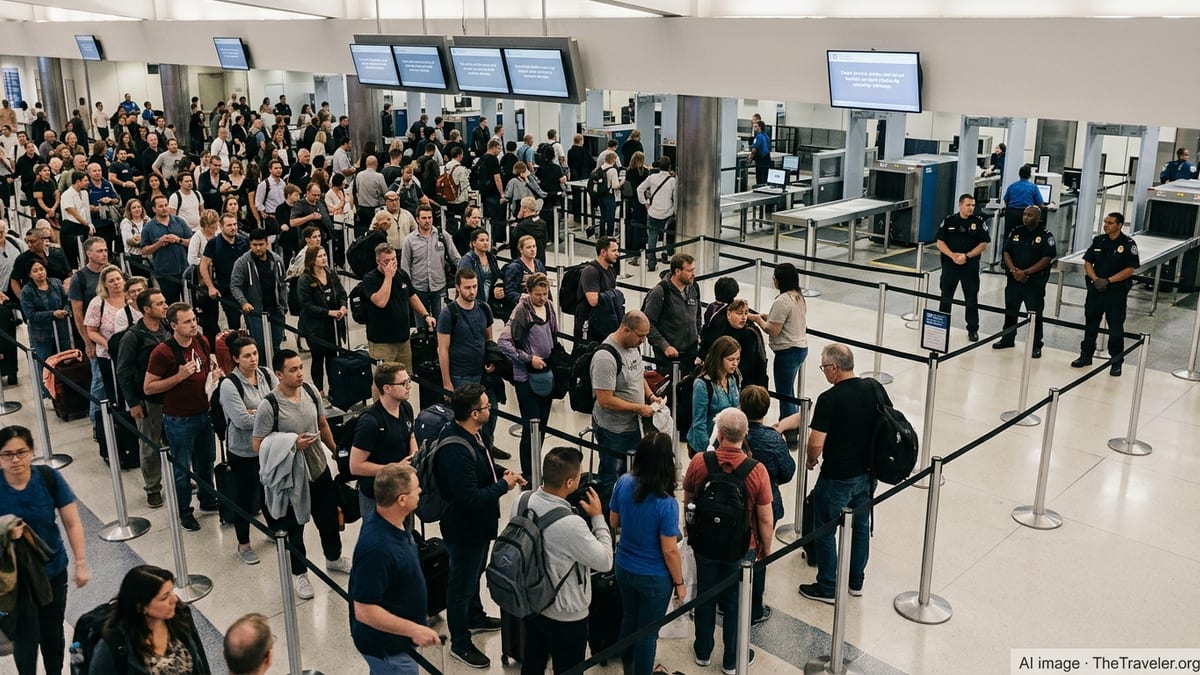
What triggered the ground stops
Published coverage indicates the disruption centered on Philadelphia TRACON, a key FAA facility that uses radar and radio communications to manage aircraft approaching and departing multiple airports in the region, including Newark and Philadelphia. The incident unfolded when a primary communications line failed, and the backup fiber line was also unavailable after being damaged during construction work in New Jersey.
Reports describe a scenario in which air traffic controllers were temporarily left without normal radar and communications capabilities, forcing traffic managers to slow or halt the flow of aircraft into affected airports. That kind of disruption can prompt the FAA to issue ground stops, which hold aircraft on the ground at their departure airports to prevent airborne gridlock and keep arrival volumes manageable.
By Monday evening, publicly available updates indicated repairs to the damaged telecom lines and a gradual return toward normal operations across affected Northeast airports. Even after a ground stop lifts, backlogs often take hours to unwind as aircraft and crews end up out of position and airport gates fill up.
Airports and airlines most affected in the New York Philadelphia corridor
The impact extended beyond Newark and Philadelphia, with major New York City area airports also experiencing heavy disruption. Coverage described hundreds of flights canceled and many more delayed across Newark, Philadelphia, LaGuardia, and JFK as the outage rippled through one of the country’s most congested air corridors.
For travelers, Newark’s hub role for United Airlines and Philadelphia’s hub role for American Airlines helped amplify the knock-on effects. Flight tracking data cited in published reporting showed more than 600 combined delays at Newark and Philadelphia during the peak of the disruption, with average delays at Newark reported at roughly two hours at one point.
By late Monday, the FAA’s public airport-status page for Philadelphia was showing markedly improved conditions compared with earlier in the day, with general arrival and departure delays listed at 15 minutes or less and an update timestamp late on September 21, 2026. That improvement, however, may not match the experience of individual passengers whose aircraft, crews, or incoming planes remained displaced by earlier stoppages.
How a ground stop differs from a delay and why the backlog lingers
A ground stop is one of the FAA’s most restrictive traffic-management tools, used when the agency needs to temporarily halt arrivals to a specific airport or group of airports. Rather than having multiple aircraft circle in holding patterns, flights are held at origin airports until the system can safely absorb them.
Even short ground stops can create long lines of waiting aircraft and crowded terminal conditions, particularly at airports like Newark and Philadelphia that operate with tight schedules. Once traffic resumes, airports must sequence departures, clear taxiway congestion, and work through arrival queues, often while juggling gate constraints and late inbound aircraft.
Published local coverage of Philadelphia’s disruptions described an on-and-off pattern during the day, with arrivals briefly resuming before being halted again, followed by a later lifting of the ground stop. Stop-start operations can compound delays because airlines may begin repositioning aircraft only to have plans disrupted again.
What travelers can do right now if flying via EWR or PHL
Airlines and the FAA have broadly advised travelers to confirm flight status directly with their carrier before heading to the airport, particularly after systemwide disruptions that can change departure times quickly. When ground stops and air traffic constraints occur, airline apps and text alerts tend to reflect the fastest schedule changes.
Some airlines issued flexibility policies tied to the Northeast air traffic control disruption dated September 21 to September 22, 2026, allowing eligible customers to rebook without typical change fees under specified conditions. Travelers should check their airline’s current waiver terms and rebooking windows, since eligibility can depend on original travel dates, routes, and ticket types.
For passengers rebooking, practical options often include shifting to earlier departures the next day, choosing alternate nearby airports where feasible, or rerouting through less congested hubs. However, the most realistic path can be whichever itinerary the airline can protect with available seats and properly timed connections as the network resets.
Why the incident is drawing renewed attention to aging infrastructure
The disruption has renewed focus on the resilience of the telecommunications and radar links that support air traffic operations in the Northeast, where airports operate close to capacity and small disruptions can cascade quickly. Published coverage described the event as stemming from damage to data lines supporting the FAA facility in Philadelphia, leaving little margin when both primary and backup paths were affected.
Reports also noted the incident echoed prior Northeast disruptions tied to technical and communications issues, including earlier problems that affected operations connected to Newark. With peak fall travel underway and the New York area seeing heightened global travel demand during the United Nations General Assembly period, the timing increased the stakes for operational reliability across the corridor.
As operations resume, travelers should expect aftereffects to continue into later flights as aircraft rotations and crew schedules normalize. The clearest indicator of improvement is typically a steady drop in average delay times and cancellations across the day, rather than a single announcement that a ground stop has ended.