


More news on this day
Flights across the busy Northeast corridor were thrown into disarray on Monday, September 21, 2026, after a Federal Aviation Administration equipment outage forced ground stops and lengthy delays at several major airports, including Newark, Philadelphia, LaGuardia, and John F. Kennedy.
Get the latest news straight to your inbox!
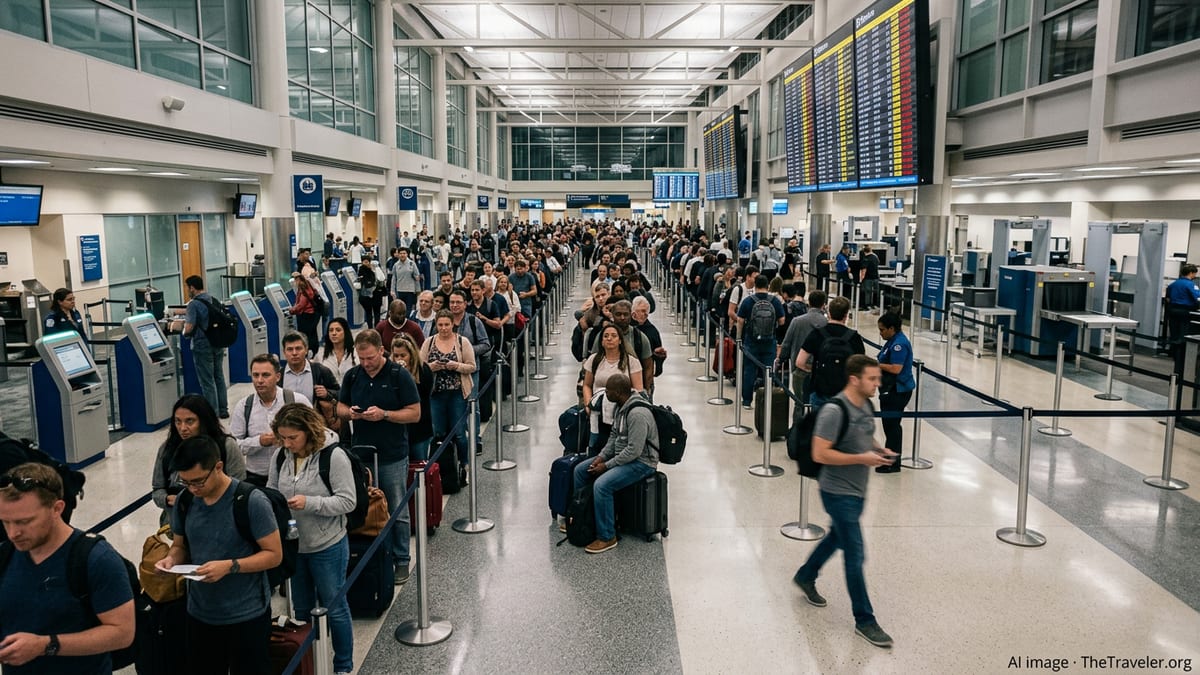
Ground stops ripple across key Northeast hubs
Publicly available airspace status data and news coverage describe a cascading disruption that began late Monday morning, when an equipment failure at a regional air traffic control facility led the FAA to halt departures at multiple airports. Ground stops were issued at Newark Liberty International Airport, Philadelphia International Airport, New Jersey’s Teterboro Airport, and later extended to New York’s LaGuardia and John F. Kennedy airports as controllers reduced traffic volumes for safety.
Reports indicate that commercial arrivals into Newark were effectively paused from about 9:40 a.m. until just after 5:20 p.m. local time, turning one of the nation’s busiest international gateways into a backlog of aircraft waiting for clearance. At Philadelphia International Airport, a similar ground stop kept flights on the ground for much of the day before operations gradually resumed in the late afternoon and evening.
According to airline tracking services cited in multiple outlets, hundreds of flights were delayed or canceled across the affected airports. The disruption also spilled far beyond the Northeast, as aircraft, crews, and connections tied to the region’s hubs fell out of position, causing knock-on delays at airports around the United States and in some international markets.
By Monday evening, the FAA’s system status information showed that the formal ground stops at Newark, JFK, LaGuardia, Teterboro, and Philadelphia had been lifted. However, ground delay programs and residual congestion meant that many passengers were still facing hours-long waits as airlines worked through the accumulated queues.
Cut fiber line and circuit failure behind the outage
According to published coverage from national and local outlets, the disruption was traced to a combination of a blown circuit and damaged telecommunications infrastructure connected to the FAA’s Philadelphia-area terminal radar approach control facility. That facility manages approach and departure flows for multiple major airports in the New York and Philadelphia region.
Telecommunications providers reported that a construction crew in New Jersey accidentally severed a fiber line used to carry key data links, triggering a communications outage for parts of the air traffic control system. The fiber cut occurred in the same general corridor that supports FAA facilities handling radar and radio frequencies for Newark and Philadelphia, compounding the impact when redundancy did not immediately take over.
Additional reporting notes that the Philadelphia facility has been a focal point of FAA modernization efforts and has experienced previous technical issues, including disruptions in 2025 that affected Newark’s operations. Federal regulatory documents published earlier in 2026 highlighted the complexity of the New York and Philadelphia airspace and acknowledged ongoing work to upgrade both technology and staffing at critical facilities.
As of Tuesday morning, September 22, publicly available information indicates that the damaged fiber lines had been repaired and primary services restored. There were no immediate indications of wider systemic safety problems, but the incident renewed questions about the resilience of the FAA’s communications and radar infrastructure in one of the world’s most congested air corridors.
Traveler impact: missed connections and crowded terminals
The outage coincided with an already busy travel period, with the United Nations General Assembly drawing international traffic to New York and routine business and leisure demand filling flights along the Eastern Seaboard. Flight-status boards at the affected airports showed waves of delays stretching several hours, with some itineraries pushed into late-night or early-morning arrivals.
Travelers connecting through Newark, Philadelphia, and the New York airports faced particular challenges. With departure slots tightly managed while the system recovered, airlines prioritized certain long-haul and hub-to-hub flights, leaving some shorter regional services subject to cancellations. Social media posts and local news segments from Boston, Washington, and other cities documented knock-on delays where aircraft inbound from the Northeast could not depart on time.
Airlines responded by issuing travel waivers for certain routes touching the affected airports, allowing passengers to rebook without standard change fees on selected dates and fare classes. Public information from carriers indicated that rebooking options were limited on some high-demand routes because of constrained seat availability just days ahead of peak fall and conference travel.
Airport operations teams also contended with surging passenger volumes in terminals as flights stacked up. Reports from Newark and Philadelphia described long lines at customer service counters and crowded gate areas, with some travelers advised to seek hotel accommodation or alternate routings if their flights slipped into the overnight hours.
What travelers should expect in the days ahead
Although the FAA reported that air traffic operations in the Northeast had largely resumed by Monday night, airlines warned that residual delays could continue into Tuesday, September 22, as aircraft and crews returned to normal rotations. Published schedules for early Tuesday showed some preemptive cancellations and retimed departures at Newark, Philadelphia, and the New York airports as carriers attempted to reset the system.
For travelers with near-term itineraries involving the affected airports, publicly available guidance from airports and airlines emphasized the importance of monitoring real-time flight status before leaving for the airport. Same-day schedule shifts remained possible as air traffic managers adjusted arrival and departure rates to handle any lingering congestion or staffing constraints.
Industry analysts quoted in recent coverage pointed to the incident as another reminder that even a localized infrastructure failure can have wide-reaching effects in the tightly interconnected U.S. air travel network. Because major Northeast hubs serve as key waypoints for transatlantic flights, business shuttles, and domestic connections, disruptions in this region tend to cascade across time zones.
Travelers planning complex itineraries or tight connections through the Northeast in the coming days may benefit from allowing additional buffer time or considering more direct routings where feasible. However, as of early Tuesday, there were no indications from public schedules or FAA status updates that the outage would prompt longer-term schedule reductions.
Spotlight on FAA resilience and modernization efforts
The outage arrives at a sensitive moment for the FAA, which has been investing heavily in new technology to manage dense airspace and reduce chronic delays in the New York region. Recent federal notices and agency communications have referenced programs to modernize radar, communications, and airspace management tools, as well as to redistribute responsibilities between the New York and Philadelphia approach control facilities.
Published coverage also notes that the agency has been testing new decision-support systems, including artificial intelligence based tools designed to optimize routes and reduce weather-related disruptions. While current reporting indicates that this week’s outage was tied directly to physical telecommunications infrastructure rather than software upgrades, the event is likely to feature in ongoing debates over how best to balance innovation with redundancy and backup capacity.
Slot waivers and scheduling caps at New York City area airports have been in place in various forms since 2023 to manage delays tied to staffing and capacity at key facilities. Regulatory documents updated in mid-2026 extended certain flexibilities into 2027, acknowledging that the system remains vulnerable to both human and technical strains. The new disruption underscores how a single point of failure in the communications chain can override carefully calibrated schedules.
For travelers, the incident serves as a reminder that even on clear-weather days, air travel can be susceptible to behind-the-scenes infrastructure problems. While Monday’s equipment outage is now largely resolved, its effects on confidence in the robustness of the Northeast air traffic system are likely to persist, and frequent flyers may watch closely for additional public updates on the FAA’s mitigation and modernization plans.