


More news on this day
A false fire alarm at Auckland’s Waitematā Station temporarily closed the city’s downtown rail hub and disrupted train services, prompting evacuations and delays for hundreds of morning commuters.
Get the latest news straight to your inbox!
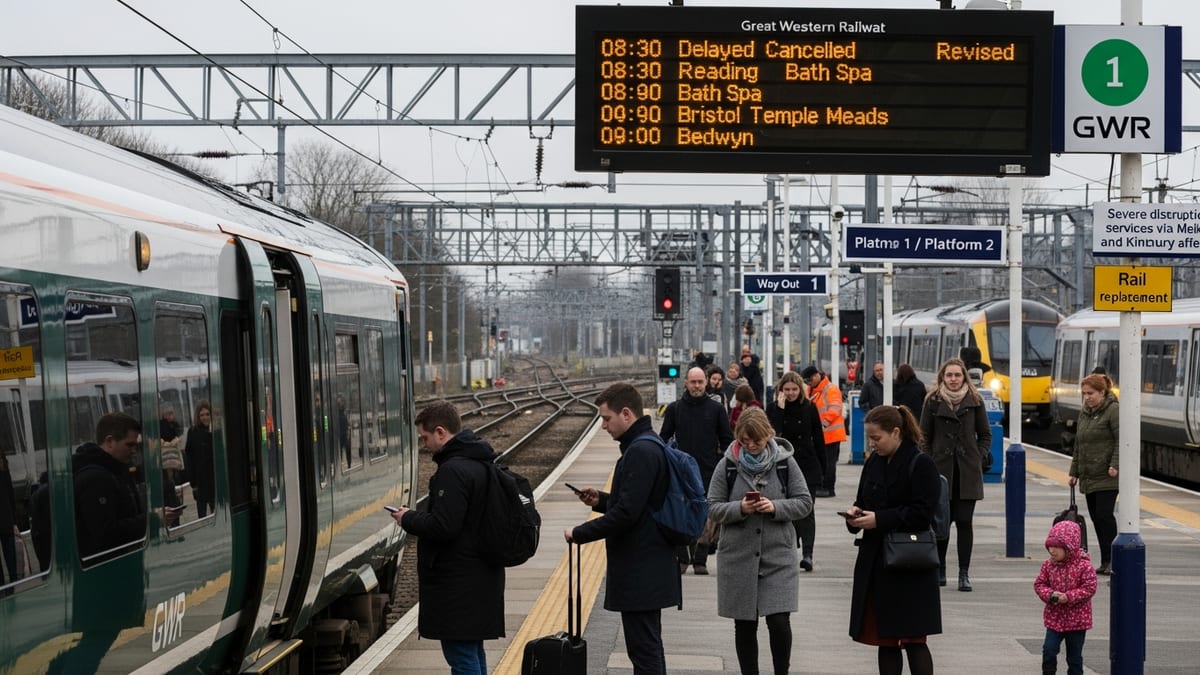
Brief closure at central rail hub after alarm triggers evacuation
The alarm activated during a busy period, leading to an immediate evacuation of platforms and concourse areas as fire systems and safety protocols were engaged. Passengers were directed out of the station while emergency checks were carried out and services held outside the inner city.
Reports indicate that trains on multiple lines were unable to enter or depart Waitematā Station during the incident, causing a temporary bottleneck across Auckland’s rail network. Some services were cancelled, while others were turned back at outer stations or significantly delayed.
Publicly available updates from transport operators described the disruption as the result of an earlier fire alarm at the station. Social media posts from passengers showed crowded platforms at other stops on the network, as commuters attempted to re-route or wait out the delays.
The station reopened after it was confirmed there was no active fire, with services gradually resuming and delays tapering off over the following hours. No injuries have been reported in connection with the incident.
False alarm highlights tight safety protocols in underground station
The response at Waitematā Station reflects the strict fire and evacuation standards applied to enclosed and partially underground transport hubs. In these environments, even an unconfirmed indication of smoke or fire is treated as a potential emergency until checks are completed.
Information available from emergency management guidance in Auckland stresses that alarms are not to be ignored and that evacuations should proceed immediately whenever a system is triggered. The approach is designed to minimise the risk of smoke inhalation and ensure safe evacuation routes remain clear.
Transport and infrastructure documents for the City Rail Link project note that Waitematā Station has been fitted with advanced ventilation, detection, and evacuation systems intended to move people quickly and safely to street level if there is any suggestion of a fire. These systems are configured so that, when activated, services are automatically restricted until the station is cleared.
Observers with experience of station operations have previously pointed out that in complex underground environments, false alarms can occur due to sensor faults, dust, maintenance activities, or localised heat that may not involve an actual fire. Even so, the system is calibrated to err on the side of caution, closing access rather than risking a delayed response.
Commuter frustration as delays ripple across wider network
The closure of Auckland’s primary downtown station had an immediate effect on rail users, particularly those relying on early services into the central business district. Many passengers reported extended journey times and crowded trains, as services were held outside the core of the network or replaced by other options.
Publicly available service alerts described a mix of cancellations, short-turning of trains, and rolling delays on lines feeding into the city. For some commuters, the issue coincided with tight work schedules and school runs, amplifying frustration at another disruption involving the central station.
Online discussion also underscored ongoing confusion for some residents between the former Britomart name and the newer Waitematā Station identity. While signage and wayfinding across the network have been progressively updated, passenger commentary suggests that the transition is still bedding in, which can complicate communication during fast-moving incidents.
Despite the disruption, services were reported to have stabilised later in the day once the station reopened and congestion on the tracks eased. Passengers were encouraged via public channels to allow extra time for their journeys and to check live updates before travelling.
Background on Waitematā Station and its role in Auckland’s rail system
Waitematā Station, previously known as Britomart, sits at the heart of Auckland’s rail network and serves as a key gateway to the central city. The station was renamed as part of a broader effort to reflect local history and align with the emerging City Rail Link network and its stations.
Project information for the City Rail Link describes Waitematā as a critical junction that will connect through new underground tunnels and additional stations to increase capacity into the central city. Once the wider project is fully operational, more trains per hour are expected to pass through the hub, making reliable operations and safety systems even more important.
The station combines historic architecture at street level with modern underground platforms and concourses, housing extensive signalling, ventilation, and emergency systems. These features are designed both to move large numbers of people efficiently and to protect them in the event of incidents involving smoke, fire, or other hazards.
With the network still undergoing adjustments linked to the City Rail Link works, occasional disruptions are expected as systems are tested, refined, and integrated. The latest false alarm at Waitematā Station fits into a broader pattern of the rail network balancing day to day operations with the demands of a major infrastructure upgrade.
Calls for clear communication and resilience amid recurring alarms
The incident has renewed public discussion about how major stations communicate with passengers during unexpected closures that later turn out to be false alarms. Travellers posting on social platforms emphasised the importance of clear, rapid messaging about the nature of disruptions and expected time frames for reopening.
According to publicly available guidance, best practice for managing false alarms in public transport environments involves both maintaining strict safety standards and minimising confusion by updating passengers through multiple channels. This can include platform announcements, digital displays, mobile apps, and wider media alerts.
Some commuter commentary has suggested that recurring alarms, even when unfounded, risk eroding public confidence if passengers feel that disruptions are frequent and unpredictable. At the same time, many acknowledge that the alternative of ignoring or downplaying an alarm would be far riskier in the rare cases where a genuine fire is present.
As Auckland’s rail system prepares for increased demand with the completion of the City Rail Link, the reliability of safety systems, the handling of false alarms, and the clarity of public information are likely to remain key issues for both planners and passengers using Waitematā Station and the wider network.