


More news on this day
President Donald Trump is weighing whether to deepen U.S. military involvement in the Iran conflict by backing a potential joint operation with Israel against a fortified Iranian site linked to nuclear activity, a move that analysts say could mark a dangerous new phase in an already volatile regional war.
Get the latest news straight to your inbox!
Debate in Washington Over Next Phase of Iran Campaign
Recent coverage from major U.S. outlets indicates that Trump is being presented with sharply divergent options as the Iran confrontation enters what advisers describe as a decisive stage. One path would extend a limited ceasefire to stabilize shipping through the Strait of Hormuz, while another would expand into a full-scale campaign that more closely integrates Israeli forces against high-value targets inside Iran.
Reporting from regional and U.S. media describes the latest American strikes as focused on degrading Iran’s coastal defenses, drone fleets, and missile infrastructure that threaten commercial and naval traffic. These actions are widely viewed as setting the conditions for more complex operations, should the White House choose to escalate rather than pursue an extended pause in fighting.
Analysts quoted in recent think-tank and press commentary suggest that the administration is using this window to assess how far it can go militarily without triggering a wider regional conflagration. The outcome of this internal debate will likely shape not only the trajectory of the war but also broader U.S. posture across the Middle East.
Focus on Pickaxe Mountain and Iran’s Nuclear Infrastructure
At the center of the current escalation discussion is a subterranean complex in Iran known as Pickaxe Mountain, which U.S. and Israeli officials have long linked to sensitive nuclear-related work. According to recent reporting, Trump has publicly threatened to target the site directly, portraying it as emblematic of Tehran’s suspected efforts to preserve a pathway to a nuclear weapon despite previous strikes and sanctions.
Specialists in nuclear security note that Pickaxe Mountain is believed to be deeply buried in bedrock, with multiple tunnel entrances and hardened facilities designed to withstand conventional airstrikes. Even so, military assessments cited in recent coverage argue that a coordinated U.S.-Israeli operation using advanced bunker-penetrating munitions and stand-off weapons could damage access shafts, power infrastructure, and support tunnels, potentially setting back any covert nuclear activities.
The White House has repeatedly framed its broader campaign, including earlier operations against Iranian missile and drone capabilities, as part of a long-term effort to ensure Iran cannot obtain a nuclear weapon. A strike on a site associated with nuclear work would represent the most direct expression yet of that objective, but it would also carry the highest risk of provoking an escalatory response from Tehran and its regional allies.
Israel’s Calculus and the Prospect of Joint Operations
Israeli leaders have signaled growing impatience with what they see as the incomplete neutralization of Iranian military and nuclear infrastructure. Coverage from regional broadcasters and international networks indicates that Israeli security officials have been refining operational plans in case the conflict broadens, with particular attention to nuclear-related facilities and critical energy assets inside Iran.
According to recent reporting, some Israeli figures have pushed for the opportunity to hit targets they argue were left intact after earlier waves of U.S.-led strikes. These include sites tied to uranium enrichment, research programs, and the ballistic missile systems that would be crucial for any future nuclear delivery capability.
For Israel, a joint operation has both strategic and political appeal. Militarily, coordination with U.S. forces offers expanded satellite intelligence, refueling capacity, and precision strike assets that would be difficult to field alone. Politically, sharing responsibility for any attack on a nuclear-linked site helps distribute the diplomatic fallout, particularly with European and Asian partners wary of a wider war that might disrupt energy supplies and global trade routes.
Iranian Response Risks and Regional Travel Fallout
Iran has already warned that it would retaliate against any new attacks on its territory, particularly those aimed at nuclear-linked facilities. Public statements carried by Iranian state media in recent days have framed U.S. and Israeli military activity as evidence of a broader effort at regime change, and they have promised what they describe as a severe response to further strikes.
In practice, analysts expect that an assault on Pickaxe Mountain or similar high-profile sites could trigger missile and drone attacks on U.S. bases and partner countries across the Gulf, as well as renewed attempts to disrupt maritime traffic through the Strait of Hormuz and surrounding sea lanes. The possibility of cyber operations against Western infrastructure and commercial entities is also being widely discussed in expert commentary.
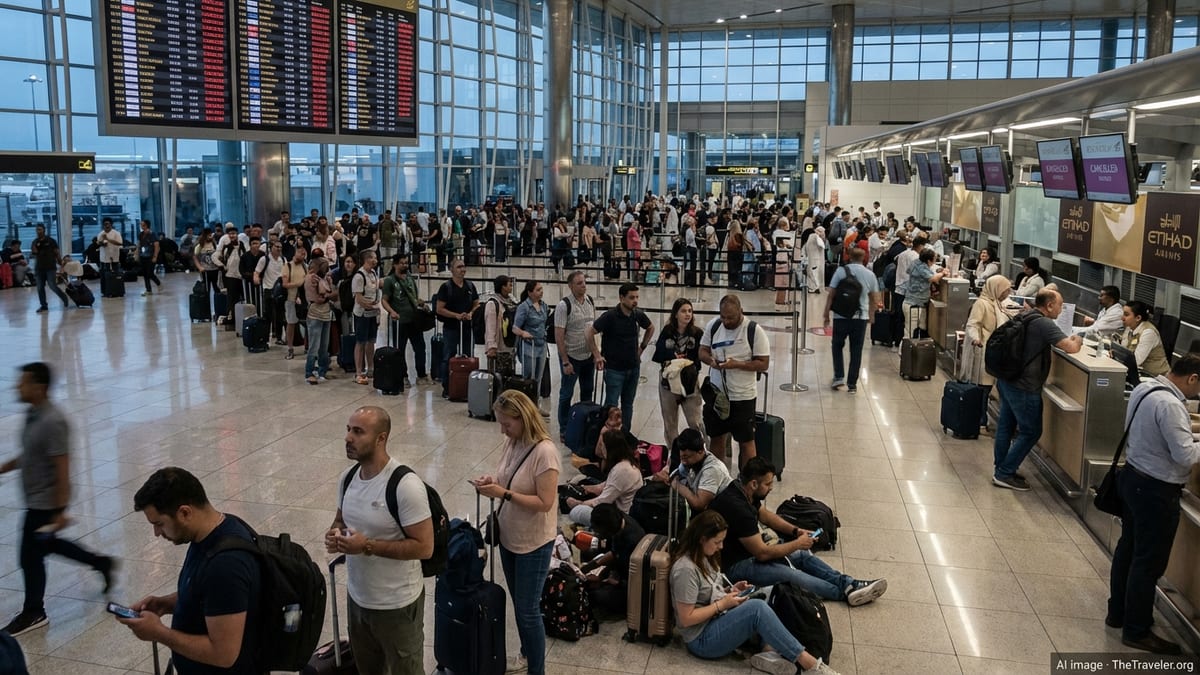
For travelers, the heightened tensions are already having tangible effects. Government advisories across North America, Europe, and Asia have urged citizens to reconsider nonessential travel to parts of the Middle East, and some have explicitly warned about the risk of airspace closures, flight diversions, and maritime disruptions in and around the Gulf. International carriers have begun adjusting routes to avoid conflict zones, lengthening flight times between key hubs in Europe, the Gulf, and South Asia.
Broader Implications for Global Security and Mobility
Beyond the immediate battlefield, a joint U.S.-Israeli strike on an Iranian nuclear-linked facility would likely reshape the global security environment for months or years. Energy analysts caution that any sustained disruption in Gulf shipping, whether from Iranian reprisals or expanded Western blockades, could push up fuel prices worldwide, with knock-on effects for aviation costs and tourism demand.
Diplomatic efforts, including mediation by regional states, appear focused on steering the crisis back toward a temporary ceasefire and renewed negotiations. Yet recent coverage underscores that trust between Washington, Tehran, and key regional actors is at a low ebb, limiting the space for compromise. As long as nuclear concerns remain unresolved and military options stay on the table, the risk of sudden escalation will continue to shadow travel corridors from the Eastern Mediterranean to the Indian Ocean.
For now, global travelers and the tourism industry are watching closely as the White House weighs whether to deepen its cooperation with Israel in a high-stakes strike or to pause and test the prospects for diplomacy. The decision will reverberate far beyond the Middle East, influencing not only regional security but the freedom of movement that underpins international tourism and business travel.