


More news on this day
The U.S. State Department has issued a new worldwide caution for American travelers, urging heightened vigilance across all international destinations as tensions in the Middle East fuel wider security risks and the prospect of sudden travel disruptions.
Get the latest news straight to your inbox!
Heightened Global Risk Linked to Middle East Conflict
The latest alert, published on July 20, 2026, advises Americans worldwide to exercise increased caution in light of what public information describes as a complex and volatile security environment linked to the ongoing conflict involving Iran and regional actors. The notice underscores concerns that incidents in the Middle East could escalate quickly and reverberate well beyond the region.
According to publicly available information, the State Department highlights the potential for hostile acts against U.S. interests overseas, including locations associated with the United States and Americans in multiple regions. Reports indicate that U.S. diplomatic facilities have already been targeted in connection with the wider Iran-related crisis, raising concerns that commercial hubs, transportation nodes, and popular visitor areas could face increased risk.
This global caution follows months of instability tied to the Iran war, which has involved airstrikes, missile attacks, and periodic airspace closures affecting several Middle Eastern countries. Travel industry coverage notes that previous rounds of hostilities in 2026 forced large-scale evacuations, strained airline capacity, and left many travelers scrambling to reroute or cut trips short.
Impact on Flights, Routes, and Travel Planning
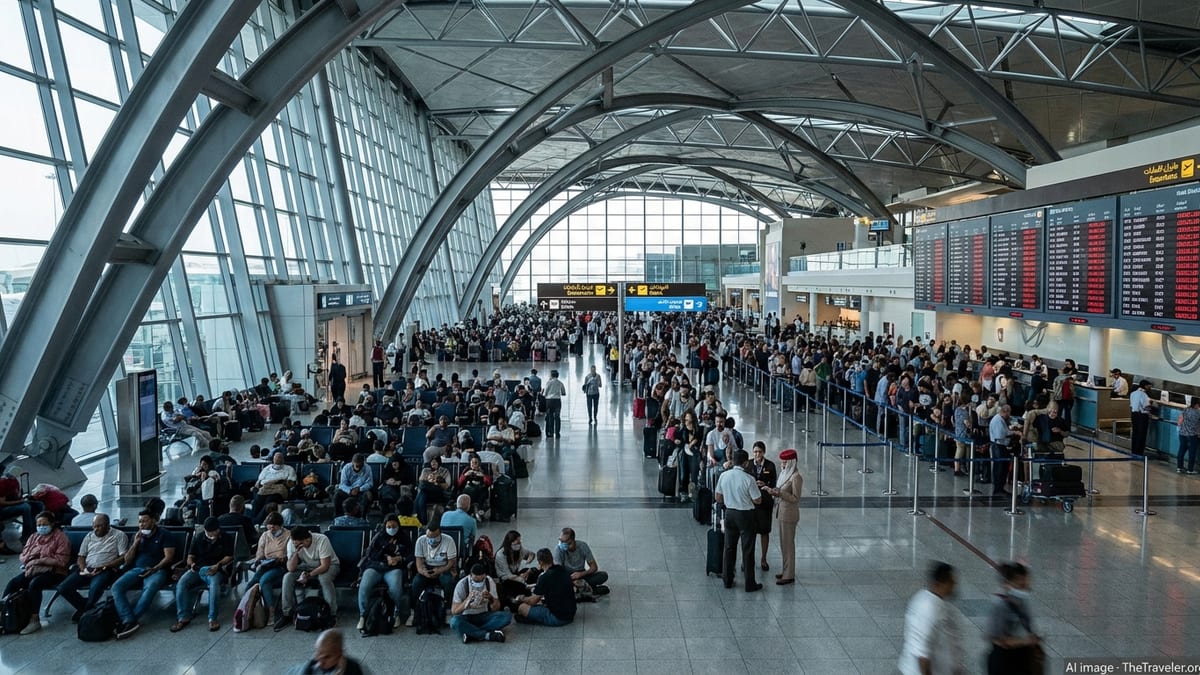
The new alert warns that Americans in or transiting through the Middle East should be ready for rapid changes in flight schedules, including cancellations, diversions, and temporary airspace closures. Recent advisories point to the possibility that such disruptions could occur with little advance notice, echoing patterns seen earlier in the year when conflict-driven restrictions rippled through aviation networks.
Airlines have already adapted routes repeatedly in response to evolving overflight restrictions and insurance considerations, and a fresh round of turbulence could lead to longer flight times or reduced service on certain corridors between North America, Europe, and Asia. Travel industry analysts quoted in open reporting suggest that carriers may again concentrate capacity on safer, higher-demand routes while trimming frequencies in more volatile areas.
Publicly available guidance from U.S. agencies encourages travelers to build extra flexibility into itineraries, avoid tight connections through regional hubs, and maintain contingency plans in case an airport or airspace closure strands passengers in transit. Travel news outlets also emphasize the importance of monitoring airline notifications and local media, since airlines may rely heavily on mobile alerts to communicate last-minute changes.
How the Worldwide Caution Fits Into the Advisory System
The worldwide alert sits alongside the State Department’s country-by-country travel advisories, which range from Level 1, advising normal precautions, to Level 4, advising that Americans should not travel. The global caution does not replace those destination-specific ratings, but it adds a cross-cutting layer of concern focused on terrorism, regional conflict, and the risk of sudden disruptions to transportation and public services.
Recent advisory updates show that many Middle Eastern destinations remain at Levels 3 and 4, reflecting ongoing armed conflict, terrorism risks, and limited consular access. Other countries far from the immediate war zone continue to carry lower advisory levels while still appearing in the worldwide caution due to the potential for opportunistic attacks or demonstrations directed at U.S. symbols.
According to background material made publicly available by the State Department, the Worldwide Caution product is designed to address broad, persistent threats that are not confined to a single country. It is periodically revised as conditions change and has historically been used around episodes of heightened terrorist activity or major geopolitical crises.
Practical Steps for U.S. Travelers Abroad
In light of the latest alert, government travel resources recommend that Americans heading overseas take several practical steps before departure. These include carefully reviewing the specific advisory for each destination, considering whether nonessential trips through higher-risk regions can be postponed, and sharing detailed itineraries with family or trusted contacts at home.
Travel guidance also stresses the importance of maintaining situational awareness. Travelers are encouraged to stay attentive in crowded public places, limit time around large gatherings or political demonstrations, and identify potential shelter locations and alternate routes in unfamiliar cities. Publicly available safety information highlights that even destinations with relatively low advisory levels can experience localized incidents that catch visitors off guard.
The alert further underscores the value of carrying updated contact information for local U.S. embassies or consulates, along with copies of key documents stored separately from originals. Many travel experts cited in recent coverage advise maintaining access to funds in multiple forms, including a backup credit card and some local currency, in case digital payment systems or ATMs are temporarily disrupted.
Insurance, Bookings, and the Question of Whether to Go
The worldwide caution is already prompting travelers and the tourism industry to reassess plans for late summer and fall. Travel media reports indicate a rise in questions about whether standard travel insurance policies cover cancellations that stem from security alerts or war-related disruptions, an area where coverage terms vary widely.
Consumer advocates note that some policies exclude losses related to war or terrorism, while others may only respond if a government issues a formal instruction to leave or if airlines cancel service outright. As a result, travelers considering itineraries that pass through or near affected regions are being urged in public commentary to read policy fine print carefully and, where available, look at plans that include broader “cancel for any reason” benefits.
Despite the elevated risk environment, tourism analysts observe that many Americans continue to travel, particularly to destinations perceived as relatively insulated from the Middle East conflict. The new alert does not bar travel but serves as a strong reminder that conditions can shift quickly. For now, the central message threaded through official advisories and travel-industry reporting is that anyone heading abroad in the coming weeks should plan cautiously, stay informed, and be prepared to adapt if the geopolitical picture worsens.