


The first 30 days after arrival in Italy are decisive for establishing day-to-day functionality and long-term compliance. While individual steps vary by nationality, purpose of stay and municipality, most new residents face a similar sequence of administrative and practical tasks. The following briefing outlines a realistic, structured setup checklist for the first month, focusing on what is typically time-critical, what can be deferred, and the interdependencies between key registrations and services.
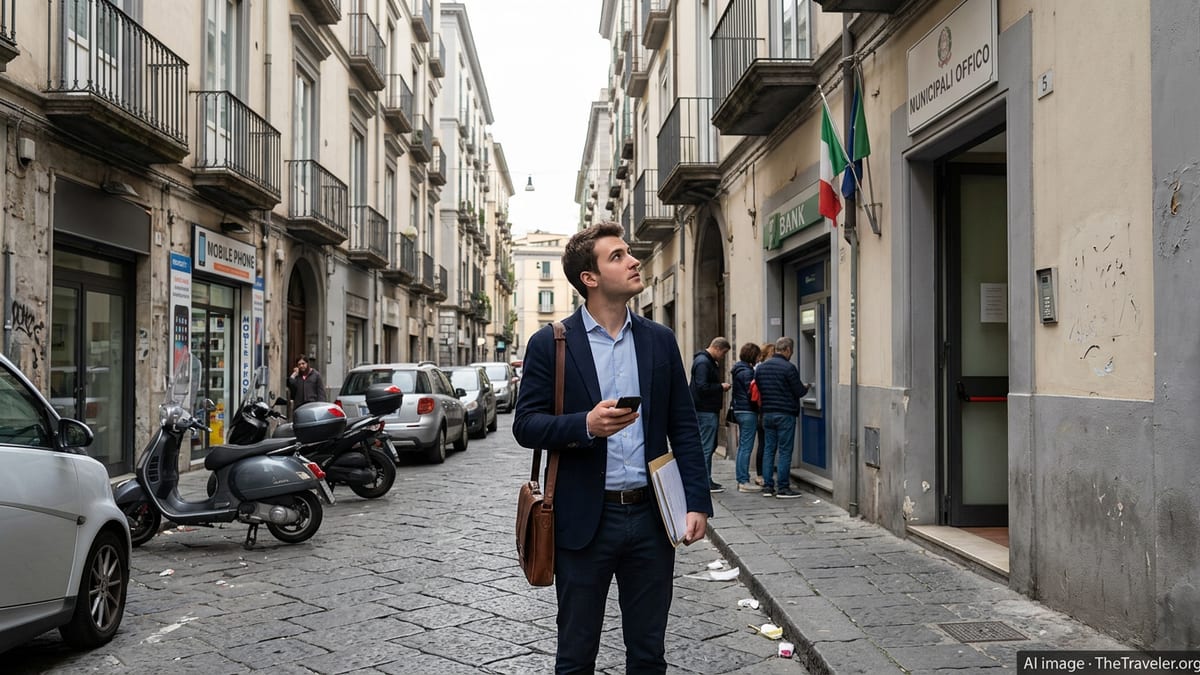
Strategic Overview of the First 30 Days
The initial month in Italy is best approached as a tightly ordered sequence rather than a loose to-do list. Many key services such as banking, telecommunications and local registrations depend on previous steps, particularly obtaining the Italian tax identification number (codice fiscale) and securing a valid address. In practice, the first 30 days typically involve parallel workstreams: identity and registration, financial access, communications, and local integration with utilities and services.
Time sensitivity varies. Some obligations derive from national rules, such as typical requirements to register a change of residence with the municipal registry (anagrafe) within roughly 20 to 30 days of moving to a municipality in cases of permanent relocation, while others are driven by providers’ internal policies, such as banks requiring proof of address to unlock full account functionality. Newcomers should therefore prioritize prerequisites that unlock multiple downstream actions, and avoid being blocked by missing documents or unconfirmed addresses.
Another practical constraint is processing time. Municipal residence registration can take several weeks to be finalized in large cities, as local police may verify that the applicant actually resides at the declared address before issuing a residence certificate. By contrast, telecommunications contracts or basic current accounts may be opened within a few days once documents are in order. Understanding these different timelines allows realistic planning of what can be completed within the first 30 days and what will only be initiated during that period.
Finally, regional variation is material. Municipal offices and local service providers apply national rules with differing levels of strictness, and frontline staff practices may differ between small towns and metropolitan areas. A conservative relocation plan assumes more documentation rather than less, brings multiple proofs of identity and address, and anticipates that not every step will be completed on the first attempt.
Day 1–7: Identity, Codice Fiscale and Address Foundations
The first week should be dedicated to establishing an administrative identity in Italy and stabilizing an address, even if initially temporary. The critical building block is the codice fiscale, which functions similarly to a tax identification or social security number and is used in almost every contract or registration, including rental agreements, employment contracts, healthcare registration and bank accounts. This identifier is free to obtain and is issued by the Italian Revenue Agency (Agenzia delle Entrate) or, in some circumstances, automatically linked to residence permits for certain non EU arrivals.
In recent practice, obtaining a codice fiscale as a newcomer typically requires presenting a valid passport or national identity card and completing a short form. Some consulates still assist certain categories of applicants, but recent changes have led many Italian consular offices to restrict issuance primarily to Italian citizens, pushing most foreign nationals to apply directly in Italy. For risk management, relocation planning should assume that the codice fiscale will be obtained on site after arrival unless pre-arranged through legal or professional intermediaries.
In parallel, newcomers must secure an address they can document. Even where no formal residence registration is yet completed, many downstream steps will require some proof of where the person is staying, such as a registered rental contract, employer-provided housing letter, or at minimum a written accommodation declaration from a host. In urban markets, landlords frequently request the tenant’s codice fiscale before finalizing contracts, while the municipal registry may later require the contract to process residence registration. This creates a circularity that can be mitigated by negotiating preliminary agreements, using employer support, or prioritizing temporary housing solutions that can be documented.
By the end of the first week, a well-sequenced relocation plan aims to have: a codice fiscale issued or an appointment scheduled to obtain it; a signed accommodation agreement or host declaration; and scanned copies of identity documents ready for use across multiple applications. This foundation significantly reduces friction in subsequent steps.
Day 8–15: Municipal Residence Registration and Core Local Records
For individuals relocating on a more than short term basis, municipal residence registration with the local anagrafe becomes a central objective in the first month. While precise legal triggers vary by status, a commonly referenced standard for permanent moves is that a change of residence should be reported to the municipal registry within roughly 20 days of establishing habitual residence. For many foreign nationals intending to stay more than three months, formal registration is also necessary to evidence local residence for employment, schooling, certain tax positions and, later, long term residence or citizenship eligibility.
The registration process typically requires: a completed application form; valid passport or identity card; evidence of legal stay where applicable; the codice fiscale; and proof of housing such as a registered rental contract, property deed or a host’s declaration with their identity and property documentation. In some municipalities, additional documentation such as work contracts or proof of sufficient financial resources may be requested, particularly for EU nationals relying on EU free movement rules.
Once submitted, registration is not always immediate. Many municipalities schedule a verification visit by the local municipal police to confirm that the applicant actually resides at the declared address. In larger cities this verification may occur within a few weeks, though timeframes vary and can stretch beyond the first 30 days. During this interim period, the registration is typically considered “pending.” Official residence certificates and, where applicable, locally issued identity cards may only be available after confirmation.
Even if full confirmation falls outside the first 30 days, initiating the process during this window is important. The date of application can potentially influence the formal start of residence periods that later matter for residence-based entitlements. It is also often a prerequisite for obtaining certain local services, such as a municipal demographic certificate, which in turn can be requested by employers, banks or schools as proof of local registration.
Day 10–20: Banking, Payments and Financial Access
Access to local banking and practical payment methods is another essential component of the first 30 days. Italian regulations do not impose a universal legal obligation for residents to hold an Italian bank account, but in practice many employers, landlords and service providers expect payments to and from domestic accounts. Newcomers therefore frequently aim to open at least a basic current account during the first three weeks, particularly if they will be receiving salary in euro.
Most banks require, at minimum, proof of identity, the codice fiscale and some form of address documentation. For resident accounts, banks usually expect an Italian address, while some institutions offer non resident accounts that can be opened using a foreign address, especially for individuals with property or other financial interests in Italy. There is no blanket legal residency requirement to open a basic account, but individual banks retain discretion and may impose stricter internal policies related to customer due diligence and anti money laundering rules.
Processing times differ among providers. In many cases, an in person appointment at a branch can lead to account activation within a few days, while online or app based banks may complete onboarding faster once documentation is verified electronically. However, cards and security devices may still require postal delivery to the stated address, so an address with reliable mail handling is important. Fees and minimum balance requirements also vary; non resident accounts can attract higher charges than resident accounts, and some services, including mortgages, may only be available after resident status is established.
Within the first 30 days, a practical objective is to secure at least one functioning account or payment arrangement capable of receiving transfers and supporting debit card spending. Where opening a local account is delayed, interim solutions such as international fintech accounts or multi currency cards can bridge the gap, but these may not be accepted for all purposes, such as direct debit arrangements with some local utilities or public bodies.
Telecommunications, Digital Identity and Everyday Connectivity
Reliable telecommunications are critical for managing appointments, online services and daily logistics. Mobile phone setup is usually one of the fastest elements of the first month. Italian providers commonly offer prepaid SIM cards that can be activated on the spot with presentation of a passport or identity card and recording of the codice fiscale. Activation may be immediate or within a few hours, and prepaid plans with data are widely available, enabling newcomers to operate without a permanent address or bank account in the early days.
Fixed line internet and home broadband typically involve longer lead times and greater dependence on address stability. Providers often require proof of occupation of the premises and may run technical feasibility checks before scheduling installation. Standard installation windows can range from one to several weeks, particularly in older buildings where infrastructure needs upgrading. For this reason, many new arrivals rely on mobile data, portable hotspots or temporary solutions for the first 30 days, transitioning to fixed broadband once the housing situation is stable.
Digital identity is an emerging element of day to day interaction with Italian public services. Systems such as the national digital identity framework and app based access to tax or municipal portals are widely used by residents to manage appointments, tax returns, registrations and payments. Initial activation often requires a combination of the codice fiscale, a recognized identity document and, in some cases, a locally issued identity card or verified bank account. It is realistic to view full digital identity activation as a medium term task that may begin but not fully complete within the first 30 days, particularly if municipal residence confirmation is still pending.
During this period, newcomers should still prepare by consolidating digital copies of all documents, enabling two factor authentication on banking and email accounts, and familiarizing themselves with the main national and municipal online portals they are likely to use. This preparation reduces friction when digital identity credentials become fully available.
Utilities, Local Contracts and Practical Household Setup
Household utilities and related services are key operational aspects of relocation that often intersect with formal registrations. The specific steps depend on whether the newcomer is moving into an existing contract, such as a fully managed rental where utilities remain in the landlord’s name, or is expected to activate or transfer individual contracts for electricity, gas, water and waste. In many Italian tenancies, at least some utilities are tied to the occupant rather than the owner, particularly electricity and gas.
Where utilities must be activated or transferred, providers typically ask for: the codice fiscale; proof of identity; the supply point code for the property, which is specific to the meter; and an address where bills can be delivered. Some providers also request bank account details for direct debits, although paper invoicing and in person payment options remain in use. Activation times can range from a few days for straightforward transfers when the supply is already active, to longer periods where connections have been suspended and require reactivation or technical visits.
Waste collection and local environmental fees are usually linked to municipal records. In many municipalities, new residents must register for waste tax or service charges, which are often based on the size of the dwelling and number of occupants. This process may be integrated with or follow anagrafe registration, but in some cases requires a separate notification to the municipal office or local multi utility. Completing this setup within the first 30 days helps avoid estimated billing or retroactive adjustments later.
Other household contracts, such as domestic insurance, parking permits or residents’ access to restricted traffic zones in historic centers, often depend on proof of residence and vehicle ownership or use. These elements frequently extend beyond the first 30 days, but the initial period should be used to identify which local permits or registrations exist in the specific municipality and which documentation will be required so that applications can be lodged promptly once residence is confirmed.
Document Management, Translation and Record-Keeping
Effective document management is an understated but crucial part of the first 30 days. Italian public bodies and service providers often require original documents, certified copies or official translations of foreign documents such as birth or marriage certificates, education records or professional qualifications. Where such documents were not already prepared prior to arrival, the first month should be used to assess what will be necessary and how long legalization and translation processes will take.
Key practices for this period include: creating secure digital archives of all documents in both original language and translated form; recording protocol numbers or reference IDs for all applications submitted; and keeping dated evidence of submissions, appointments and correspondence. This is particularly important because processing delays or data entry errors can occur, and having a clear record simplifies follow up with municipal offices, banks or utilities.
Newcomers should also pay attention to name formats and consistency between documents. Italian systems may handle middle names, multiple surnames or transliteration differently from other jurisdictions, and inconsistencies can complicate the matching of records across tax, municipal and banking systems. Early in the relocation, it is prudent to confirm that the spelling and sequence of names and dates of birth are aligned in the codice fiscale, residence application, bank records and any local identity cards issued.
Finally, where family members relocate together, centralizing all family documentation under a single, well structured file system reduces the risk of missing papers during appointments. This is particularly relevant for dependants’ registrations, future school enrollments or any processes where the status of one family member depends on the documented status of another.
The Takeaway
The first 30 days in Italy constitute an intensive setup period in which a limited number of foundational actions determine the pace and ease of subsequent integration. Obtaining the codice fiscale, stabilizing a documentable address, initiating municipal residence registration, securing functional banking and telecommunications, and configuring utilities and local records form a tightly interconnected chain. Delays or missteps at the beginning can ripple through the entire relocation timeline.
A structured approach that sequences these steps, anticipates variable processing times and recognizes municipal and provider level differences is essential. While it may not be realistic to complete every registration and contract within the first month, it is usually feasible to initiate all critical processes and establish interim solutions for payments and connectivity. From a decision making perspective, understanding this setup workload and its practical implications helps prospective movers assess whether they have the time, administrative capacity and support to make relocation to Italy operationally viable.
FAQ
Q1. Can all of these setup steps realistically be completed within 30 days?
In many cases the applications can be submitted within 30 days, but finalization, especially of municipal residence registration and some identity documents, may extend beyond the first month due to verification visits and processing queues.
Q2. Is a codice fiscale mandatory immediately on arrival?
The codice fiscale is not checked at the border, but it is practically indispensable for most formalities and should be obtained as early as possible in the first days to avoid delays with housing, employment and contracts.
Q3. How soon after moving should municipal residence registration be started?
For those making a permanent move, best practice is to initiate residence registration within the first few weeks after establishing a stable address, rather than waiting for the 90 day mark or until all other arrangements are complete.
Q4. Can a bank account be opened before residence registration is complete?
Yes, some banks allow accounts to be opened using a codice fiscale and proof of identity plus address, even if municipal residence registration is still pending, although product options and conditions may be more limited.
Q5. Do telecommunications providers require residence registration to issue a SIM card?
Prepaid mobile SIM cards are usually issued on the basis of passport or identity card and codice fiscale, without requiring completed residence registration, which makes them a practical early step.
Q6. What happens if utilities are not transferred into the newcomer’s name in the first month?
If utilities remain in the landlord’s or previous occupant’s name, service may continue, but the newcomer may lack direct control or visibility over billing, which can lead to disputes or unexpected costs later.
Q7. Are official translations of foreign documents needed immediately?
Not necessarily in the first 30 days, but early assessment is advisable because obtaining legalized and translated documents can take weeks or months, and they may later be required for local procedures.
Q8. How important is documenting each application and interaction?
Keeping dated records, receipts and protocol numbers is highly important, as it provides evidence for follow up, supports corrections if information is misrecorded, and helps track when residence or other statuses formally start.
Q9. Can digital identity systems be fully used in the first month?
Full access to national and municipal digital portals often depends on having a codice fiscale, sometimes a local identity card and, in certain cases, a confirmed residence, so activation may start but not complete in the first month.
Q10. What is the main risk of poor planning in the first 30 days?
The main risk is a cascading series of delays, where lack of a codice fiscale or documented address blocks banking, registrations and contracts, significantly extending the overall time needed to become fully established.