


The first 30 days in Portugal are critical for putting in place the basic administrative and practical structures that make day-to-day life function smoothly. This period is less about long-term integration and more about securing the essential identification numbers, registrations and services that enable access to banking, housing contracts, utilities, healthcare and routine transactions. The following briefing outlines a structured, decision-grade checklist of what most new arrivals should realistically aim to complete in their first month in Portugal.
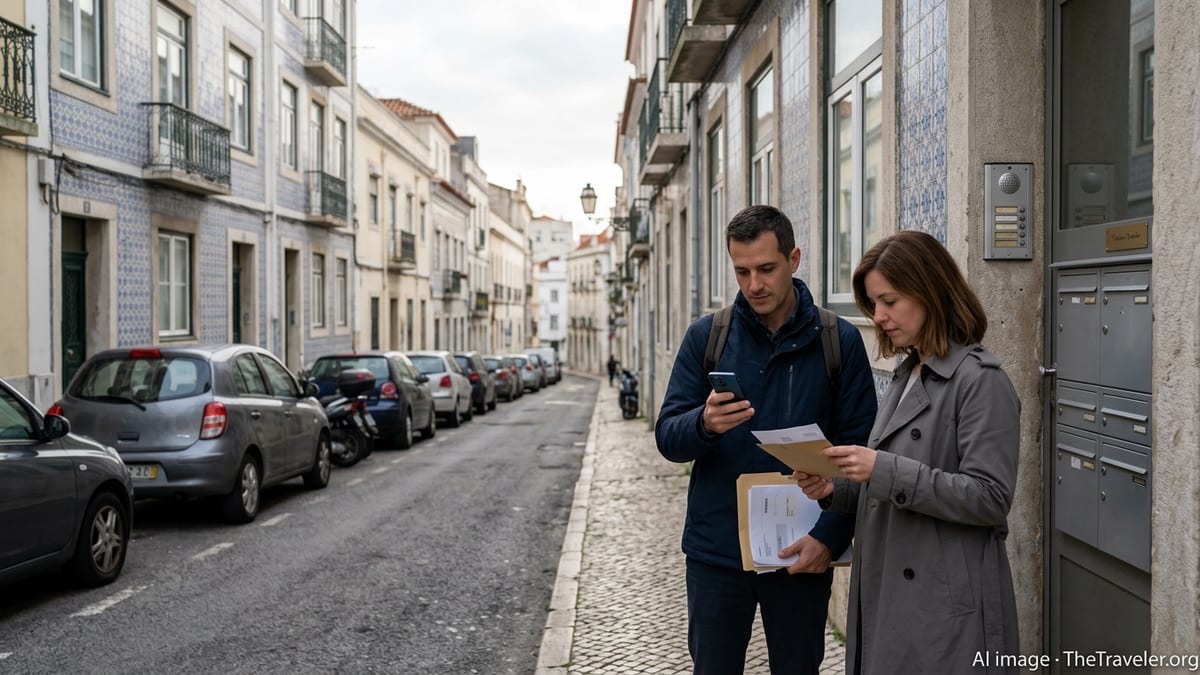
Strategic Overview of the First 30 Days
The first month in Portugal should be managed as a short, intensive project with clear priorities rather than a loosely defined settling-in period. Core dependencies shape the order of tasks: many services require a Portuguese tax identification number (NIF), several benefit from proof of address, and health and social registrations often require both identification and some evidence of residence status. Establishing this hierarchy before arrival allows newcomers to schedule appointments and gather documentation ahead of time.
In broad terms, the first 30 days are best divided into three phases. Days 1 to 7 focus on identification numbers and interim address solutions, Days 8 to 20 concentrate on banking, communications and local registrations, and Days 21 to 30 are used to close any gaps, update addresses, and formalize ongoing arrangements. The exact cadence will vary depending on location, workload at local offices and the individual’s immigration route, but the dependencies are broadly consistent nationwide.
Newcomers should expect that some tasks will require multiple visits or follow-up emails, particularly when dealing with busy local branches of national services. It is common for different offices to interpret documentation requirements slightly differently, so having more paperwork than strictly requested is prudent. Where possible, booking online appointments with tax authorities, citizen shops (Lojas do Cidadão) or municipal services can reduce waiting times in the first weeks.
The table below summarises the main setup tasks that typically belong in the first month and how they depend on each other.
| Task | Ideal Timing | Key Prerequisites |
| Obtain NIF (tax number) | Days 1–7 | Passport/ID; in some cases Portuguese or foreign address |
| Register contact details with municipality or local authority | Days 5–20 | NIF; proof of residence (rental contract or declaration) |
| Open Portuguese bank account | Days 5–20 | Passport; NIF; proof of address; occasionally proof of income |
| Secure mobile SIM and internet access | Days 1–10 | Passport; in some cases NIF |
| Register with National Health Service (SNS user number) | Days 10–30 | Identification; address in Portugal; residence documentation where applicable |
| Set up utilities for long-term accommodation | Days 10–30 | Bank details; NIF; rental contract or ownership document |
Identification Numbers and Core Registrations
Portugal relies on a small group of identification numbers that underpin most formal interactions. For newly arrived residents, the NIF (Número de Identificação Fiscal) is the most critical in the first 30 days. It is the unique tax identification number used for almost all financial and contractual acts, including opening a Portuguese bank account, signing a long-term rental, registering utilities or purchasing services above low-value thresholds. The tax authority explicitly states that registration as a taxpayer and allocation of a NIF is mandatory for anyone who has taxable activities or financial ties in Portugal, regardless of nationality.
Foreign citizens can obtain the NIF at tax offices, citizen shops and, in some cases, through integrated service points. Current government guidance indicates that foreign nationals with a Portuguese address, including many EU citizens and residents with a permit in process, can request the NIF and, in some locations, other identifiers in a combined procedure at select citizen spots. Applicants generally need a valid passport or national ID and a local or foreign address; the requirement for a local tax representative has been relaxed in some circumstances, especially for non-residents applying in person, although practices can differ by office.
In several major cities, it is now possible for eligible foreigners with a Portuguese address to request a NIF, social security number (NISS) and National Health Service user number (SNS) “in one go” at designated citizen spots, according to government service descriptions updated in late 2025. This can significantly compress the setup timeline where available, but capacity is limited and appointments may book out quickly. For those who cannot access this bundled service, it is still realistic to obtain the NIF within the first week and defer NISS or SNS registration until later in the month.
After the NIF, the next priority is registration of an address where that is required by specific procedures. Many municipalities issue residence confirmations or certificates based on rental contracts or landlord declarations, which can in turn support other administrative steps. While the precise municipal processes fall outside this article’s scope, it is important to recognize that some later tasks in the first month presuppose a document that links the newcomer to a specific address, temporary or long term.
Banking, Payments and Financial Infrastructure
A functioning local banking and payment setup is usually essential within the first 30 days, both for routine payments and because many service providers prefer or require a Portuguese IBAN for direct debits. In practice, the minimum documentation Portuguese banks commonly request from new arrivals includes a passport or EU ID, a NIF, proof of address and, in some cases, proof of income or employment status. Several banks explicitly list tax notices, utility bills, bank statements or municipal certificates as acceptable proof of address, and some accept a foreign address at the outset for non-resident accounts.
Different banks apply these rules with varying degrees of flexibility. Reports from relocation guides and user experiences indicate that some large retail banks can open basic accounts for non-residents using a foreign proof of address combined with a Portuguese NIF, particularly when the purpose is to receive income or pay local expenses. Others prefer or insist on a Portuguese address and, increasingly, evidence of lawful residence or at least a visa process underway, especially for non-EU nationals. This reflects tightening risk controls rather than a change in core banking law.
Newcomers should be prepared for additional due diligence questions, especially where there are cross-border income sources or higher-value transfers. Banks can request evidence of the origin of funds and may require clients to explain expected incoming transfers and their purpose, such as salary, pension or property-related payments. While basic account maintenance fees vary, some online-focused banks and fintech-linked accounts offer low-fee options, but they may still demand a NIF and proof of address. In some cases, institutions allow account opening without a NIF initially, but this is increasingly the exception rather than the rule.
From a practical perspective, it is advisable to secure at least one reliable payment method usable in Portugal (local bank account, multi-currency account or foreign card with low fees) by the end of the first two weeks. This timing aligns with the need to start paying deposits, recurring rents, utility activations and local service contracts before the end of the first month. Where opening a traditional Portuguese account proves slow, maintaining a parallel solution such as an international multi-currency account can provide continuity while bank onboarding is completed.
Communications: Mobile, Internet and Contactability
Access to mobile communications and a stable internet connection is foundational for completing other first-month tasks, including receiving SMS security codes from banks, accessing government portals and managing digital signatures. Portugal has a competitive telecommunications market, and major providers offer prepaid and postpaid mobile plans as well as residential internet packages. Most providers require a passport or EU ID to register a SIM card; a NIF is often requested for postpaid contracts but is not always mandatory for prepaid services.
For new arrivals in their first days, purchasing a prepaid SIM using a passport is generally the fastest route to local connectivity. This can typically be done at operator shops or multi-brand electronics retailers. Once a NIF and, if applicable, a more stable address are obtained, it becomes easier to transition to postpaid mobile contracts or converged packages that bundle mobile, fixed internet and television. These bundles may offer cost advantages, but they usually require a Portuguese IBAN for direct debits and sometimes a minimum contract period.
Residential internet installation often depends on building infrastructure and provider workload in the specific area. In larger urban centres, connection lead times of a few days to two weeks are common, provided an active line already exists in the property. Where no prior installation exists, survey appointments and cabling can extend that timeline. Given these variables, newcomers should plan for a period in which mobile data serves as the primary connection while fixed internet is being arranged, particularly if arrival coincides with peak relocation months or major holidays.
Ensuring reliable contact details is also important for interaction with public services. Many government platforms, health centres and banks validate user accounts through SMS or email. Using a stable local number, rather than a short-term foreign roaming number, reduces the risk of missed authentication codes. Recording and reusing the same email and mobile number across different Portuguese services also simplifies retrieval of credentials and account recovery during the early weeks.
Healthcare User Registration and Practical Access
Although this article does not cover healthcare entitlements or insurance strategies, obtaining the National Health Service user number (Número de Utente do SNS) is part of the practical setup many long-term residents aim to complete in their first months. According to official guidance from the health regulator and service portals, all Portuguese citizens and foreign citizens with permanent residence or in a temporary stay or residence situation in Portugal are, in principle, eligible to be SNS beneficiaries. The SNS user number is the unique identifier used to access public health centres, hospitals and digital health services.
There are multiple pathways to obtain an SNS user number, and not all require completion within the first 30 days. In some cases, particularly for EU citizens and foreign nationals with residence processes already underway, the number can be issued during first contact with a local health centre or hospital. In others, health centres may request evidence of address, identification, and proof of residence status before assigning a permanent number. Government documentation notes that citizens can receive the user number in the course of registering with an SNS unit, and that certain categories (such as applicants for international protection) have explicit rights to registration.
Separately, an integrated service option introduced by the government enables some foreigners with a Portuguese address who meet specified criteria to request an SNS number at designated citizen spots alongside their NIF and social security number. This option is geographically limited and subject to appointment availability but can, where accessible, compress the health registration timeline into the first one or two weeks after arrival. Where this is not feasible, a realistic target is to initiate SNS registration within the first month and accept that confirmation may take longer in busy urban areas.
From a practical standpoint, newcomers should anticipate variable experiences at local health centres. Documentation requests and processing times can differ by region and workload. Having digital and paper copies of identification, proof of Portuguese address, any residence documentation and the NIF available at the first visit increases the likelihood of same-day registration. Even where a permanent family doctor assignment is delayed, securing the basic SNS user number early supports access to vaccinations, urgent appointments and online health services over the longer term.
Housing-Linked Utilities, Contracts and Daily Operations
Once a medium or long-term housing solution is in place, typically within the first 30 days for many relocations, attention shifts to setting up the practical services linked to the property. While the broader housing search is outside this article’s scope, the administrative steps that follow a lease or purchase agreement are relevant to the first-month checklist. Utility providers for electricity, gas, water and internet commonly require the tenant or owner to provide identification, NIF, proof of connection to the property and, in many cases, a local bank account for direct debit authorization.
In practice, incoming residents may face two different scenarios. In apartments with existing utility contracts, responsibility can be transferred to the new occupant using the lease contract plus identification and NIF, sometimes without service interruption. Where utilities are disconnected, new contracts and potential connection fees or security deposits may apply, which makes having an operational Portuguese bank account especially useful. Providers increasingly allow online initiation of contracts, but completion often requires uploading supporting documents or attending a branch, depending on the company and region.
During the first month, it is advisable to gather and securely store all contract numbers and customer references for utilities and telecommunications. These references are frequently needed when contacting call centres or managing services through online portals. Aligning billing cycles and payment methods across providers reduces administrative friction: for example, switching all major utilities to direct debit from the same Portuguese account simplifies cash-flow planning and avoids missed invoice deadlines.
Other operational tasks, such as arranging local transport cards, setting up postal forwarding or collecting access credentials for building services, fit logically into this phase. While not strictly mandatory for all newcomers, they contribute to a stable daily routine and are easier to complete once address, banking and identification basics are in place. Treating these as part of a structured utilities and operations checklist helps ensure they are not overlooked amid higher-priority administrative tasks.
The Takeaway
The first 30 days in Portugal are best approached as a sequence of interlocking administrative steps rather than a collection of unrelated errands. At the core of this sequence sit three elements: obtaining a NIF, securing a usable local payment method, and establishing a verifiable Portuguese address. Once these are in place, access to telecommunications, public health registration and property-linked utilities becomes progressively easier and more predictable.
Timelines vary by location and personal circumstances, but a realistic plan for the first month should aim to secure the NIF within the first week, open at least one functioning banking or payment channel by the end of the second week, and stabilize housing-related services and, where applicable, SNS registration during the third and fourth weeks. Allowance should be made for delays, inconsistent documentation requests and the need for repeat visits to certain offices.
For individuals evaluating whether relocation to Portugal is practical, the key consideration is not whether these systems exist, but whether their own circumstances align with the typical documentation and timing expectations. Those arriving with clear identification, evidence of address and an understanding of the NIF-centric structure of Portuguese administration are more likely to complete the essential first-30-day setup without major disruption to work or personal life.
FAQ
Q1. Is it realistic to obtain a Portuguese NIF in the first week after arrival?
Yes, for most newcomers it is realistic to obtain a NIF within the first week, provided they bring valid identification and, where requested, an address and supporting documents. Appointment availability and local office workload are the main variables affecting timing.
Q2. Do I need a Portuguese address before I can open a bank account?
Many banks prefer a Portuguese address, but some will open accounts using a foreign address if you have a NIF and appropriate identification. Practices vary by institution, so it is advisable to confirm requirements with specific banks and be prepared with both foreign and local address evidence.
Q3. Can I get my NIF, social security number and SNS number in one appointment?
In certain locations, designated citizen spots allow eligible foreigners with a Portuguese address to request these three numbers in a single visit. Capacity is limited and not all regions offer this integrated service, so it should be treated as an opportunity rather than an assumption.
Q4. Is a NIF mandatory for all contracts and purchases in the first month?
The NIF is required for many formal contracts and higher-value purchases, but small cash transactions and some prepaid services can be obtained without it. However, delaying the NIF complicates later steps such as opening a bank account, signing a lease or registering utilities.
Q5. How quickly can I realistically have a home internet connection in Portugal?
In areas with existing infrastructure, installation within a few days to two weeks after ordering is common, though lead times can be longer during busy periods or when new cabling is needed. Using mobile data as a bridge solution during this period is advisable.
Q6. Do I need my SNS number in the first 30 days?
It is not always essential in the first month, but obtaining or at least initiating the process for an SNS user number during this period is prudent for those planning to reside long term, as it supports access to public healthcare and digital health services.
Q7. What happens if my utility contracts are not in my name during the first month?
Where utilities remain in a landlord’s or previous tenant’s name, you may still have service but lack direct control over billing and changes. Transferring or initiating contracts in your own name within the first weeks improves security and transparency.
Q8. Is a Portuguese bank account required for rent and deposit payments?
Some landlords accept international transfers or foreign accounts, but many prefer a Portuguese IBAN, particularly for recurring rent. Having a local account by the second or third week simplifies these payments and can reduce transfer fees.
Q9. Can I complete most of the first 30-day setup online?
Certain steps, such as scheduling appointments, uploading documents and initiating service contracts, can be done online, but many core tasks still require at least one in-person visit, particularly for first-issue identification numbers and initial bank onboarding.
Q10. What are the main risks of not completing this checklist in the first month?
The main risks include difficulty signing stable housing contracts, limited access to local payment methods, slower onboarding with public services and greater administrative friction later. While none of these are insurmountable, they can significantly increase the time and effort required to normalize daily life.