


More news on this day
American Airlines’ first Boeing 777 fitted with its new Flagship Suite premium cabin has arrived at Dallas Fort Worth International Airport, signaling a major milestone in the carrier’s long-haul fleet overhaul and its efforts to cement DFW as a global premium hub.
Get the latest news straight to your inbox!
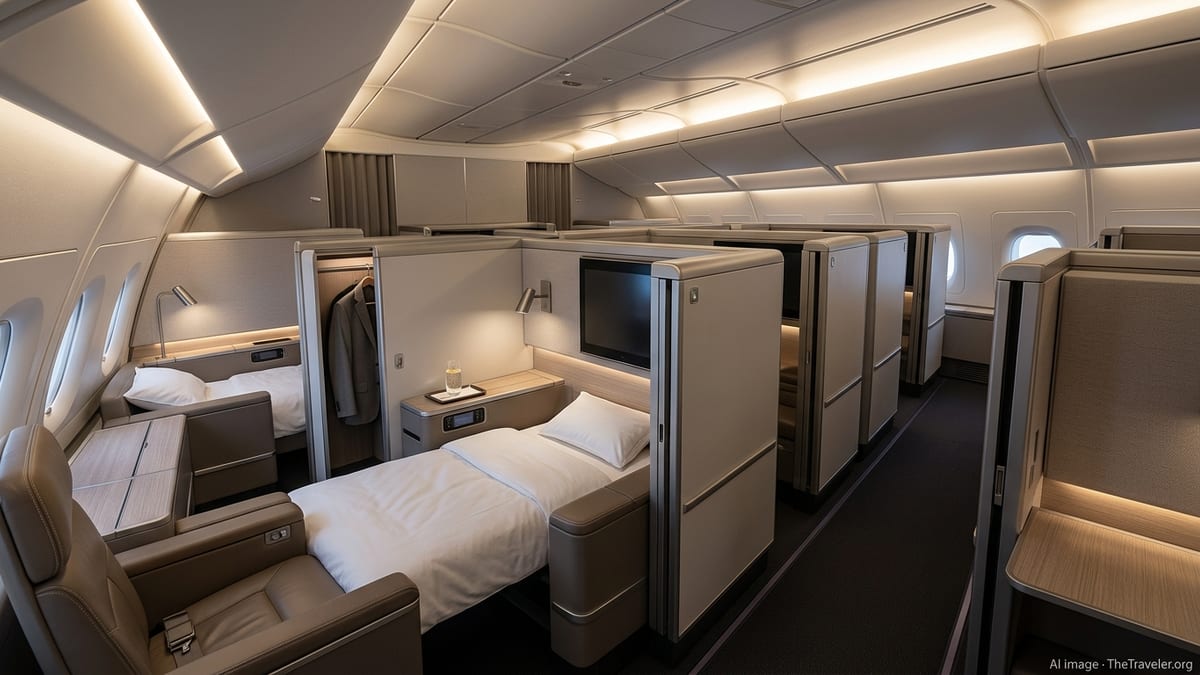
A Prototype 777 Marks the Start of a Fleet-Wide Refresh
The arrival of the first retrofitted Boeing 777 at Dallas Fort Worth represents the transition of American’s Flagship Suite concept from design renderings and new deliveries into a full-scale refurbishment program for existing widebodies. Publicly available company filings and previous announcements have indicated that American plans to introduce the suite across its Boeing 777-300ER and 777-200ER fleets alongside new Airbus A321XLR and Boeing 787-9 aircraft, creating a common premium standard across long-haul routes.
The aircraft arriving in Dallas is widely understood among aviation observers to be the prototype for the 777 retrofit program, following an extended modification period at an overseas facility. Enthusiast tracking of the airframe’s movements in recent months has highlighted multiple schedule changes as engineering work, certification requirements, and interior installation timelines evolved, which is typical for a first-of-type conversion.
Reports indicate that the 777 will now complete final checks and crew familiarization activities at Dallas Fort Worth before it begins operating regularly scheduled passenger services. The airline has not yet publicly detailed the first revenue route for the upgraded jet, but industry expectations center on high-demand transatlantic and transpacific services where premium demand is strongest.
The decision to channel the aircraft through Dallas Fort Worth underlines the strategic importance of the airport within American’s network. Corporate disclosures in recent months have emphasized that DFW is being positioned as the airline’s largest single-carrier hub, with the Flagship Suite rollout forming a cornerstone of that strategy.
Flagship Suite Layout Brings Privacy Doors and Higher-Density Premium Cabin
The Flagship Suite product is designed to replace the current generation of business and international first class seating on American’s long-haul aircraft with a single, more consistent premium experience. Visual materials and prior announcements about the suite concept highlight fully lie-flat seats with direct aisle access, privacy doors, and expanded personal storage, reflecting a broader industry move toward more enclosed business-class cabins.
On the retrofitted 777s, the layout is expected to reallocate space toward higher-yield premium seating, with more suites replacing a portion of the previous economy cabin and the legacy international first class section. This mirrors American’s broader shift away from a separate Flagship First cabin on many long-haul routes and toward an enhanced business-class product that can be marketed more widely.
Frequent flyers following the development of the Flagship Suite have noted that the new configuration is designed to bring the 777 fleet in line with the upcoming 787-9 and A321XLR interiors. For travelers, this is expected to translate into a more predictable onboard experience regardless of aircraft type, particularly on key transatlantic and transpacific routes where equipment swaps have historically produced wide variations in seat quality.
Early commentary from travelers who have sampled Flagship Suite on newer aircraft suggests that the addition of privacy doors, larger entertainment screens, and redesigned lighting has been well received, even as some feedback points to tighter footwells and more compact layouts compared with older first class seats. The 777 retrofit will bring those trade-offs to one of American’s most heavily used international fleets.
Dallas Fort Worth Strengthens Its Role as American’s Premium Showcase
The routing of the first retrofitted 777 through Dallas Fort Worth also reinforces the airport’s role as the primary stage for American’s evolving premium strategy. Public information about the airline’s long-term plans highlights significant capital investment in a new terminal at DFW, expanded lounge capacity, and increased long-haul connectivity, all of which rely on competitive hard products in premium cabins to attract high-yield travelers.
DFW already serves as a major connecting point for American’s long-haul services to Europe, Asia, and Latin America. Introducing the Flagship Suite-equipped 777 into this environment enables the carrier to showcase its newest cabin on routes where business travel, corporate contracts, and premium leisure demand are especially concentrated.
The new cabin also complements American’s existing Flagship-branded lounges and premium check-in facilities at DFW, creating a more integrated ground-to-air experience. While service levels and soft-product details can vary by route and season, the alignment of lounge, boarding, and onboard offerings around a single Flagship identity is intended to simplify marketing and strengthen the carrier’s position against international rivals and domestic peers serving the North Texas hub.
As additional 777s cycle through retrofit, Dallas Fort Worth is expected to see a growing share of departures using the updated interiors, particularly during peak transatlantic and transpacific travel periods. That concentration will make the hub one of the earliest places where travelers are likely to encounter the new product on a consistent basis.
Implications for Routes, Loyalty Members, and Competitive Dynamics
The entry into service of the first Flagship Suite-equipped 777 is likely to influence how American deploys capacity on several marquee routes from Dallas. Network watchers expect the airline to prioritize high-profile city pairs where premium demand justifies the additional investment, such as services to London, key European hubs, and major Asian gateways.
For AAdvantage members, the new configuration may bring changes to upgrade dynamics, particularly as more seats are shifted into higher-revenue premium cabins. Recent program updates already indicate a tighter focus on monetizing premium inventory, and the shift to a single, highly differentiated suite product may further encourage travelers to buy up rather than rely on complimentary upgrades.
From a competitive standpoint, the rollout narrows the gap between American and rivals that have spent recent years refreshing long-haul business class products with doors and more private layouts. The 777 retrofit program, anchored by the prototype’s arrival in Dallas, signals that American intends to compete more aggressively for premium travelers who have grown accustomed to enclosed suites and consistent hard products on other global carriers.
Industry observers will be watching closely how quickly additional 777s enter modification and how reliably the first aircraft operates once it begins scheduled services. The pace and execution of the retrofit program will help determine how rapidly American can transition from a mixed long-haul product to one centered around the Flagship Suite design that has now made its first appearance on a 777 at its Texas home base.